A one-day walk through historic Palermo, from the old harbour and Arab-Norman monuments to the great nineteenth-century theatres.
In December 2019, I decided to see Palermo, Cefalù and Monreale in a single day. And I did. But managing to squeeze three places into one day is not the same as getting to know them. I certainly wouldn’t recommend my original plan to someone who wants to discover Palermo properly. So this time I’ve put together a more sensible walk through the city, leaving Cefalù and Monreale for another day.
Palermo’s historic centre isn’t particularly large. Yet an extraordinary amount of history has been squeezed into those few square kilometres. Phoenicians, Arabs, Normans, Spanish rulers — each left something behind. And what fascinates me is how little effort Palermo makes to keep their legacies separate. Sometimes you find several centuries, and several civilisations, on the same building.
I’ve arranged the walk to begin at the old harbour, La Cala, continue through La Kalsa and Albergheria, and cross the great squares towards the cathedral and the Norman Palace. From there, it passes Teatro Massimo and ends at Politeama. Those with energy left can continue along Via della Libertà. You needn’t go inside every church and museum. I would rather choose a few interiors carefully and spend the rest of the day actually looking at the city.
Palermo in one day — before you set off
- Walking distance: approximately 8–10 km, depending on detours.
- Time: a full day, including roughly 2.5–3 hours of actual walking.
- Suggested start: around 8 a.m.
- Palatine Chapel: allow at least an hour for the chapel and accessible rooms of the Norman Palace.
- Market and lunch: aim to see Ballarò in the morning, perhaps stopping to eat.
- Before travelling: check visiting hours. Palazzo Abatellis generally closes on Mondays, and the Royal Apartments of the Norman Palace are normally inaccessible from Tuesday to Thursday. On Sundays, plan around the Palatine Chapel’s opening hours.
This is my recommended route for readers, not an exact record of my 2019 visit.
Map: open an overview of the walk from La Cala to Politeama on Google Maps. It shows the main points, but not every turn. For navigation on the ground, use the four linked stages towards the end of this guide.
In this guide: Harbour and La Kalsa · Markets and squares · Cathedral and Norman Palermo · Theatres · Maps and practical advice.
A city built around its harbour
La Cala, Palermo’s old harbour, is now a marina filled with small boats. It takes some imagination to see why this particular stretch of coastline mattered so much. But Palermo grew around a naturally sheltered anchorage, and for centuries its fortunes depended on trade arriving by sea.
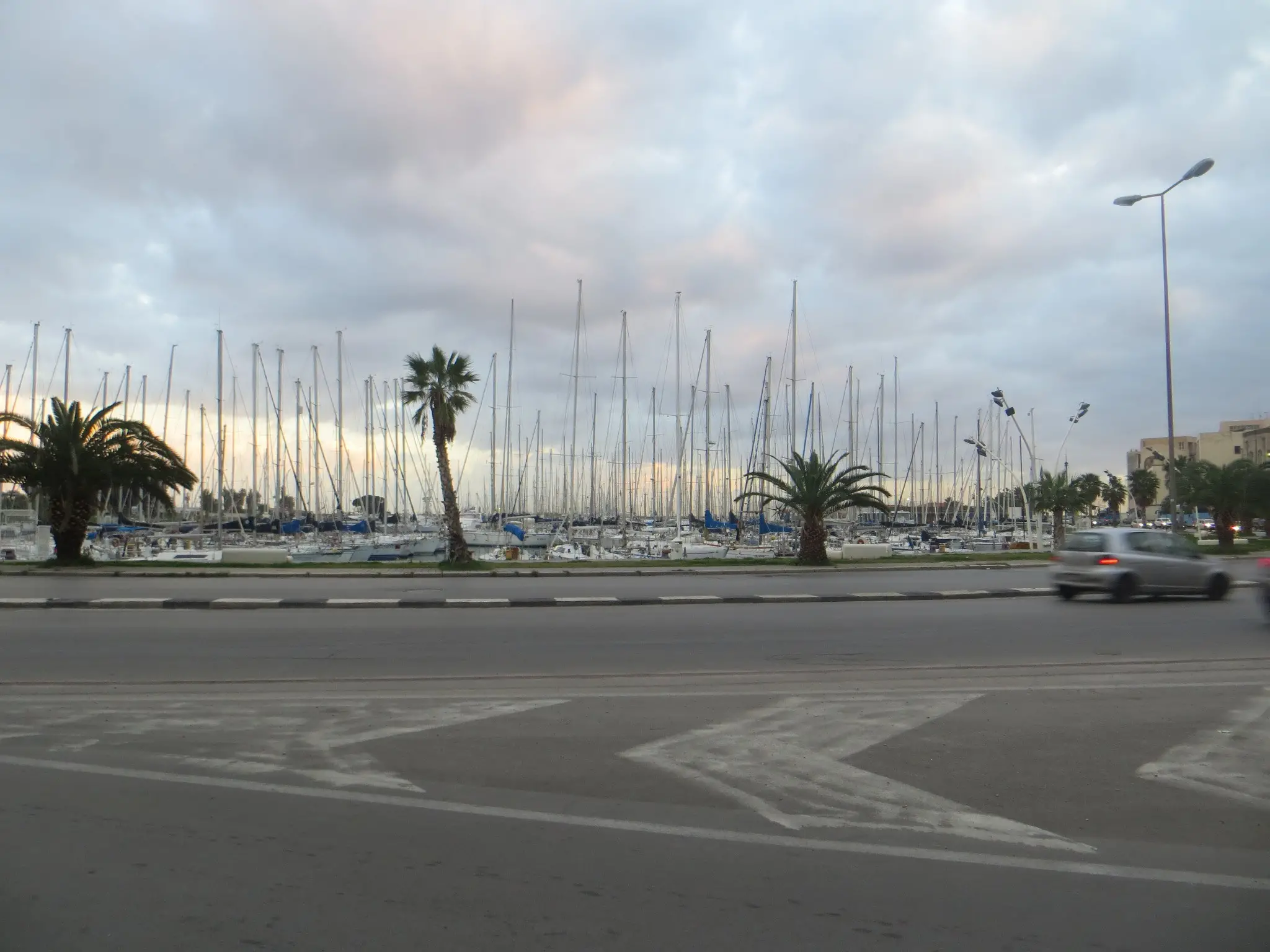
The Phoenicians established a settlement here. The Greeks called it Panormos, usually interpreted as ‘all harbour’. The coastline was very different then. The Kemonia and Papireto waterways once bordered the settlement, while deposits of sediment gradually changed the bay. La Cala remained the city’s main harbour for centuries, particularly between the thirteenth and sixteenth centuries, before much of the traffic moved farther north.
Beside the harbour, look for Santa Maria della Catena. Its name recalls the chain used to close the entrance to the port. The church is an example of Catalan Gothic architecture, a style that influenced Sicily in the late Middle Ages. The nearby remains of Castello a Mare belonged to the fortress that guarded the harbour.
From the harbour, walk towards Porta Felice, the monumental gateway at the seaward end of Corso Vittorio Emanuele. The promenade of Foro Italico is nearby. But turn inland towards Piazza Marina and Palermo begins to change. The sea is barely a few minutes behind you. Ahead are a garden, a medieval palace and a square with a history considerably darker than its appearance suggests.
Piazza Marina and its stories
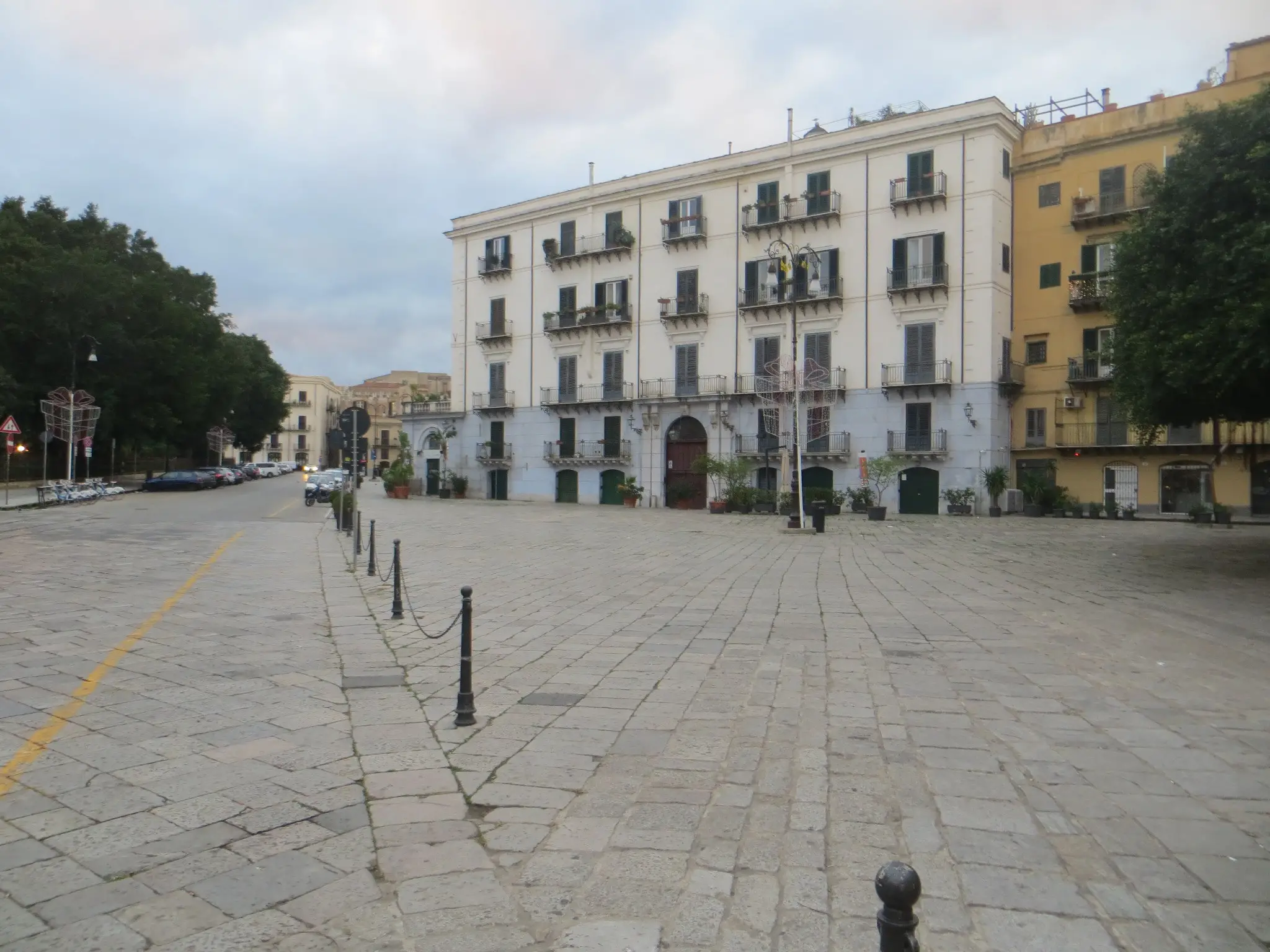
On Piazza Marina, I would begin with Giardino Garibaldi. Its enormous fig trees are among the most remarkable trees I’ve seen in any city park. The garden was designed in the nineteenth century by Giovan Battista Filippo Basile. Remember the name: we’ll meet him again near the end of the walk, at Teatro Massimo.
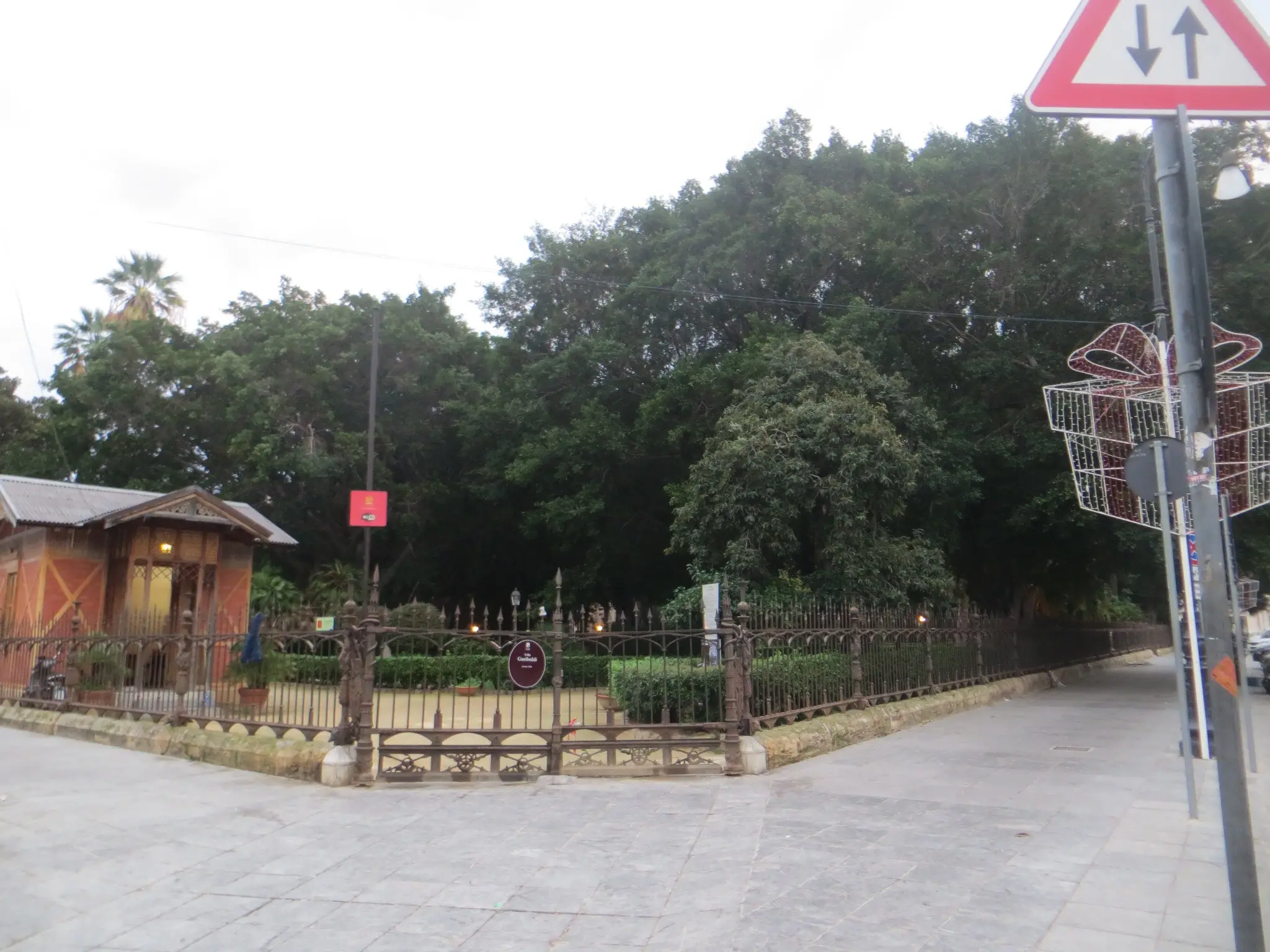
On the square stands Palazzo Chiaramonte-Steri, a medieval palace that later housed the Inquisition. Public executions once took place on Piazza Marina, and in 1909 Joe Petrosino, a New York policeman investigating the Sicilian Mafia, was murdered on Piazza Marina.
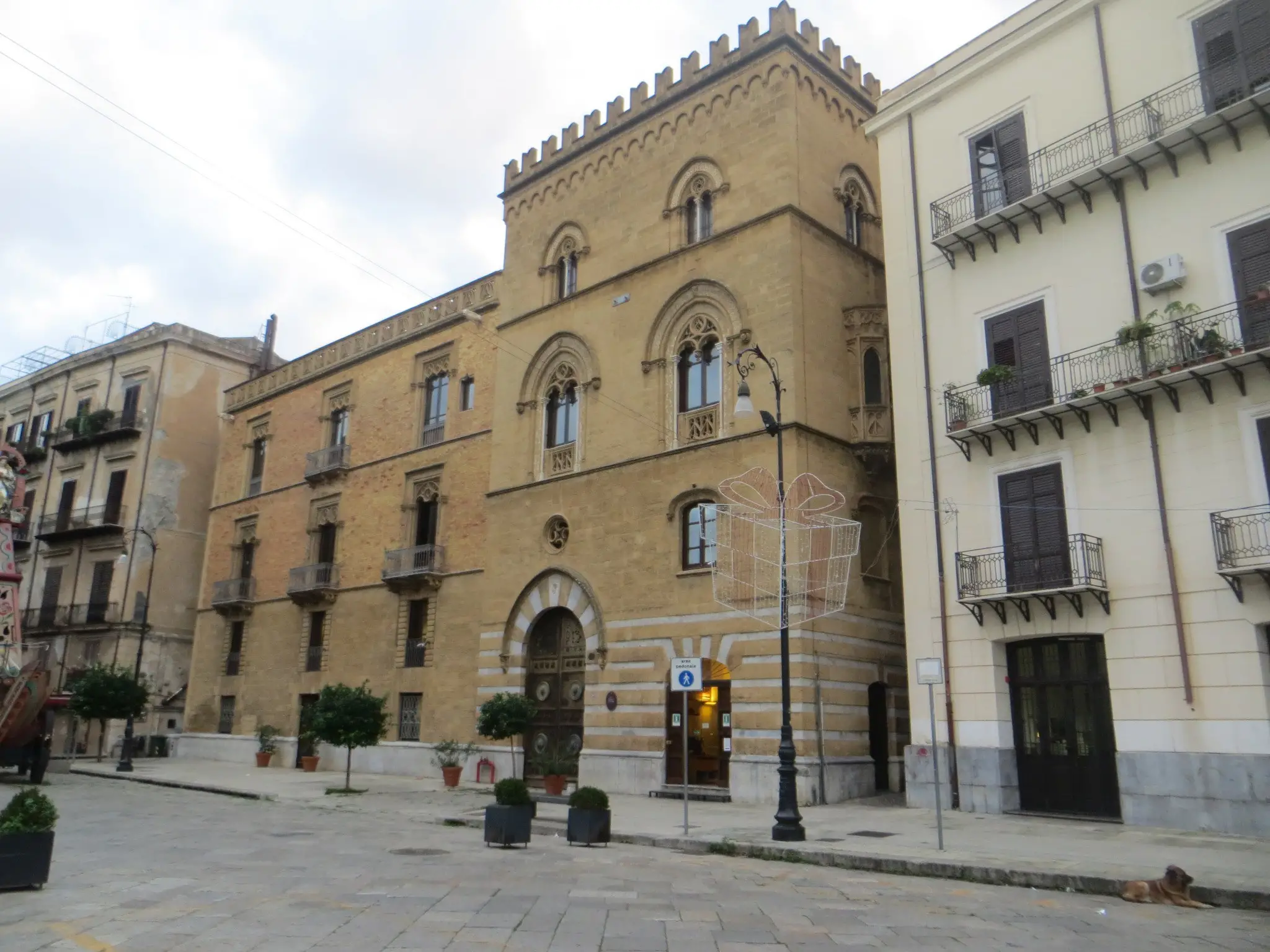
At the edge of Piazza Marina stands Fontana del Garraffo, one of Palermo’s more elaborate Baroque fountains. Designed by Paolo Amato and sculpted by Gioacchino Vitagliano in 1698, it is a rather busy piece of marble: four dolphins support shell-shaped basins, an eagle battles a many-headed hydra above them, and an allegorical figure of Abundance crowns the whole arrangement. Water once flowed from the hydra’s mouths through the shells into the lower basin. The fountain wasn’t even made for this square. It originally stood by the Vucciria market and was moved here in the nineteenth century. From here, continue into Via Alloro, one of the principal streets of La Kalsa.
La Kalsa and its Arab past
The name La Kalsa comes from the Arabic al-Khālisa. Palermo fell under Arab rule in 831 and, over the following two centuries, became one of the great commercial and political centres of the Islamic Mediterranean, often compared with Córdoba and Cairo. La Kalsa itself was established around 937, under the Fatimids, as a fortified government district near the harbour, separate from the older city. When the Normans conquered Palermo in 1072, they didn’t simply sweep away what they found. Much of the existing artistic and architectural tradition lived on — something that becomes particularly clear when we reach the Norman churches and palace.
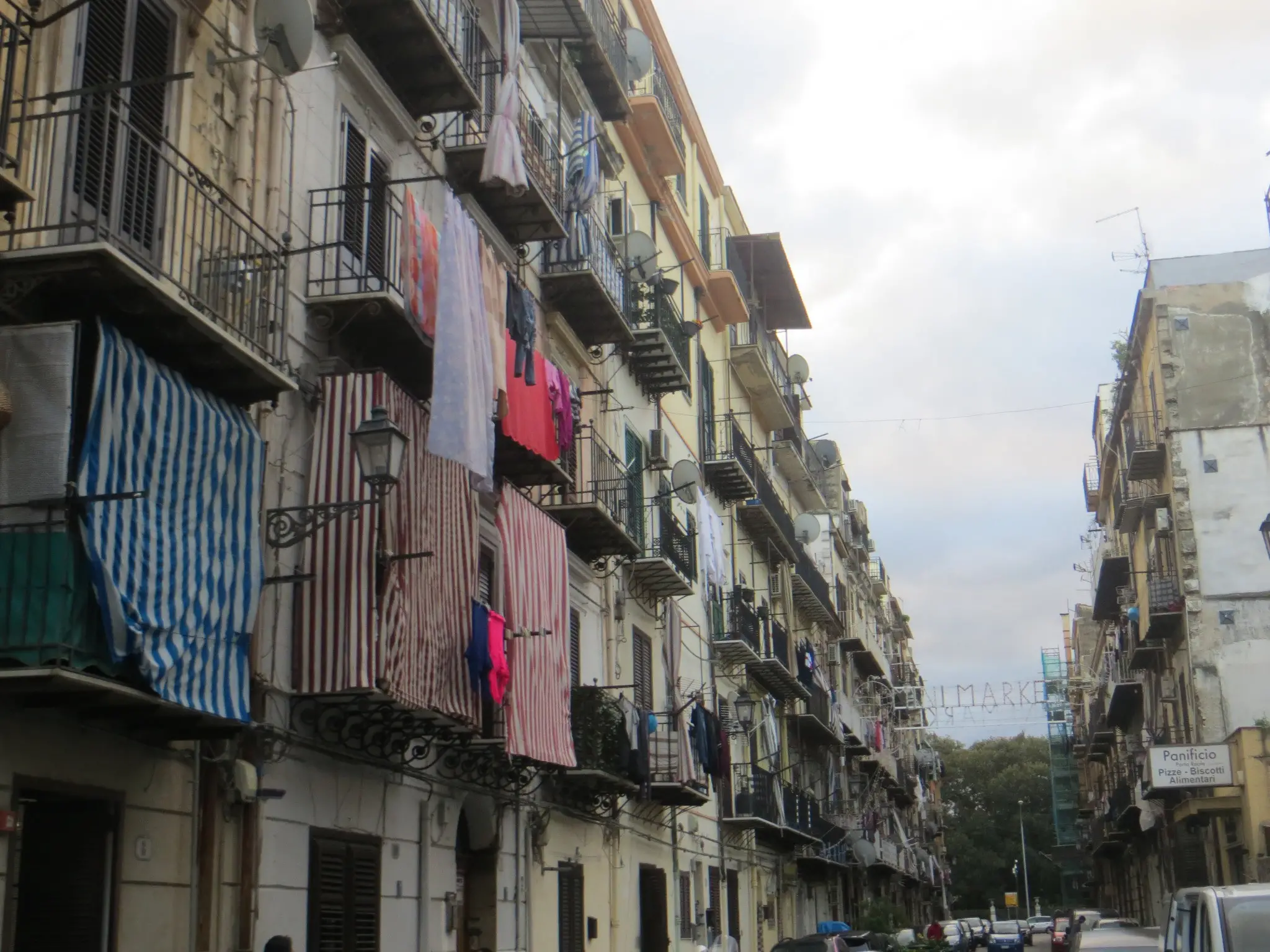
The narrow, irregular streets of La Kalsa sometimes remind me of medinas on the other side of the Mediterranean. Then you turn a corner and find a Baroque church or an aristocratic palace, perhaps with a little square squeezed between them. Via Alloro passes several important buildings, but La Kalsa isn’t a neighbourhood to be reduced to a checklist of sights. Bombing in 1943 tore holes in its urban fabric; some buildings stood unrepaired for decades. Walking past the surviving façades and the gaps between them tells you more about that history than any single monument could.
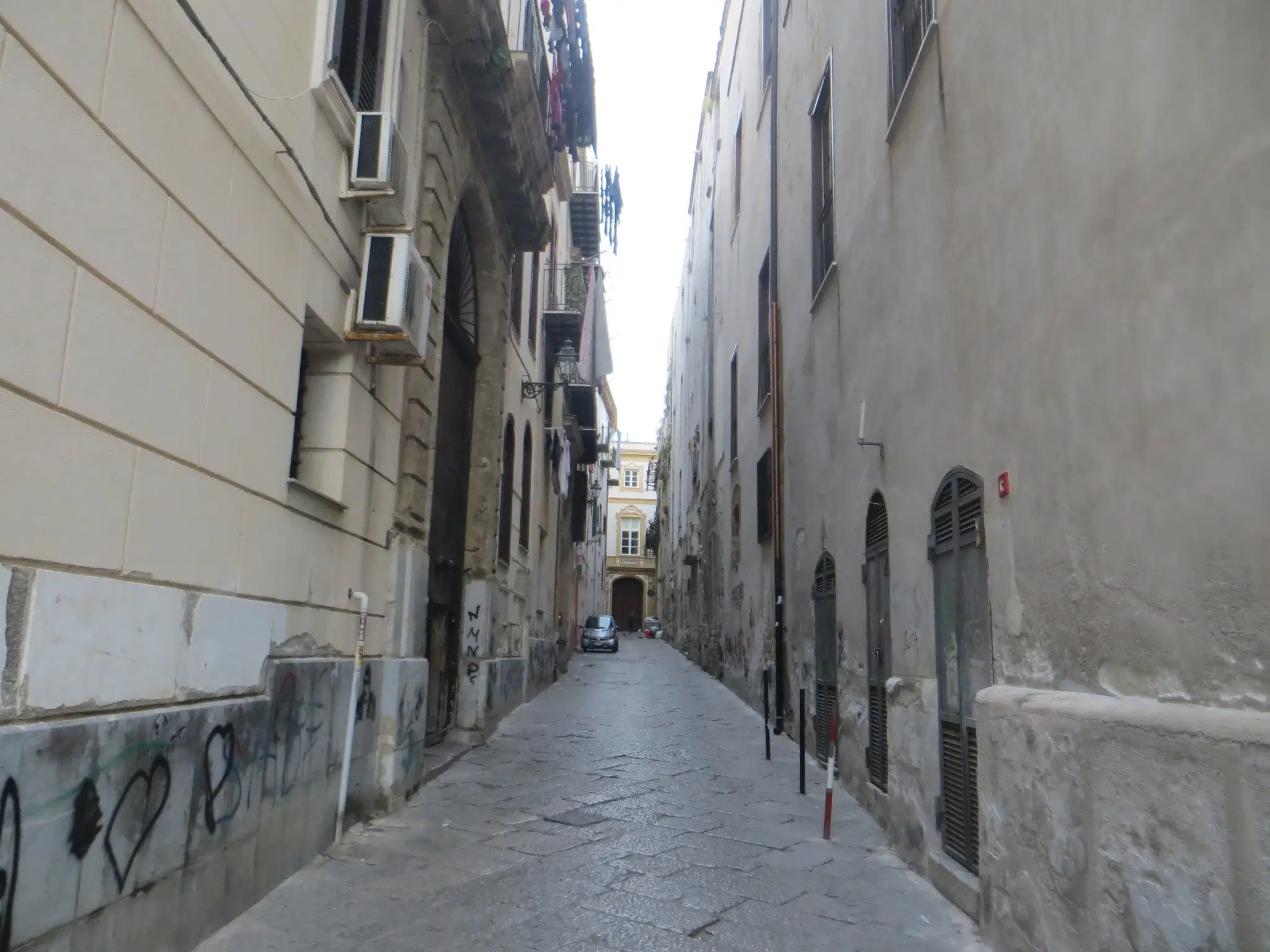
The fifteenth-century Catalan Gothic Palazzo Abatellis houses the Regional Gallery of Sicily. Among its treasures are the Triumph of Death, Antonello da Messina’s Annunziata and Francesco Laurana’s sculpture of Eleanor of Aragon. Carlo Scarpa designed the museum display. If you enjoy art, I would recommend going in. But allow at least an hour, and on this particular walk I would keep it as an option rather than a compulsory stop.
Nearby is Santa Maria dello Spasimo, a church begun in the sixteenth century and never completed. Its extraordinary feature is the missing roof: the remaining walls and vaults enclose an open-air space now used for cultural events. Close by, Piazza Magione still shows traces of wartime destruction.
From Spasimo, follow Via Lincoln to Orto Botanico, Palermo’s university botanical garden. More than two centuries old, it covers about ten hectares and contains Mediterranean as well as tropical and subtropical plants. Villa Giulia park is nearby. Allow extra time if you intend to enter rather than simply see the entrance.
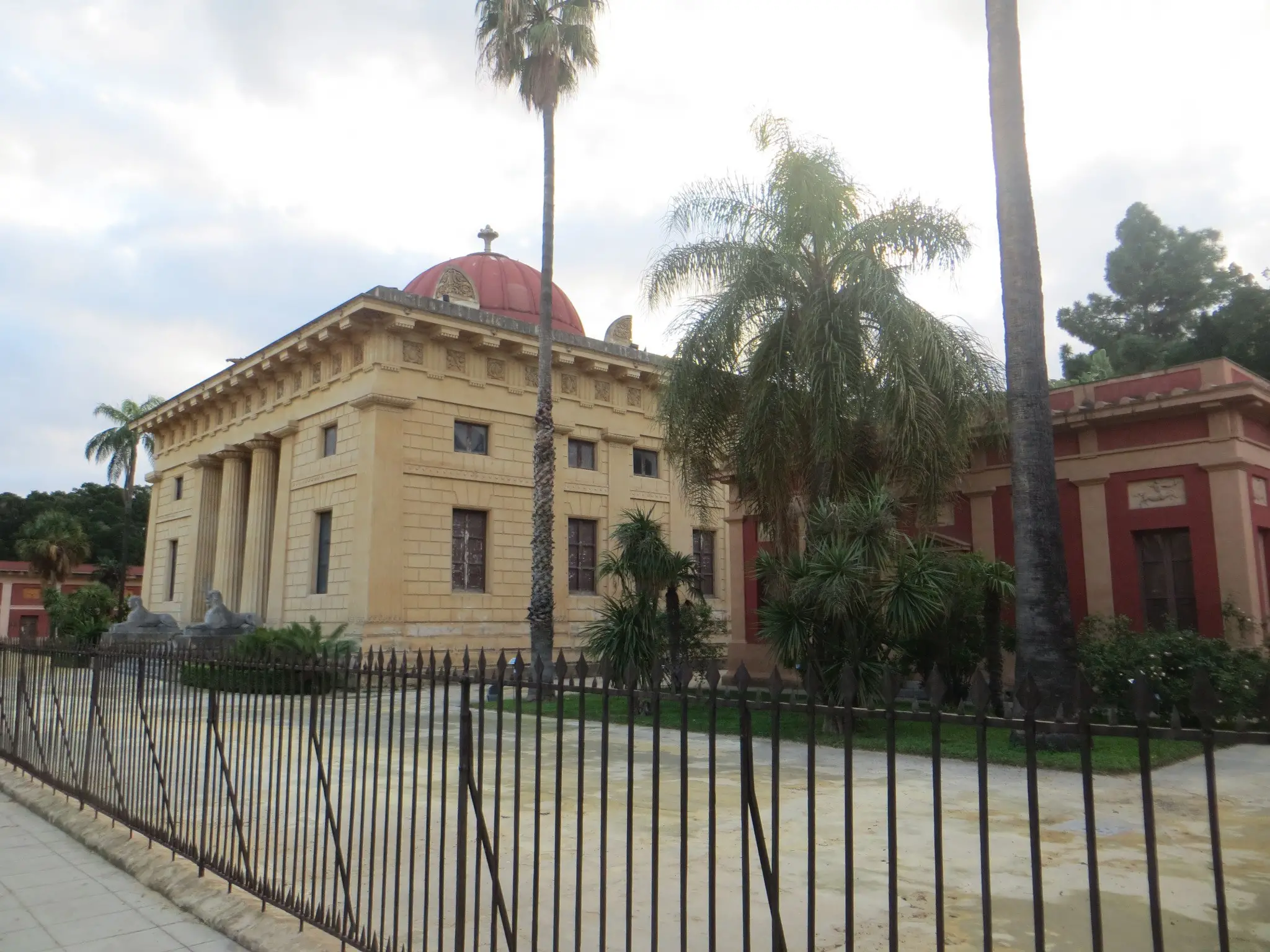
If you want to visit the botanical garden, check its opening hours, especially if you set off early. I arrived before it opened in December 2019 and didn’t have time to wait. If plants aren’t high on your list, continue along Via Lincoln towards Palermo Centrale. The station is useful here mainly as a landmark: beyond it lies Albergheria, home to one of Palermo’s best-known markets.
Markets, churches and squares
Albergheria and Ballarò
The name Albergheria has an unusual historical explanation. The expression Albergaria Centurbi et Capicii is linked to people from Centuripe and Capizzi whom Frederick II moved to Palermo following the destruction of their towns in 1233. Albergheria suffered again during the bombing of 1943. In the following decades, abandoned houses became homes for migrants from different countries, while new shops appeared alongside traditional workshops. So Albergheria is more than a historic quarter. It is one of the city’s most diverse neighbourhoods, and it is still changing.
Ballarò isn’t a conventional covered market. It is a tangle of streets where stalls, shops and people’s homes run into one another. You can barely tell where the market starts and where it ends. And that, for me, is the point: trade isn’t something separate from life in Albergheria. It is part of the everyday life of the neighbourhood. From Ballarò, make your way towards Via Maqueda and a completely different chapter of the city’s history.
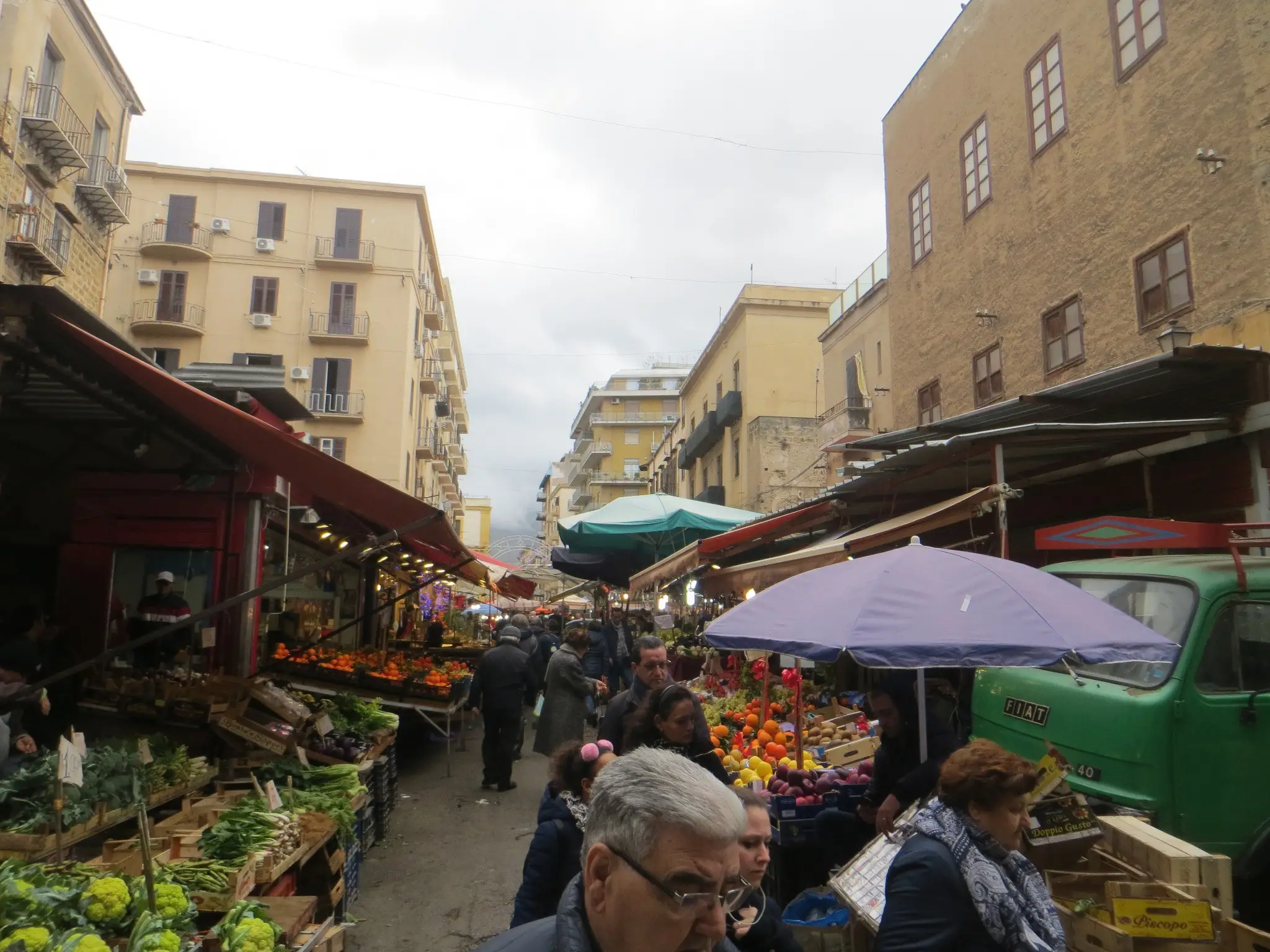
A break for food. If you reach Ballarò in the late morning, you might stop for an arancina, a stuffed, deep-fried rice ball, or panelle, chickpea fritters often served with potato croquettes (crocchè). But don’t assume the market is one enormous open-air restaurant. When I was there, I found rather less ready-to-eat food than I’d expected. If nothing tempts you, you’ll have other opportunities near Piazza Bellini or Quattro Canti. There’s no reason to stay hungry out of loyalty to an itinerary.
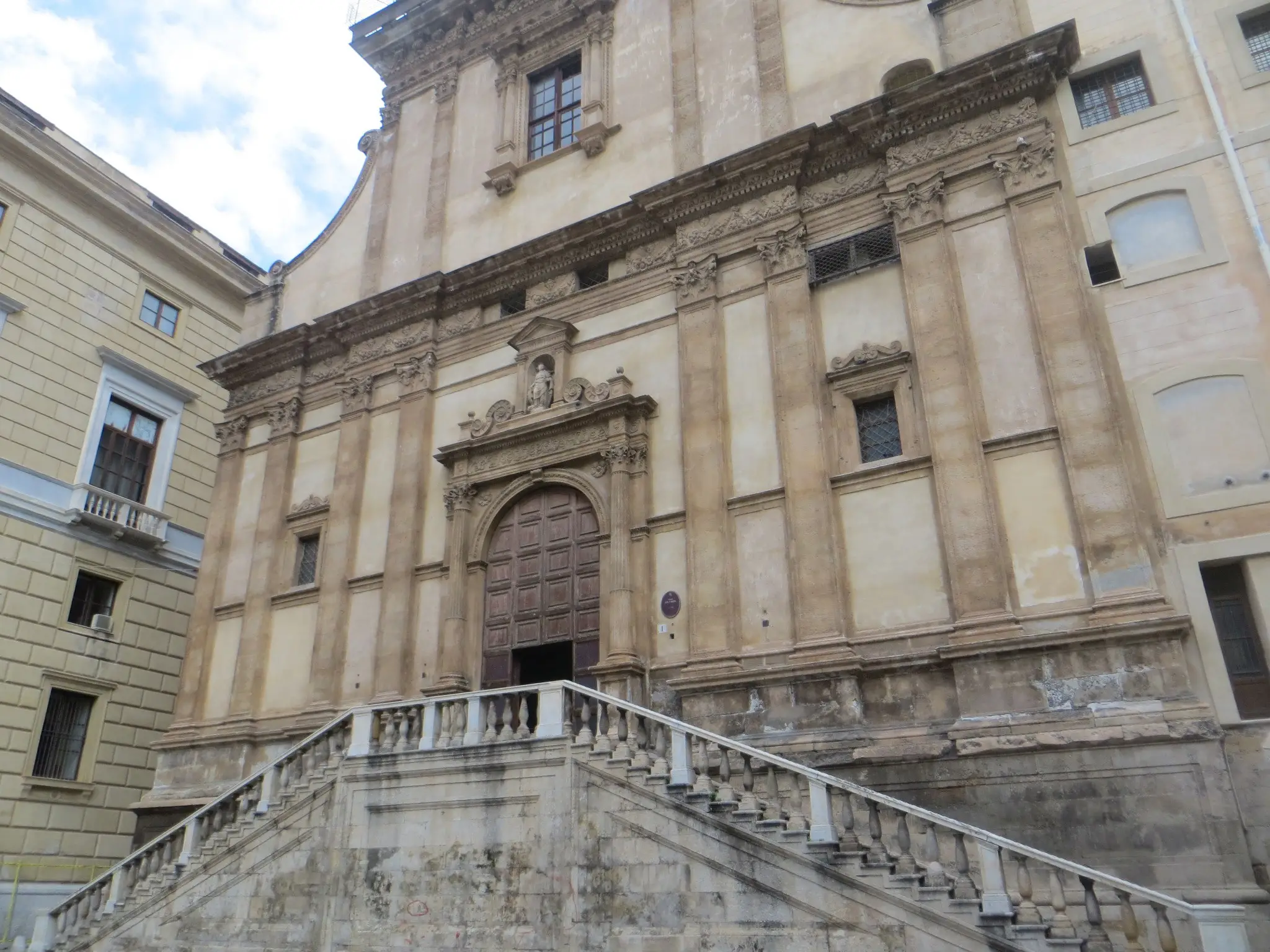
Continuing through Albergheria, you reach Chiesa del Gesù, also known as Casa Professa. Its interior is an exuberant example of Sicilian Baroque, with marble, inlays and sculpture covering virtually every surface. Piazza Bellini is a short walk away. Here stand two very different Norman-era churches, La Martorana and San Cataldo.
La Martorana, or Santa Maria dell’Ammiraglio, was founded in the twelfth century and is associated with George of Antioch, a Norman admiral. Its Byzantine mosaics are among Palermo’s finest. The Romanesque bell tower, Byzantine dome, Baroque changes to the façade, twelfth-century mosaics and eighteenth-century frescoes make the building a lesson in layered history. The name Martorana comes from the neighbouring Benedictine convent associated with Eloisa Martorana.
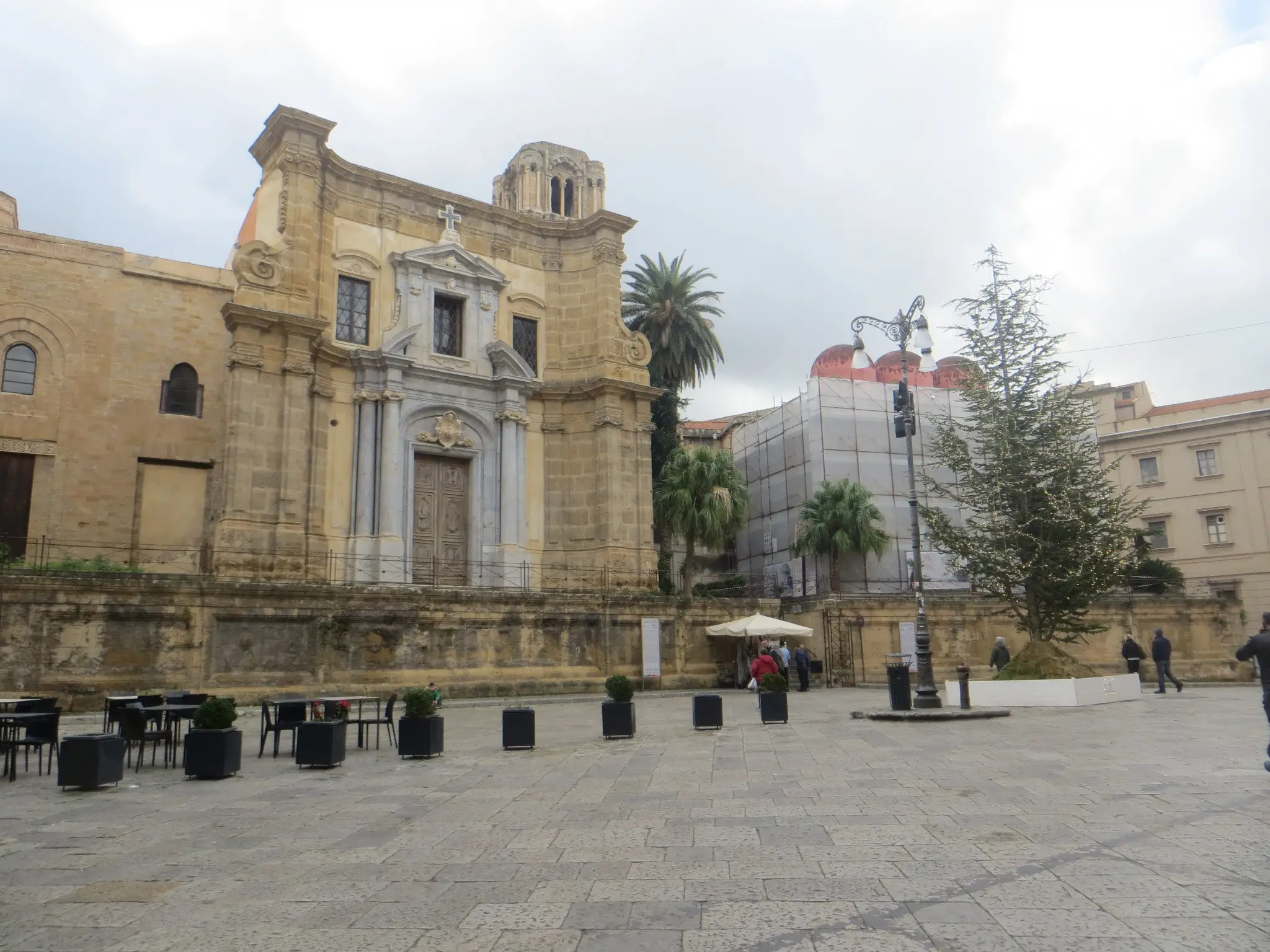
Immediately beside La Martorana stands San Cataldo, with three red domes and a surprisingly severe façade that clearly shows Islamic architectural influences. Over its long history it has served some unlikely purposes. For a time, it was even a post office. And one more detail: the distinctive dark-red coating on the domes was applied during a restoration completed in 1885. So the colour everyone now associates with the building isn’t an untouched survival from Norman times.
The square also contains Santa Caterina d’Alessandria, a Baroque church and former convent. If I could enter only one of the churches here, I would choose La Martorana for its mosaics. La Martorana and San Cataldo form part of UNESCO-listed Arab-Norman Palermo. The historic Teatro Bellini has borne the name of the composer Vincenzo Bellini since 1860.
Piazza Bellini and Piazza Pretoria are only a few steps apart. Yet the sight that awaits you is quite different: an enormous Renaissance fountain that seems to fill almost the entire square. And it wasn’t even made for Palermo. Francesco Camilliani created it in the sixteenth century for a villa in Florence. When the owner ran into financial trouble, the fountain was sold to the Palermo authorities, taken apart, shipped to Sicily and reassembled here. Accounts of that extraordinary undertaking mention no fewer than 644 pieces. Some surrounding buildings even had to be demolished to make room for it.
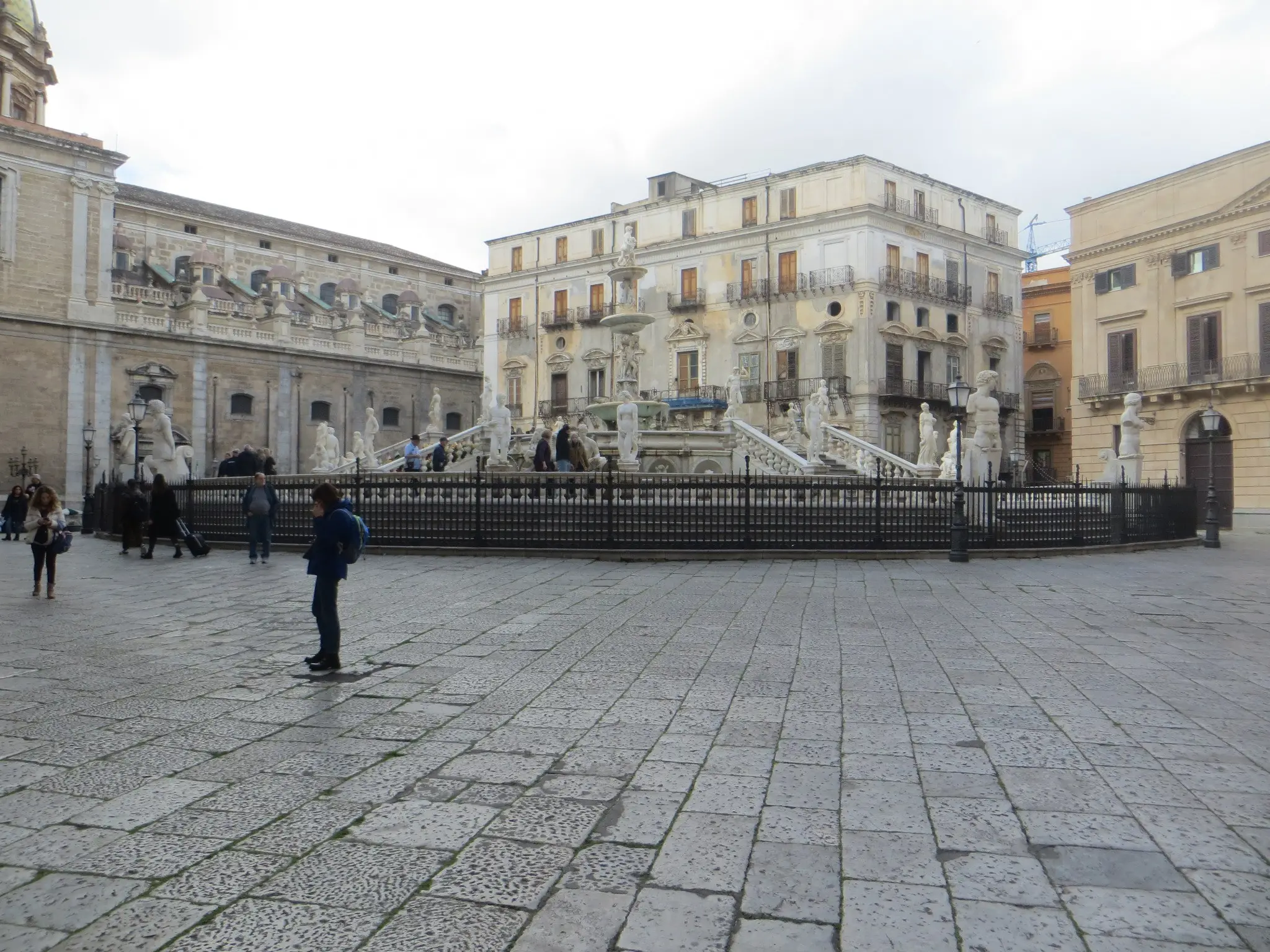
The fountain is crowded with gods, mythical creatures, animals and figures representing the Oreto, Papireto, Gabriele and Maredolce rivers. Quite a few are naked. That is why the square’s nickname, Piazza della Vergogna — the ‘Square of Shame’ — is often explained by the statues’ nudity. There is another explanation, however. The fountain cost the city a fortune at a time of widespread poverty, and by the eighteenth century it had also become a symbol of corruption in local government. City Hall stands right beside it. I can hardly imagine a more appropriate place for that accusation.
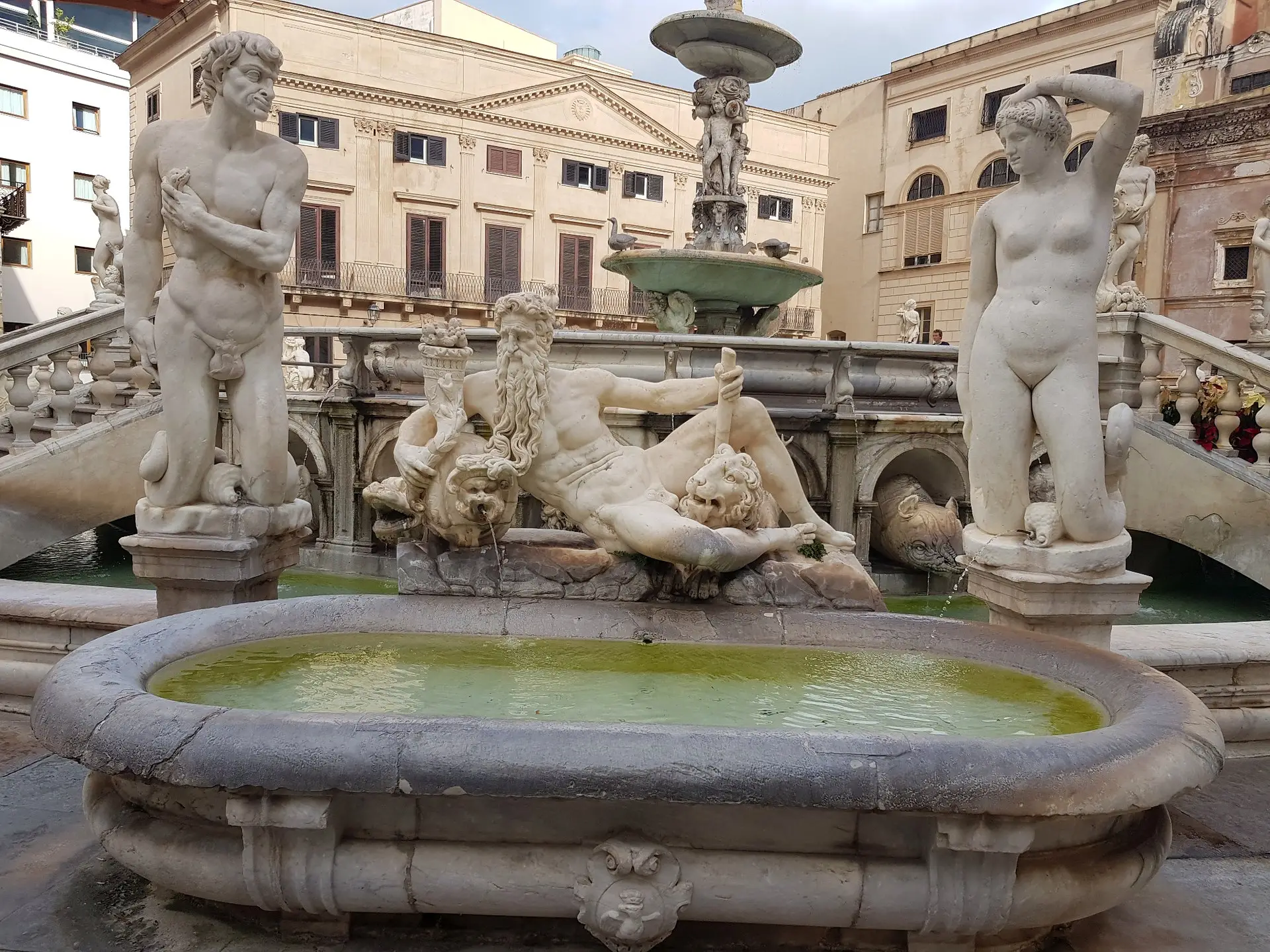
Beside the fountain is Palazzo Pretorio, Palermo’s city hall, whose origins go back to the Middle Ages. Its name comes from the praetor, a former city official. From here, return to Via Maqueda and continue for a few steps. Where it meets Corso Vittorio Emanuele, you’ll find Quattro Canti, the ‘Four Corners’, officially Piazza Vigliena. Created in the early seventeenth century after Via Maqueda was cut through the old city, its four concave Baroque façades are decorated with fountains, allegories of the seasons, Spanish kings and Palermo’s patron saints. Together, they form an almost octagonal space in which the Baroque vision of a city can be appreciated without entering a single building.
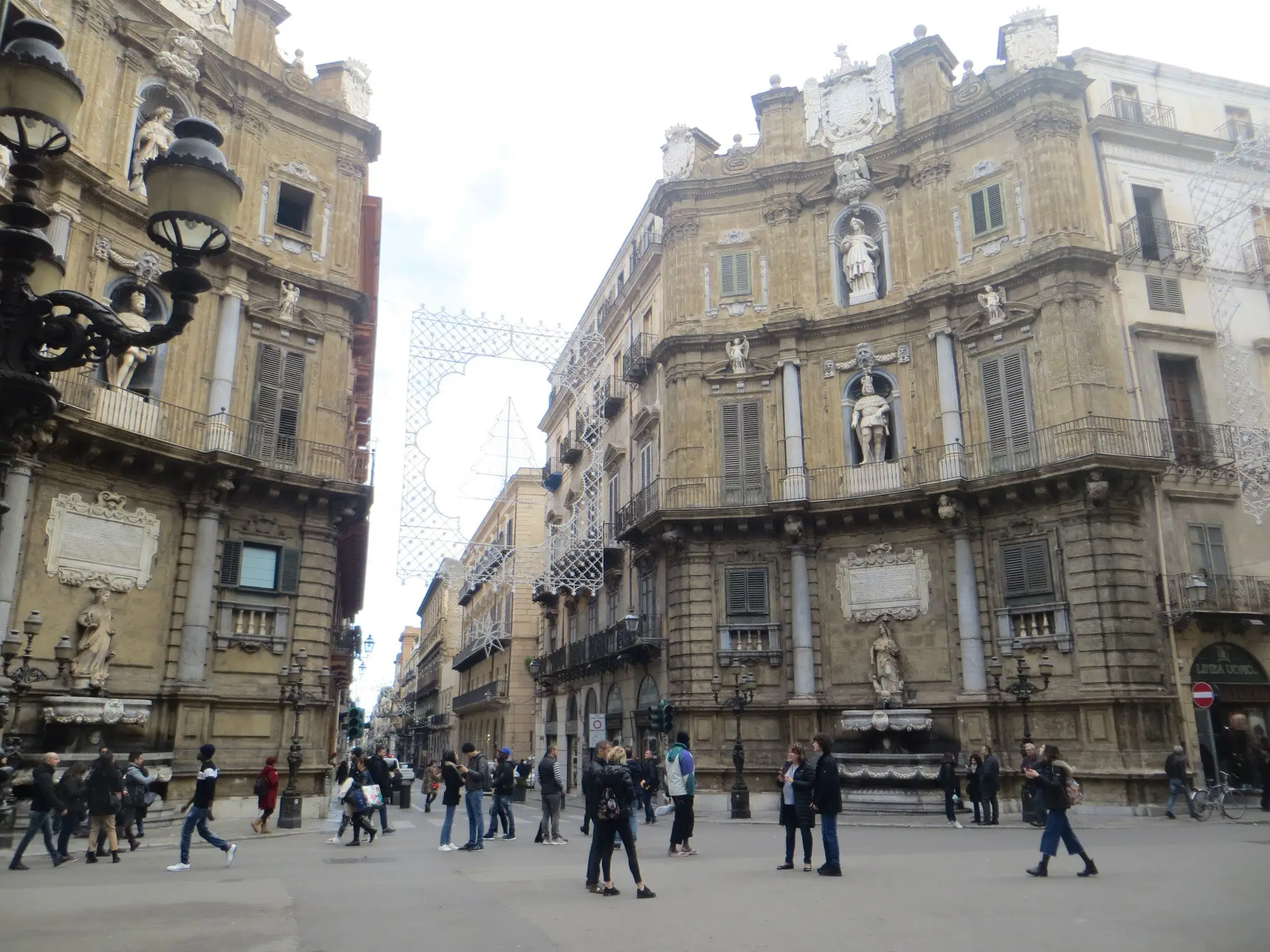
From here, the four historic quarters — La Kalsa, Albergheria, Capo and La Loggia — suddenly make sense. Corso Vittorio Emanuele, once called the Cassaro, connects the harbour with the Norman Palace. Via Maqueda cuts across it. After the jumble of streets we’ve just walked through, the symmetry of Quattro Canti is almost startling. Follow Corso Vittorio Emanuele west towards the cathedral.
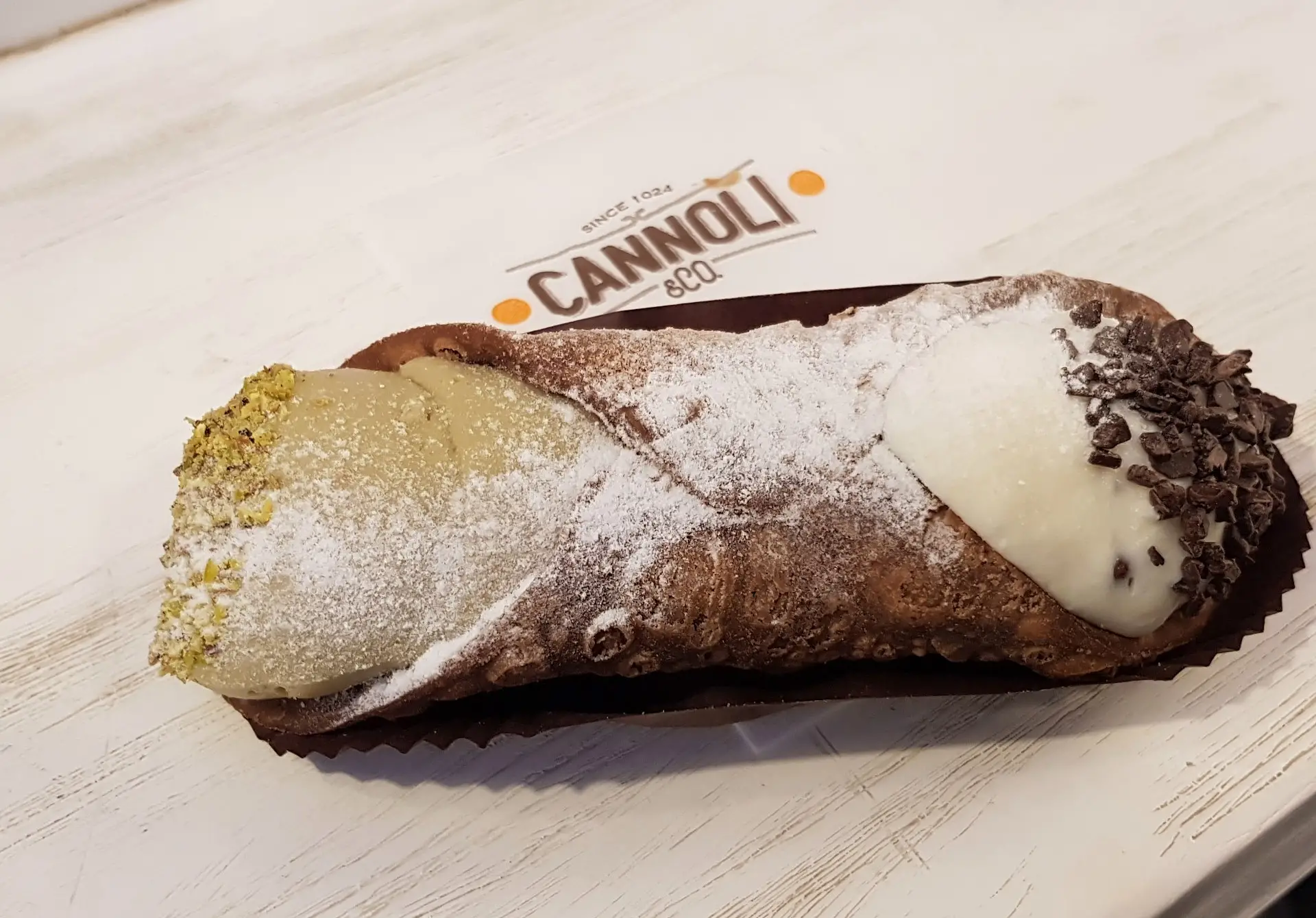
As you continue along Corso Vittorio Emanuele, I would stop for something that has absolutely nothing to do with architecture: a cannolo, a crisp fried pastry shell filled with sweet ricotta cream. In 2019, I took a break here for a cannolo and a cappuccino, then repeated the exercise with pistachio filling. There is only so much disciplined sightseeing a person can do in Palermo.
The cathedral and Norman Sicily
On the south side of Palermo Cathedral is a porch with three pointed arches, built in the fifteenth century in the Catalan Gothic style. There are richly carved doorways and little towers, while the eastern apses feature geometric decoration in stone and dark lava. The whole building feels almost like a fortified palace. One column of the southern porch preserves an Arabic inscription containing a passage from the Quran — a reminder of the mosque that once stood here. I would walk all the way around the cathedral; looking at just one façade means missing half the story.
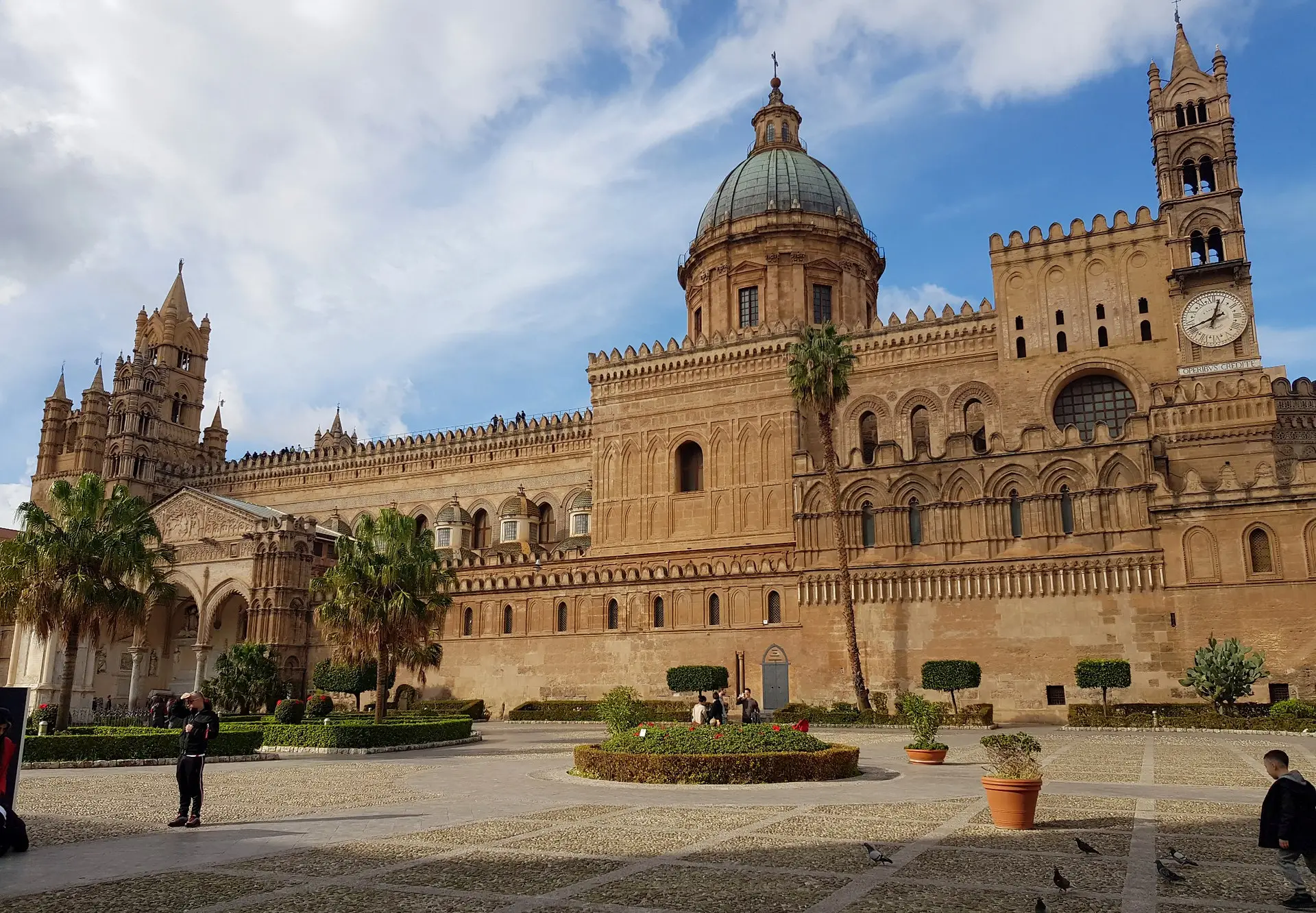
The cathedral belongs to a different chapter in the city’s history: it was founded in Norman times, but what we see today is the result of many later additions and alterations. Its Norman core dates from the twelfth century, with Gothic and Renaissance features added over the centuries; the great dome came still later. It is difficult to assign the cathedral to a single style, and that is precisely what makes it so interesting. An earlier Christian church stood here and was converted into a mosque under Arab rule. After the Norman conquest, it was returned to Christian worship. Roger II, Sicily’s first king, was crowned here in 1130 — but not in the cathedral we see today. The present cathedral was built later, under Archbishop Walter Ophamil, and consecrated in 1185. It is an easy distinction to miss.
Inside, major reconstruction between 1781 and 1801, following Ferdinando Fuga’s plans, produced a Neoclassical space and monumental dome. The cathedral contains royal tombs, including that of Frederick II, as well as a treasury. Roof visits may also be possible with the appropriate ticket.
Continue along Corso Vittorio Emanuele towards Piazza della Vittoria and the neighbouring Villa Bonanno, a park laid out in the early twentieth century. The area around today’s square was one of Palermo’s earliest inhabited sites, going back to Phoenician-Punic times. Later rulers developed their residences around this oldest fortified part of the city. Beyond the park stands the Norman Palace (Palazzo dei Normanni), built over older fortifications and an Arab rulers’ residence. After the Normans conquered Palermo in 1072, they established their royal seat here. Successive rulers changed the building, but its political importance never disappeared. Today it houses the Sicilian Regional Assembly.
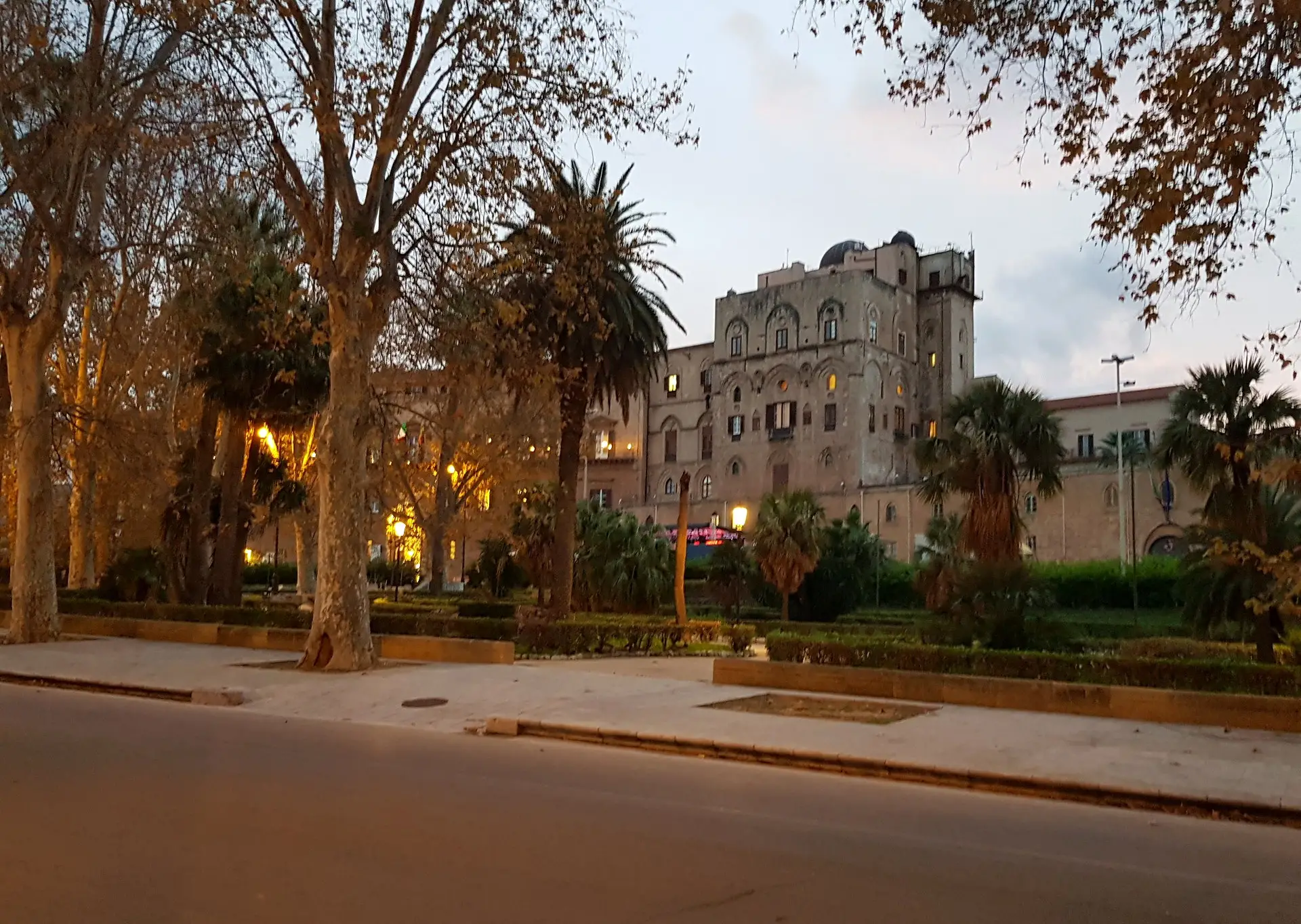
The Palatine Chapel
The main reason to go inside is the Palatine Chapel (Cappella Palatina), commissioned by Roger II. Its Byzantine mosaics, especially the image of Christ Pantocrator, are among the masterpieces of Norman Sicily. But do look up at the wooden ceiling of the nave, with its Islamic decoration and intricate, stalactite-like muqarnas. In the Palatine Chapel, Byzantine, Islamic and Western traditions don’t feel like three separate worlds. They come together in one of the most remarkable interiors Norman Sicily has left us.
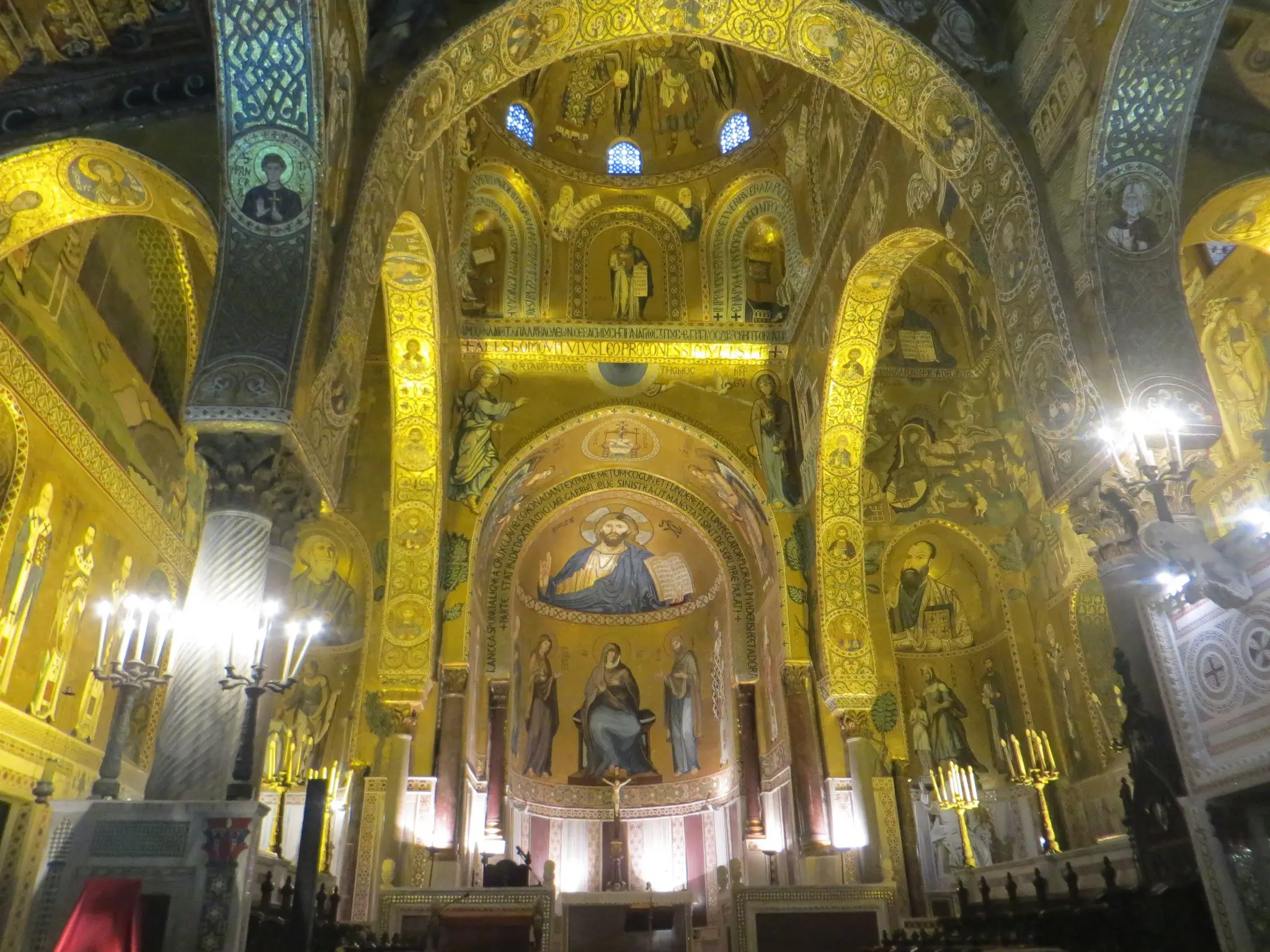
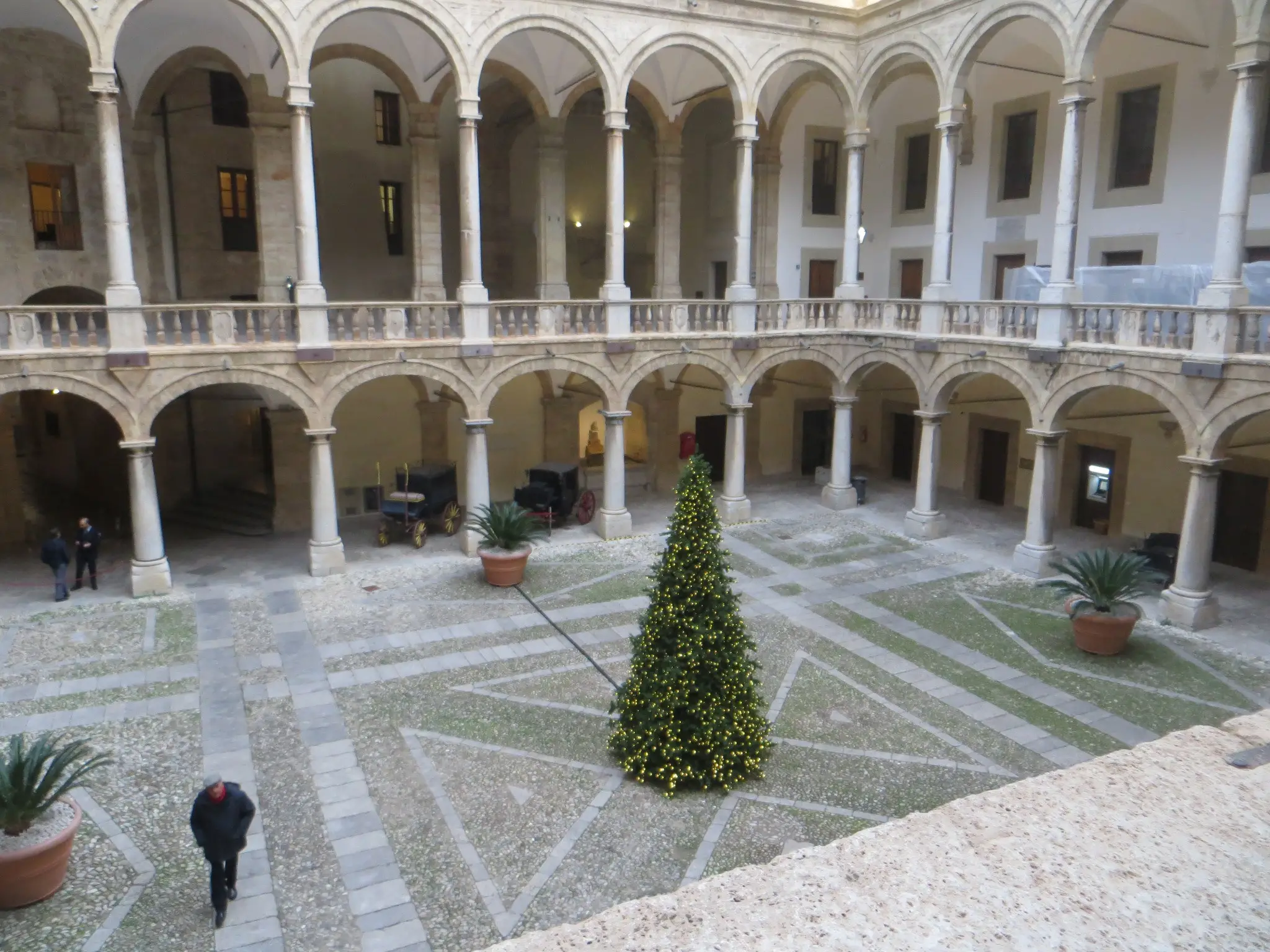
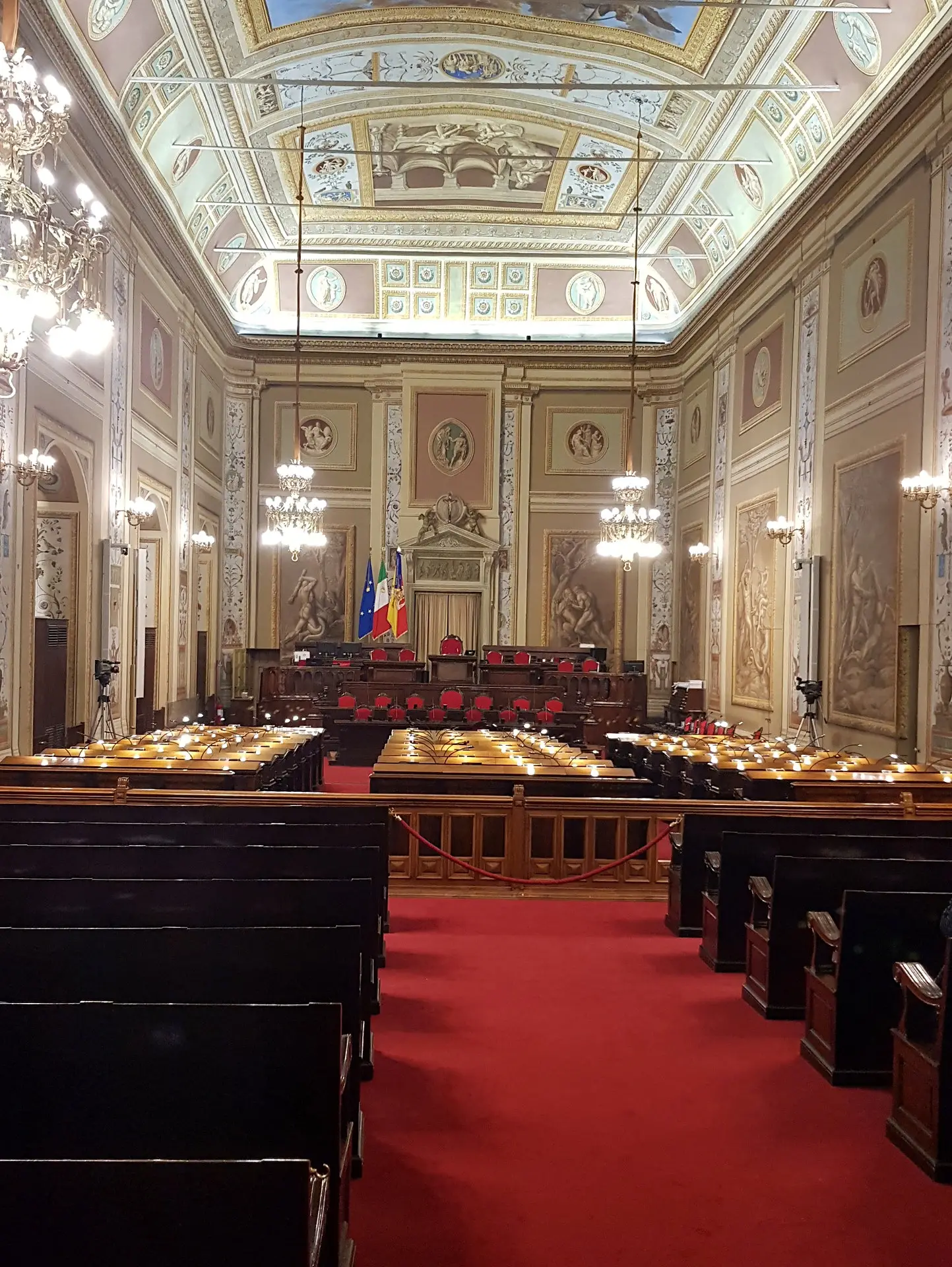
If I had time for just one great interior in Palermo, I would choose the Palatine Chapel. Besides the chapel, a visit may include the inner courtyards, rooms such as the Sala di Ruggero and Sala d’Ercole, where the regional assembly meets, and temporary exhibitions. Allow at least an hour for the chapel and the accessible parts of the palace, often more. Opening times can change, particularly on Sundays, and the assembly’s business can affect which rooms are open.
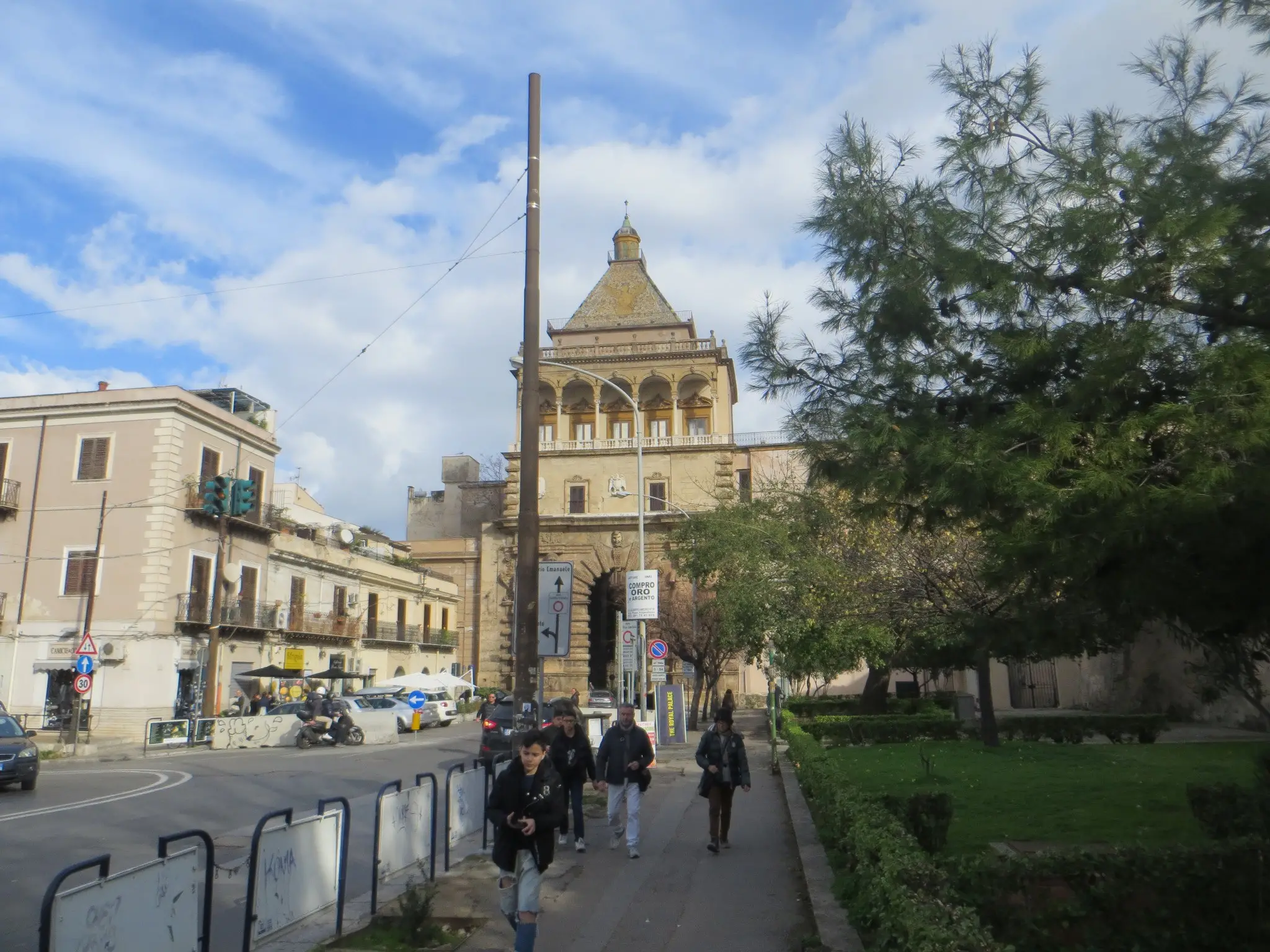
Beside the palace stands Porta Nuova, a monumental gateway associated with Charles V’s entry into Palermo in 1535 after his campaign in Tunis. Most of what we see today dates from the second half of the sixteenth century, although the gateway was rebuilt after a gunpowder explosion in 1667. Its façade is decorated with telamons — enormous male figures representing conquered Moors.
South of the palace, along Via dei Benedettini, is San Giovanni degli Eremiti, a Norman church with five red domes on a site with both Christian and Islamic history. Its austere geometry makes the influence of Islamic architecture particularly clear.
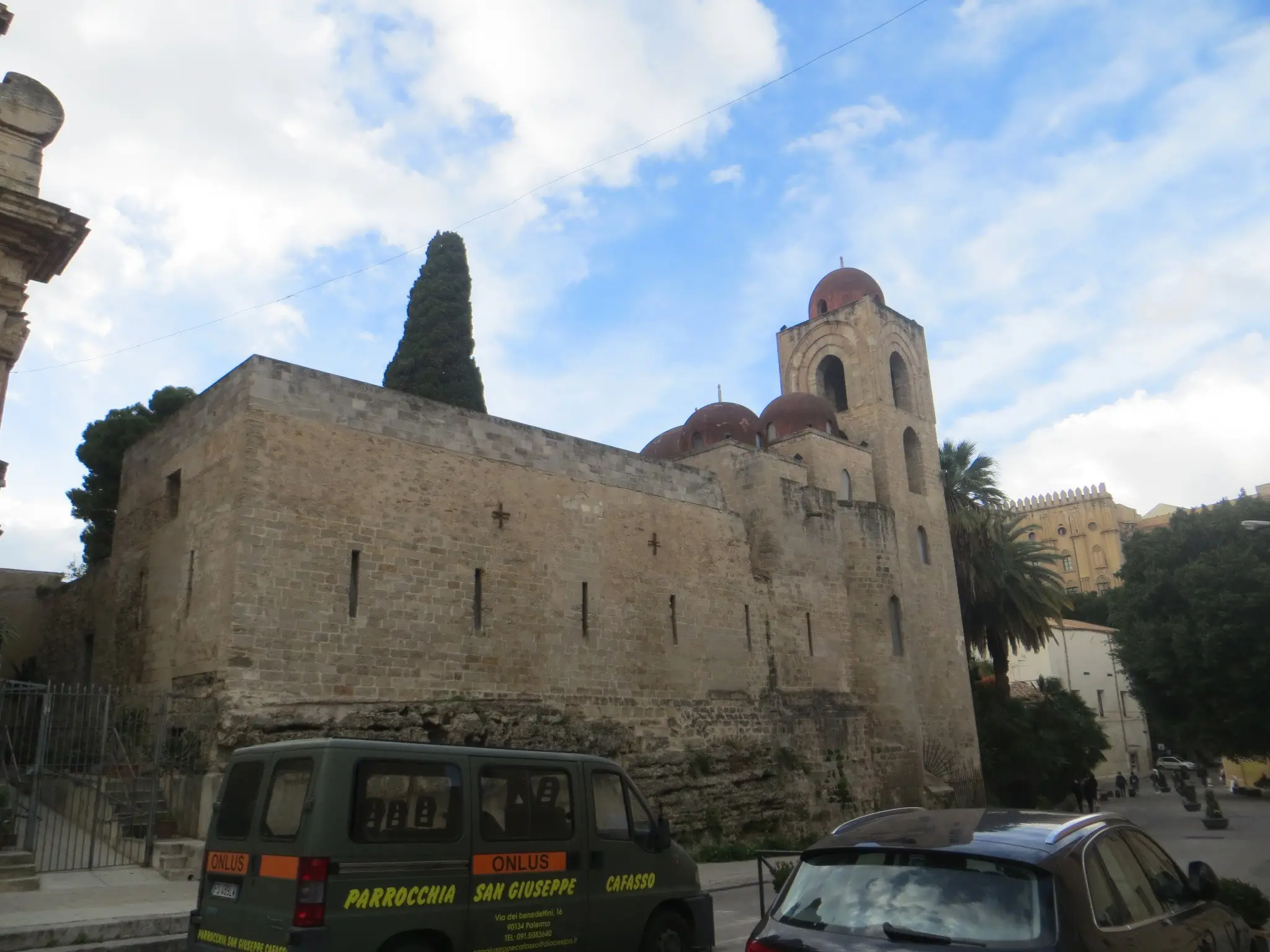
You can visit San Giovanni degli Eremiti and its cloister, a courtyard surrounded by covered walkways, when they are open. If you’ve already spent a long time inside the palace, even a look from outside is worthwhile. From here, head towards Porta Carini and the Capo market before continuing to Teatro Massimo. But there is a catch: Capo is at its liveliest in the morning. By late afternoon many of the stalls may be shut. The neighbourhood is still worth walking through, but don’t expect the full market experience at that hour. If the market itself matters to you, come in the morning, either separately or by rearranging the day’s route.
The theatres and another side of Palermo
Teatro Massimo
On Piazza Giuseppe Verdi stands Teatro Massimo, Italy’s largest opera house and one of the largest in Europe. Its grand staircase, Corinthian columns and triangular pediment make the entrance look almost like an ancient temple. It is a fine expression of Palermo’s nineteenth-century ambitions.
Construction began in 1875 and Teatro Massimo opened in 1897 with Verdi’s Falstaff. Its architect was Giovan Battista Filippo Basile — the same man who designed Giardino Garibaldi earlier in our walk. After his death, his son Ernesto completed the building. Teatro Massimo covers roughly 7,730 square metres, and its auditorium seats nearly 1,400 people. When people call it one of Europe’s largest opera houses, they generally mean the area of the building, not the number of seats.
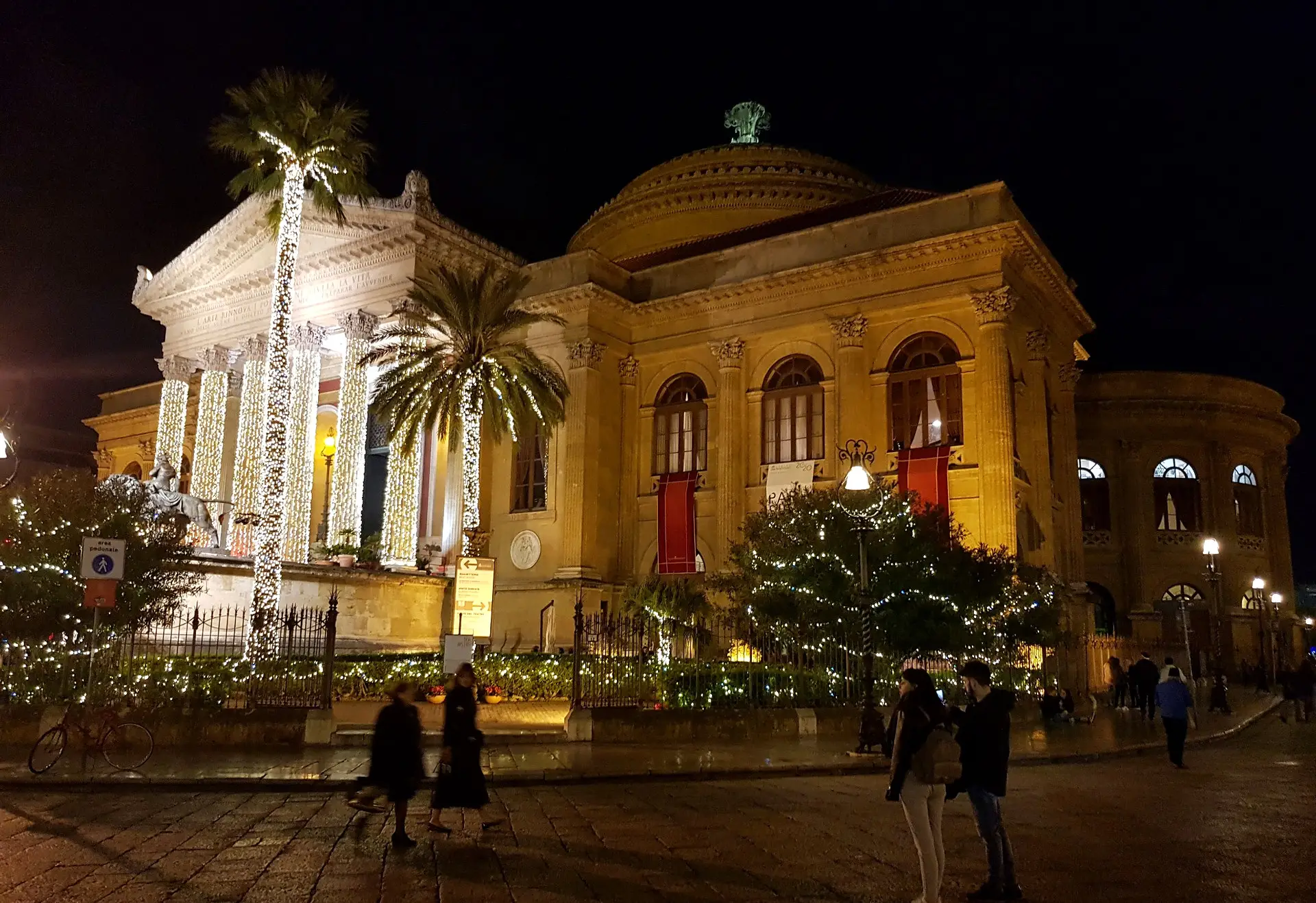
Teatro Massimo is also famous for the final scenes of The Godfather Part III. I saw it from outside, but guided visits to the interior are available.
A short walk down the shop-lined Via Ruggero Settimo brings you to Teatro Politeama Garibaldi. Unlike the grand opera house, Politeama was intended as a multifunctional theatre for a wider public. The project was launched in 1865, construction began in 1867, and the theatre opened unfinished in 1874 with Bellini’s I Capuleti e i Montecchi. Its completion was celebrated in 1891 with Verdi’s Otello, attended by King Umberto I and Queen Margherita. The architect was Giuseppe Damiani Almeyda.
Politeama has a semicircular plan, double colonnades and a triumphal arch crowned by a bronze quadriga, a chariot pulled by four horses. It is now associated with the Sicilian Symphony Orchestra.
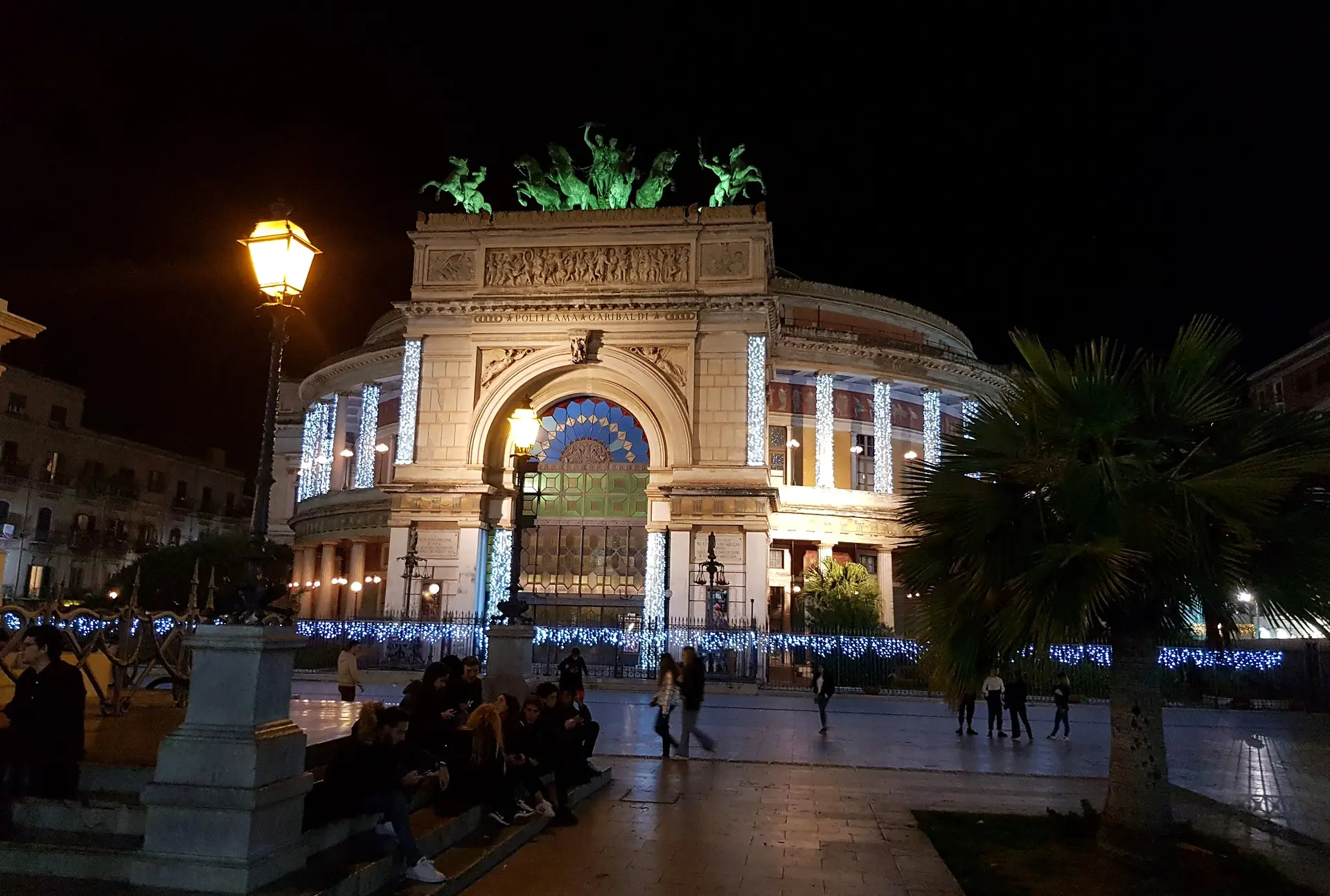
I would finish at Politeama. If you still have the energy, you can carry on along Via della Libertà, lined with trees, shops, elegant townhouses and examples of Italian Art Nouveau (stile Liberty). With its wide pavements and shop windows, it is sometimes compared to the Champs-Élysées. This part of Palermo developed during the nineteenth century and its architecture is tied to the rise of wealthy families such as the Florios. Compare it with the old harbour and the streets of La Kalsa and you might wonder whether you’re still in the same city. You are. And all of it can be seen in a single walk.
If you want to follow this walk
How to use the maps
The four sections below have their own linked maps. The times refer to walking only, without visits or long stops, so allow extra time for any interiors you plan to see. The point isn’t to reach Politeama as quickly as possible. It is to reach the places you want to explore while there is still time to go inside.
Four stages, with maps
Open the map for the section you are currently walking.
- From La Cala, first walk to Porta Felice; then follow Porta Felice – Piazza Marina – Palazzo Abatellis – Spasimo – Orto Botanico. Allow 35–50 minutes of walking in total, passing through La Kalsa on your way to the botanical garden. Visiting the gallery or garden requires extra time.
- Orto Botanico – Palermo Centrale – Ballarò – Casa Professa – Piazza Bellini: 35–50 minutes of walking. Leave time for Ballarò and food; morning is best.
- Piazza Bellini – Piazza Pretoria – Quattro Canti – Cathedral – Norman Palace: 25–35 minutes of walking. This short stage may take much longer when visiting interiors. Check Palatine Chapel access first.
- From the Norman Palace, walk to Porta Nuova; then use Porta Nuova – San Giovanni degli Eremiti – Capo – Teatro Massimo – Politeama: 45–60 minutes of walking in total. The route doubles back towards San Giovanni before crossing Capo. Late in the day, Capo may be quiet.
Pacing your day
I would spend the morning around the harbour, La Kalsa and Ballarò, then leave the squares, cathedral and Norman Palace for the second half of the day. If you visit the botanical garden or the gallery at Palazzo Abatellis, you’ll need to sacrifice another interior. Above all, don’t arrive at the Palatine Chapel with only a few minutes left before closing.
Which interiors should you choose?
Beyond the Palatine Chapel, it depends on your interests: La Martorana for mosaics, Palazzo Abatellis for art, Casa Professa for Baroque decoration, the cathedral or Teatro Massimo. If you’re short of time at the cathedral, I would still walk around the entire exterior, especially the eastern apses. You’ll need extra time if you want to see the interior and rooftops. Check visiting hours before setting out. The Royal Apartments are generally unavailable from Tuesday to Thursday, although the Palatine Chapel and Royal Gardens may still be visited. Because the palace houses the regional assembly, access can change.
Orientation and arrival
Corso Vittorio Emanuele and Via Maqueda are the principal axes of the old city. If you take the train from Falcone–Borsellino Airport, you can get off at Palermo Centrale and walk to La Cala. Use a map in smaller streets, watch out for cars and scooters, and check the ZTL restricted-traffic rules if arriving by car.
What about Sundays?
If the Palatine Chapel is your main priority, arrange the day around its current visiting hours and start at the Norman Palace. See Porta Nuova and San Giovanni degli Eremiti, then descend past the cathedral, Quattro Canti, Piazza Bellini (La Martorana normally holds Mass rather than tourist visits on Sundays) and Ballarò, finishing at La Kalsa and the harbour. Leave the theatres for a later walk. This reverses the main route, but avoids arriving at a closed chapel. Some market stalls also operate shorter hours on Sundays.
One more way through the city
If you’re heading back towards Palermo Centrale, consider walking along Via Roma. I took that route the following morning and particularly remember the monumental Palazzo delle Poste, with its tall columns, designed by Angiolo Mazzoni in the first half of the twentieth century. It isn’t a compulsory stop on this walk, just another possibility if you have time.
If you are staying longer
If you have a second day, I’d consider Palazzo della Zisa, another Norman residence with Islamic influences; the two oratories of San Lorenzo and Rosario di Santa Cita, with decorations associated with Giacomo Serpotta; and the Antonino Salinas Archaeological Museum. The Capuchin Catacombs, with their displayed human remains, are a very particular experience and certainly not for everyone. Outside the centre are Monte Pellegrino, with the shrine of Saint Rosalia, and Mondello, Palermo’s famous seaside resort. Monreale and Cefalù also deserve more time than I originally gave them.
If you are especially interested in markets
The final stage crosses Capo, near Immacolata Concezione church. You can also explore La Loggia and the old Vucciria, parts of which are livelier in the evening. To fit these in, shorten another stop.
For current opening hours and tickets, consult Palermo’s tourism portal, Fondazione Federico II for the Norman Palace, the cathedral website, Palazzo Abatellis gallery, and Teatro Massimo. For trains use Trenitalia. What was true during my visit in 2019 may not be true when you read this.