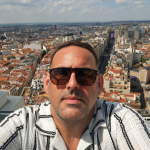
“I expected the Sicily I knew from the movies. I found it. But I also found a completely different Palermo, one I could never have imagined.”
I’d been planning a trip to Sicily for years. The problem was that it fascinated me almost as much as it frightened me. In my mind, Sicily was practically synonymous with the Mafia. I imagined crumbling towns where shoot-outs were part of everyday life and danger lurked around every corner. The curious thing was that what frightened me was also precisely what drew me in. That world of gangsters and organised crime I knew from the movies, that danger which looked so exciting on screen but which I had absolutely no desire to experience in real life. Part of me wanted to see it all for myself; the more sensible part suspected that might not be such a good idea.
I’m still a little ashamed of how little I knew about Sicily. I knew next to nothing about the Normans, Greek temples or the Baroque. And, rather more embarrassingly for a mathematician, although I knew Archimedes came from Syracuse, I had no idea Syracuse was in Sicily. I was convinced it was somewhere in Greece. Whether I had forgotten all that or simply failed to pay attention at school hardly matters. The fact is that the Sicily I had imagined and the Sicily I was about to discover were two entirely different worlds.
I’d booked the flights, the hotels and a hire car. That was more or less the extent of my preparation. I discovered everything else along the way. Each evening I would read up on what awaited me the next day, decide what I wanted to see, and then, without fail, stumble upon something I had never even heard of. Looking back, I am genuinely proud of that journey. I travelled around practically the entire island, learned a tremendous amount, and, best of all, every new town and every bit of research showed me just how much I still did not know. The more I discovered Sicily, the more it surprised me.
It was my New Year holiday, at the turn of 2019 and 2020. I began in Palermo, arriving on the evening of 26 December on a flight from Verona. The flight was pleasant enough, though I spent most of it wondering how on earth I was going to get from the airport to the city. A taxi would have been the obvious choice, but the Sicily of my imagination insisted that the driver would rob me and dump me somewhere along the road. I find that ridiculous now, but I certainly did not find it funny at the time. The fear was completely irrational, yet strong enough to make me abandon the taxi idea and opt for public transport instead.
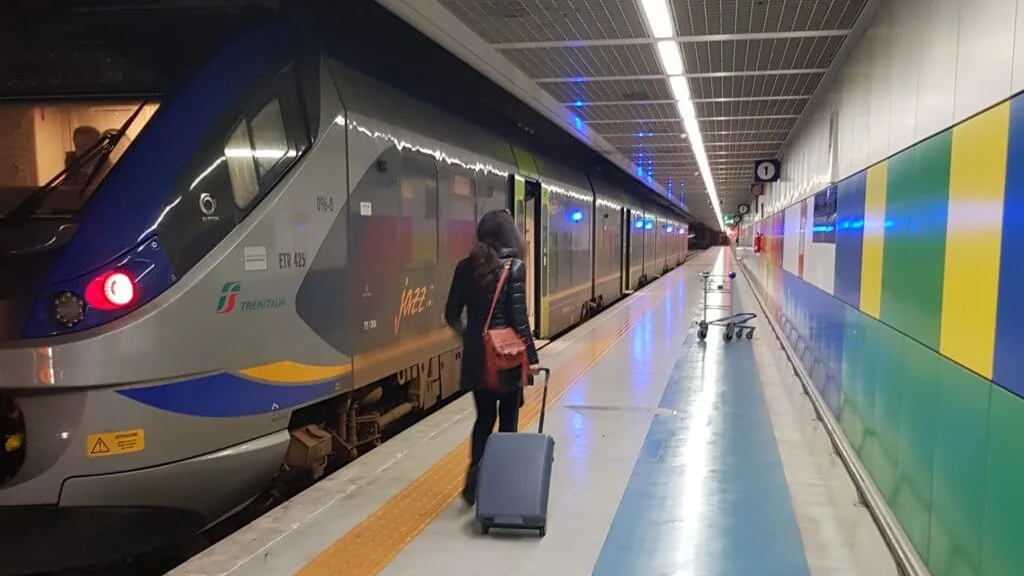
And that was where my first surprise came. There was a train from the airport to Palermo. Clean, tidy and on time. Nothing extraordinary, you might say, but for someone who, barely an hour earlier, had been picturing himself as the victim of a Sicilian taxi driver, it was a revelation. The Sicily in my head had begun to fall apart, slowly making room for a very different one.
And all this before I had even reached Palermo.
Functional Chaos
When I’m travelling somewhere I consider exotic—and at the time Palermo certainly qualified—I tend to favour a familiar hotel chain over a small independent one. Unfortunately, there was no Marriott, so I settled on the Mercure Palermo Centro. It was in the more modern part of the city centre, not far from Via Cavour and the Politeama theatre. The price was fantastic. And being part of a big chain gave me a certain sense of security. The room itself turned out to be thoroughly average. Neither its size nor its decor was particularly to my taste, but I had no intention of spending much time in it anyway.
Given the hotel’s location, it made sense to get off at Lolli station rather than continue to the main railway station, where the line terminated. From Lolli, I still had a walk of about a kilometre and a half to the hotel.
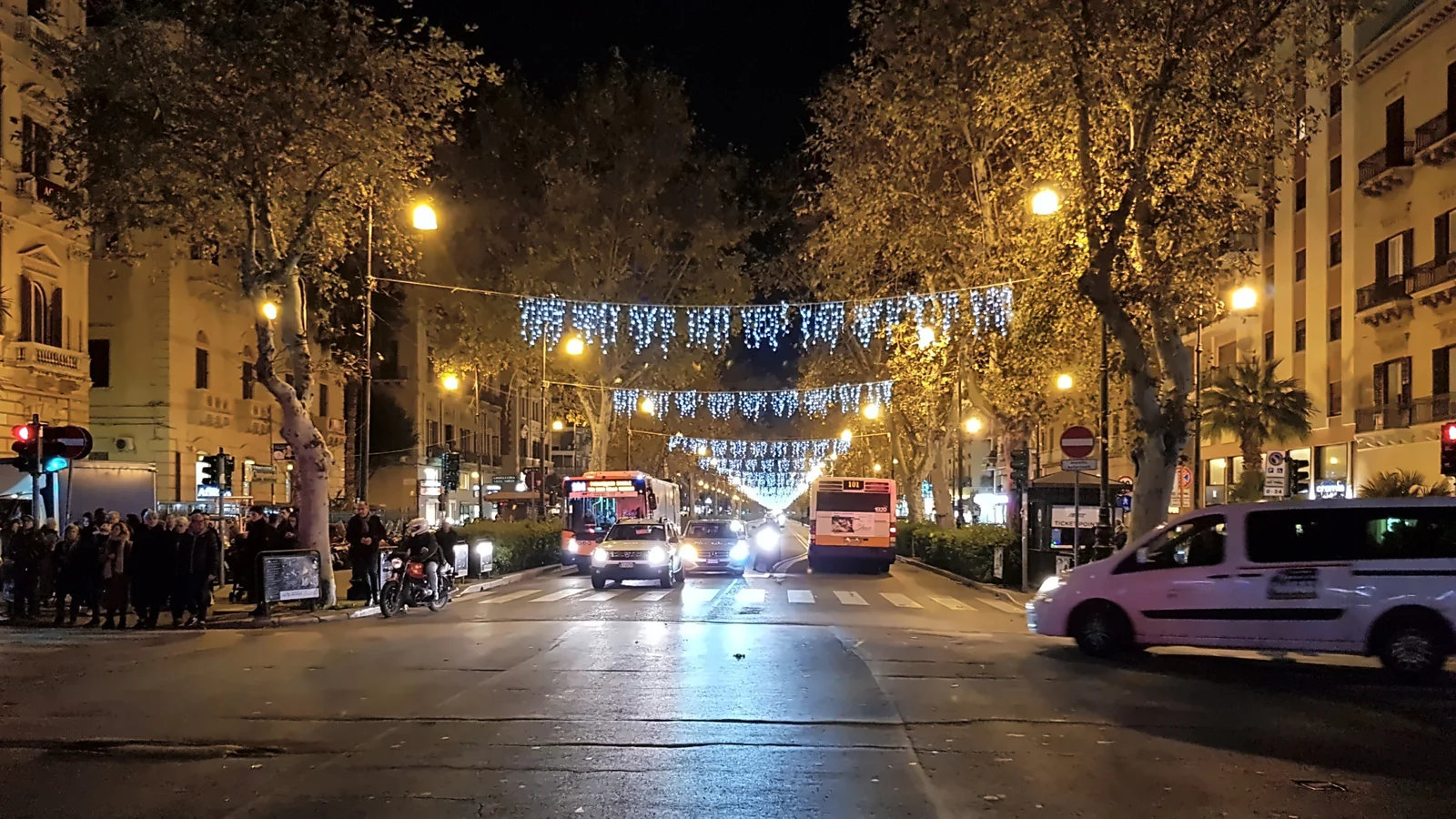
Along the way, I began to discover Palermo’s true character. Cars were parked wherever their owners had managed to squeeze them, often so close together that you could barely get between them. Traffic lights and pedestrian crossings existed, but sometimes seemed more like helpful suggestions than actual rules. Somehow, though, the traffic kept moving. Nobody appeared particularly upset and, perhaps most surprisingly of all, I felt perfectly safe. Functional chaos. I cannot think of a better description.
Checking into the hotel was surprisingly quick. At least with my receptionist. At the desk next to mine, an entirely different drama was unfolding: German precision colliding head-on with Sicilian nonchalance.
A German couple had booked a room of very specific dimensions and had been given one that differed slightly. I no longer remember what the difference was, only that it wasn’t large. But there was a difference. And they had done the maths. For the Germans, this was a serious problem. They were visibly distressed, while the Sicilian receptionist simply could not understand what all the fuss was about.
I was tempted to stay and see how this clash of cultures ended. Slightly voyeuristic, I admit. But hunger won, and I never found out who had the last word.
How to Almost Go Without Dinner in a City Full of Restaurants
I first tried to have dinner at the hotel. I could have put up with the wait for service, but when the waitress finally appeared it turned out that every dish I was interested in had sold out. Back I went to reception. Fortunately, my efficient receptionist was still there and immediately recommended a few nearby restaurants.
The first was Bebop, a somewhat more sophisticated place offering modern interpretations of traditional recipes. It sounded promising. There were empty tables, yet I waited almost five minutes for somebody to show me where I could sit. Then another fifteen minutes for a menu. Twenty more minutes passed and nobody came to take my order. The restaurant had just eight tables and two waitresses, but only one was taking orders. Why? I had no idea, and I had no intention of waiting around to find out. I got up and left. I don’t think they even noticed.
My next attempt was Klikò, a restaurant serving more traditional food. Getting a table was easy enough, but the system seemed strangely familiar. Two waitresses, a lot of waiting, and only one taking orders. By then I was beginning to suspect this wasn’t a coincidence. It was a system I would have to get used to in Sicily. I decided to stay and wait. Otherwise, judging by how the evening was going, I would have ended up without dinner altogether.
I ordered pasta alla Norma and cassata al forno. The pasta, with tomato, fried aubergine, salted ricotta and basil, was simple but absolutely phenomenal. So good, in fact, that I ordered it several more times during the rest of my trip. I was particularly amused by its connection with Bellini’s opera Norma, whose title role is considered one of the most demanding in the soprano repertoire. According to the story, Nino Martoglio, a playwright from Catania, was so delighted by the dish that he exclaimed it was a real ‘Norma’, comparing it to Bellini’s masterpiece. At least, that is the best-known explanation of how the pasta got its name.
Only later did I learn that Norma had premiered at La Scala in Milan on 26 December 1831. And I had my own premiere of pasta alla Norma on 26 December 2019, exactly 188 years after the opera’s first performance. Even if I’d planned every last detail of this trip, I doubt I could have arranged that.
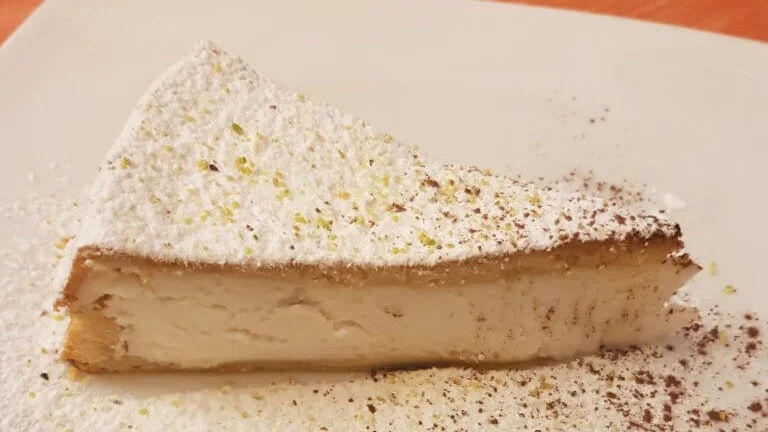
Cassata al forno was another pleasant discovery. A baked dessert made with shortcrust pastry and filled with ricotta cream, rather like an enclosed cheesecake. Later I also tried the better-known chilled cassata, with marzipan and candied fruit, but the baked version remained my favourite.
The story of Klikò, however, took another entirely unexpected turn many years later. While preparing this travelogue, I discovered that the company running the restaurant had been seized back in 2016 as part of anti-Mafia proceedings. In February 2020, less than two months after my dinner, it was reported that the confiscation order concerning businessman Giuseppe Citarda’s assets had become final. The proceedings stemmed from investigations into money laundering linked to the Sicilian Mafia.
So there I was: the man who had been so terrified of a Sicilian taxi driver on the plane, calmly eating pasta on his very first evening in a restaurant whose operating company had already been seized by the courts in an anti-Mafia case.
And the food was excellent.
Contrasts
My first day in Palermo ended, to put it rather bluntly, in a gastronomic orgasm. The second day began in much the same fashion. I got up early. By 6.30 I was already having breakfast. The hotel restaurant, which had let me down so badly the previous evening, more than made up for it in the morning. Despite being part of a chain hotel, it offered an excellent, varied breakfast full of local food. There were freshly filled cannoli, and I was particularly pleased to see cassata al forno, which I had fallen in love with the night before.
At exactly seven, I set out to explore. I will leave the list of sights for another story; what interests me here is the city’s character. Or, more precisely, what seemed to me the very essence of Palermo: Kalsa. What I remember most about Kalsa are its contrasts. Ruins stood between restored houses; a woman in a fur coat walked past residents who were clearly not well-off; beautifully kept squares existed alongside others strewn with rubbish. Some of those ruins were a legacy of the Allied bombing in 1943, whose aftermath shaped the district for decades. In Kalsa I found plenty of the stereotypical Sicily of films and novels. But that was not the whole of Palermo. In other parts of the city, which I explored later, I found a modern metropolis, albeit one with a rather different attitude to order. Kalsa was another story altogether.
Among all those contrasts were some deeply unsettling scenes. In a small local restaurant, a wake was taking place. The traditional kind, with an open coffin. The man who had died was elderly and, judging by the family’s calm demeanour, his death did not seem to have been unexpected. But stumbling upon such a scene during a morning stroll was quite another matter. It surprised and disturbed me. On more than one level.
In Croatia, you might still encounter a wake like that in some rural areas, though increasingly rarely. In a big city, I could hardly imagine it. But an open coffin in a restaurant? I would not have expected that in Palermo, Rome or Milan. In fact, I would not have expected it anywhere.
I have no idea how common that kind of farewell is in Palermo. Perhaps I stumbled upon something truly exceptional. But of all the contrasts of Kalsa, this is the one that has stayed with me most vividly: life going on as usual in the street, while death waited inside a restaurant.
The Market That Cannot Be Silenced
Next came Albergheria, a district whose multicultural character was visible at every turn. People from different parts of the world, different languages, clothes and customs—all mingled in a shared chaos that somehow seemed to work remarkably well. Italian was just one of the languages I heard, and, at least to my ears, not even the most common.
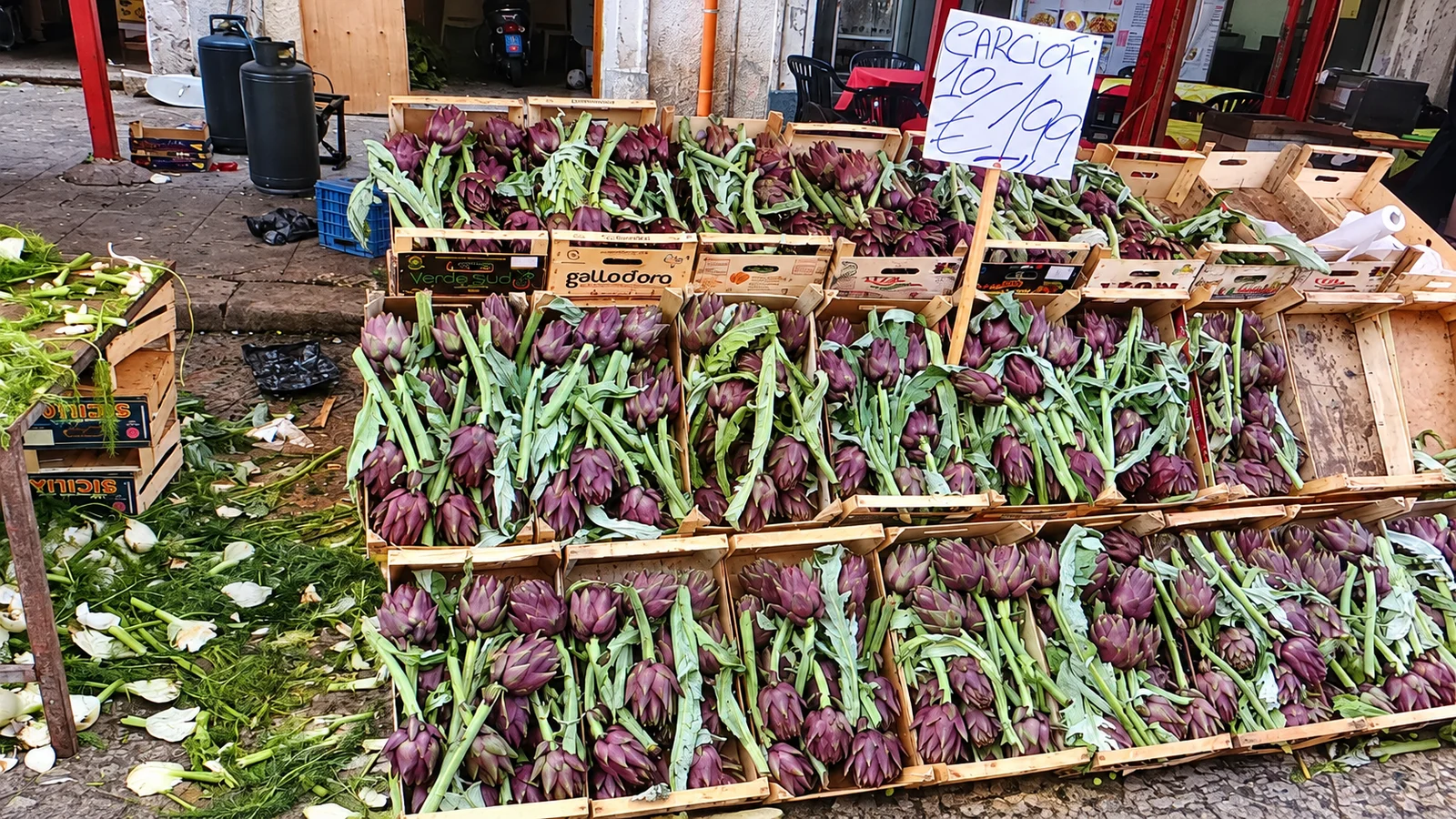
Soon I heard something that could not possibly be mistaken for ordinary city noise: market traders shouting out their wares at the top of their lungs. I had reached Ballarò. Frankly, I had no idea what language they were shouting in, let alone what they were saying. These traditional calls are known as abbanniate, shouted in the Palermitan dialect, which even other Italians often struggle to understand. The traders were loud and seemed almost aggressive from a distance, but when I actually spoke to them they were helpful and friendly.
Colours, smells, voices, enormous broccoli, artichokes, fruit, fish and seafood—the market was quite a spectacle. What surprised me that morning was that there was relatively little ready-to-eat food, at least in the part I visited. Plenty of guidebooks portray Ballarò as somewhere tourists can eat well, but that was not my experience. Experience Palermo? Absolutely. Turn up hungry and expect a proper lunch? I wouldn’t bet on it.
Another Side of Palermo
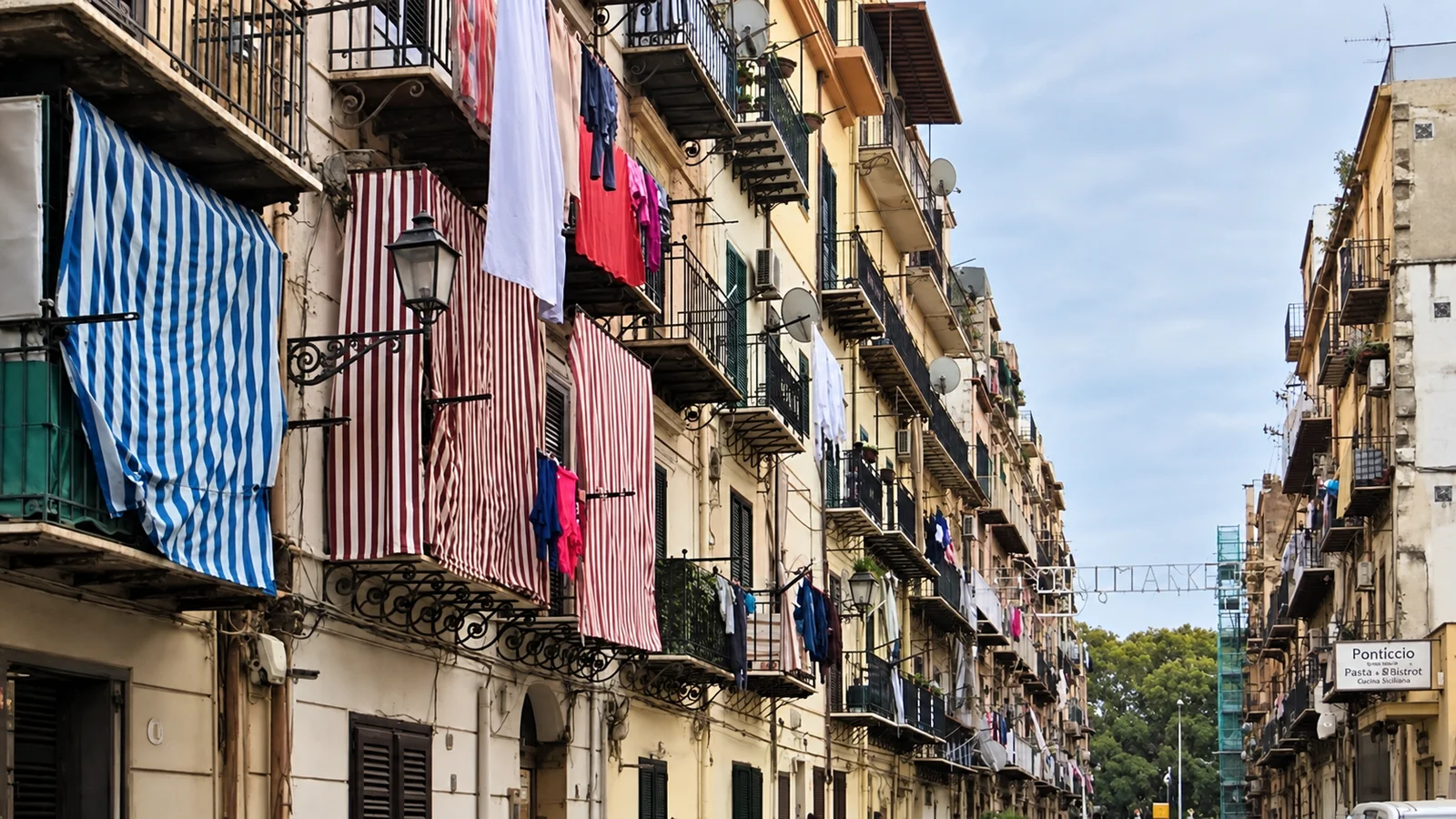
Kalsa surprised me, and not just once. An open coffin in a restaurant was certainly not something I had expected to see. Yet its ruins, its contrasts and its slightly rough everyday life still fitted, to some extent, the image of Sicily I had carried around in my head for years. Much the same was true of Ballarò. I had no idea exactly what I would find there, but that noisy, slightly chaotic Palermo was not so far removed from what I had imagined.
And then I discovered another side of the city.
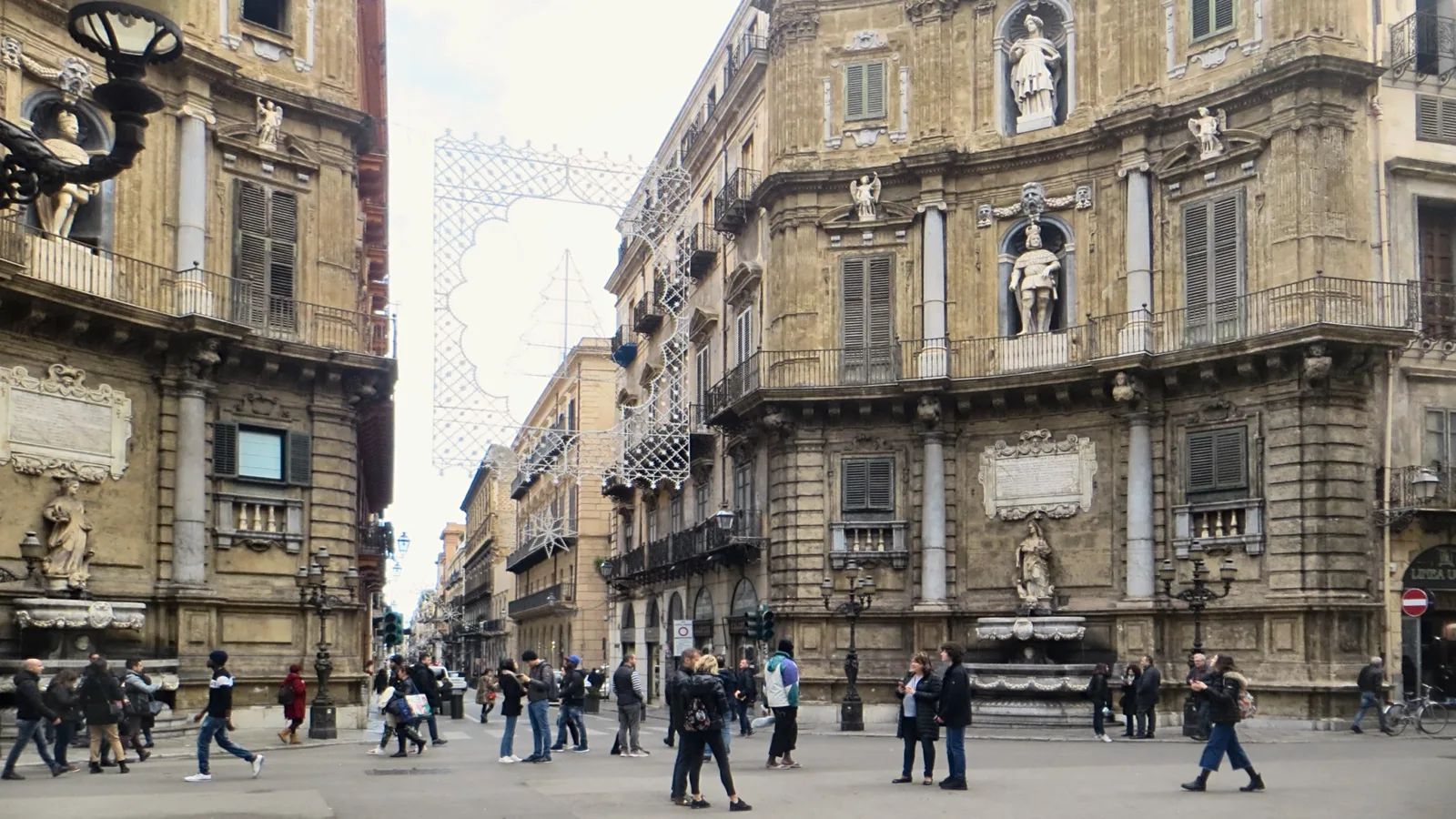
A Palermo of old palaces, magnificent façades and an unexpected sense of peace. Refined, dignified, almost elegant. A city that seemed to have nothing in common with the one I had been walking through only a short while earlier.
And yet it was the same Palermo.
Norman Grandeur
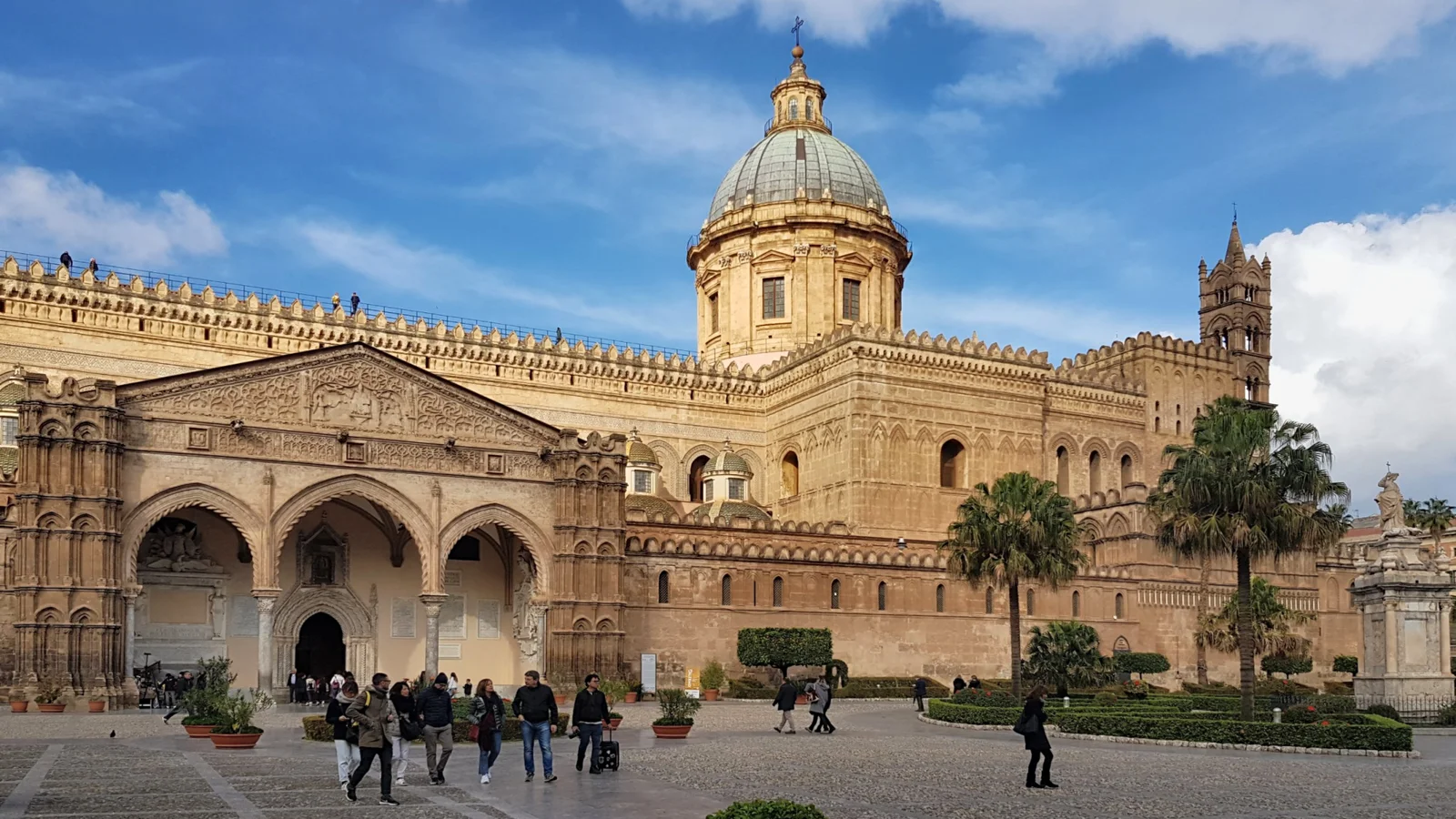
And then the cathedral appeared in front of me. And it knocked me on my arse.
Don’t ask me why. It is not the largest or most lavish cathedral I have ever seen. I’d seen the cathedrals in Milan and Cologne, and St Peter’s Basilica in the Vatican. But this was something entirely different.
That almost orange colour, which I would have expected in Morocco, perhaps, or Verona. That solidity, which reminded me of old churches in England and France. A vast building, yet without the grey severity of Gothic architecture or towers piercing the sky. Somehow everything looked familiar, and yet nothing looked like anything I had ever seen before.
It was ancient, powerful and unbelievably beautiful. As though someone had brought together several different worlds and ended up creating something entirely new.
When I looked into what there was to see in Palermo, Norman art was among the first things I came across. I’m embarrassed to admit I’d never even heard of it. I’ve always been interested in art, so naturally I was intrigued. I just couldn’t for the life of me imagine what it actually looked like. Then I found myself standing in front of the cathedral—Norman at its core—and suddenly I understood.
That was when it finally dawned on me that Palermo had yet another face: monumental, ancient and completely unexpected.
So, What Was My First Impression?
I’m not sure how to answer that. It was not what I had expected, but it was neither ugly nor beautiful. Actually, it was both ugly and beautiful.
Perhaps D. H. Lawrence, the English writer who lived in Sicily in the early 1920s, had already provided part of the answer. In a note accompanying his translation of Giovanni Verga’s Little Novels of Sicily, he referred to travelling by train down the island’s eastern coast towards Syracuse—the very Syracuse I had once failed to realise was in Sicily. He concluded that anyone who had come to know that part of the island would never quite shake off their longing for it. Almost seven years later, I find it hard to disagree.
And the Sicily in my head? It had not entirely fallen apart. Some of it really did exist, but I had also discovered far more than I could ever have imagined. In Palermo I saw ruins alongside splendour, death in the middle of everyday life, and chaos that somehow managed to function.
Perhaps, though, the greatest contrast was me: I had arrived in the city afraid of a taxi driver, and today I would go back without a second thought.