
My first visit to Fes involved an expensive airport lesson, five-star comfort and a guided walk through the medina — where mint became emergency equipment and one hand briefly looked younger.
My first encounter with Morocco was largely organised by other people. The hotel sent a driver to collect me, the concierge persuaded me to wait until daylight before exploring the medina, and a local guide later chose the streets, workshops and places where we stopped. At the time, I was quite happy to let them.
That did not prevent me from making an impressively expensive mistake before I had even reached the hotel. Nor did it stop Fes from surprising me in ways that had very little to do with the usual list of sights.
One more pastel de nata before Morocco
The journey began on 28 December 2018 in Lisbon, after a night that barely deserved to be called one. My flight from Venice had arrived late, and by the time I reached the hotel it was around one in the morning. Spending the next morning in bed would still have felt like wasting Lisbon, so I went out for a short walk through a city I already knew.
There was also a culinary objective: pastel de nata. The little puff-pastry tart filled with egg-based custard remains one of Lisbon’s more convincing reasons for repeated visits, and at the time the Diners lounge at the airport had the additional advantage of serving them in unlimited quantities. I could therefore leave the city, pass security and continue eating Portugal until boarding.
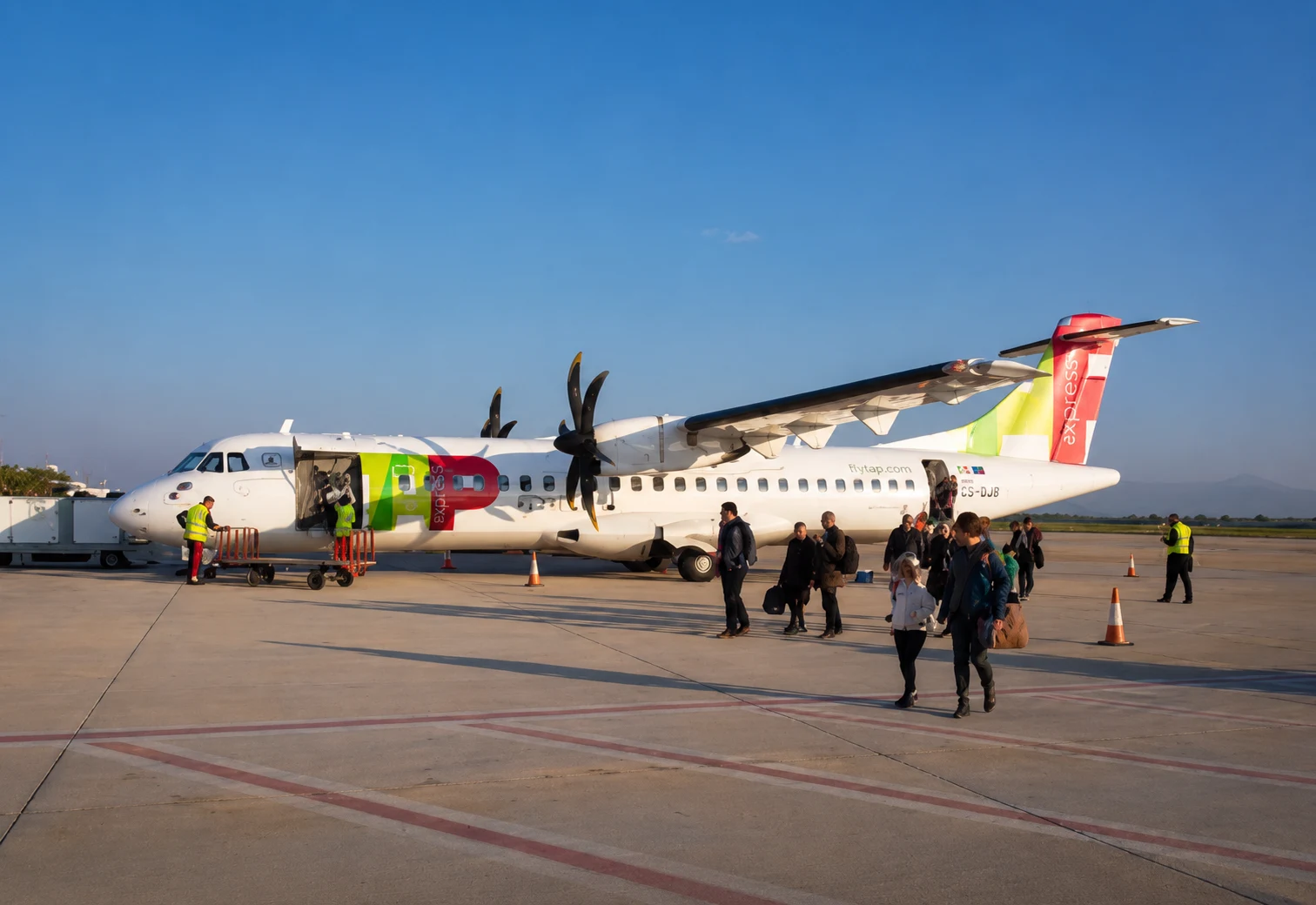
Then I saw the aircraft that would take me to Fes: one of the smallest passenger planes I had flown on until then. Small aircraft do not particularly improve my relationship with turbulence. Fortunately, the flight itself was uneventful.
A few hours later, Europe had disappeared beneath us and my first encounter with Morocco was about to begin.
A €50 lesson at the airport
Fes Airport was surprisingly quiet, with just two aircraft on the apron and serious-looking soldiers guarding the terminal. Immigration was quick. My first real problem was money.
I needed cash for the hotel transfer and expected to need plenty more during the trip. At an airport counter offering cash against a credit card, I withdrew the equivalent of around €300, worried that getting money later might be complicated.
The fee was approximately €50.
It was an impressive piece of financial stupidity. Ordinary ATMs turned out to be readily available in the city and charged vastly less. My first practical lesson in Morocco had cost roughly one sixth of the money I had withdrawn.
Finding the driver was the next challenge. Hotel transfers normally followed a reassuring choreography: leave customs, find somebody holding a sign with my name and get into the car. Fes had apparently decided that such obvious procedures were unnecessary.
Outside the terminal, several taxi drivers were more interested in a board game than in newly arrived passengers. Eventually one offered me a ride. I mentioned my hotel, and another player jumped up and held up a card with my name on it.
Apparently my transfer had been waiting for me all along. I simply had not understood where.
The car was large and comfortable, closer to what European hotels would call a limousine transfer than to the older taxis outside. It cost roughly €20, more than a petit taxi would have, but I felt no urge to find out how cheaply I could travel.
My driver spent much of the journey speaking loudly into his mobile phone. Between calls he repeatedly checked whether I was comfortable. Loud, distracted and extremely polite turned out not to be mutually exclusive categories.
Through the window I caught my first glimpse of Morocco: dry landscape, low buildings, few cars and many of them much older than those I was used to in Western Europe. People sat outside in traditional clothing, talking and laughing in surroundings that looked strikingly modest to a newly arrived visitor.
It was an early warning against easy conclusions. The surroundings looked modest, but the people did not look unhappy. They appeared relaxed and entirely at home in a landscape I had not yet learned how to read.
Then the hotel gates opened, and Morocco changed again.
Morocco behind Marriott gates
The Fes Marriott Hotel Jnan Palace was a dramatic contrast to everything I had seen on the road from the airport. I was already loyal to Marriott, and at around €100 per night the hotel had seemed like an obvious choice. It looked and felt properly luxurious, with spacious public areas, gardens, traditional decorative elements and polished service.
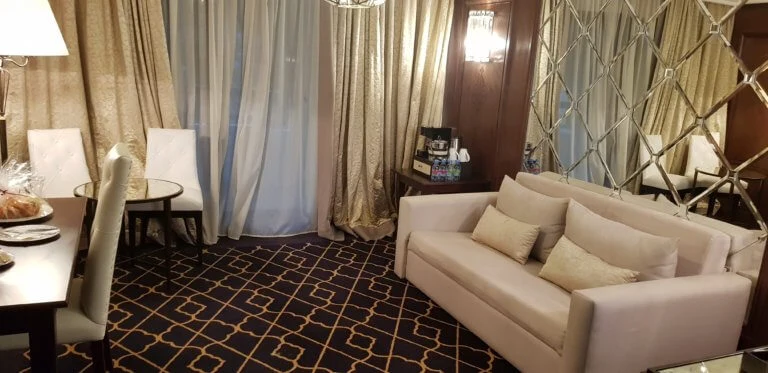
I received a wonderful upgrade: a duplex suite, with the living room on one level and the bedroom on another, and enough space to feel slightly excessive for one person. Fruit and Moroccan pastries were waiting as a welcome amenity.
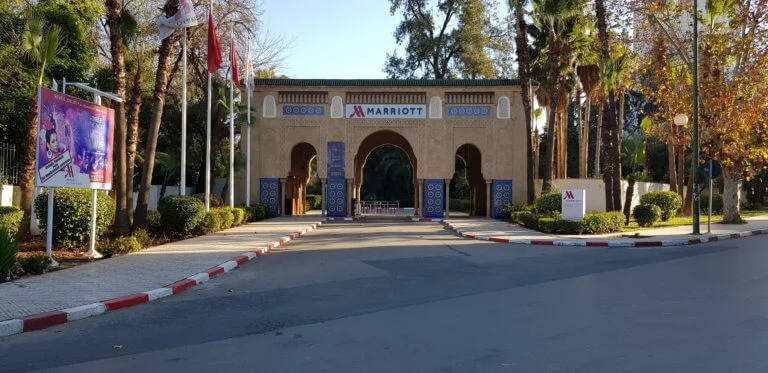
My plan had been to leave almost immediately and explore Fes. The concierge suggested seeing the medina in daylight first, preferably with a guide. He did not say that going alone would be dangerous; he simply made waiting until the next day sound sensible enough that I changed the plan.
The obvious replacement was a hammam.
Traditional Moroccan hammams are public baths and social spaces built around washing, steam and vigorous scrubbing. The Marriott offered the five-star interpretation: privacy, silence, polished facilities and nobody unexpectedly participating in my personal hygiene.
There was serious scrubbing followed by massage, and I came out considerably cleaner and more functional. The more traditional hammam I later visited in Marrakech probably did the job even better. After two flights and a very short night, though, the private version was precisely what I needed.
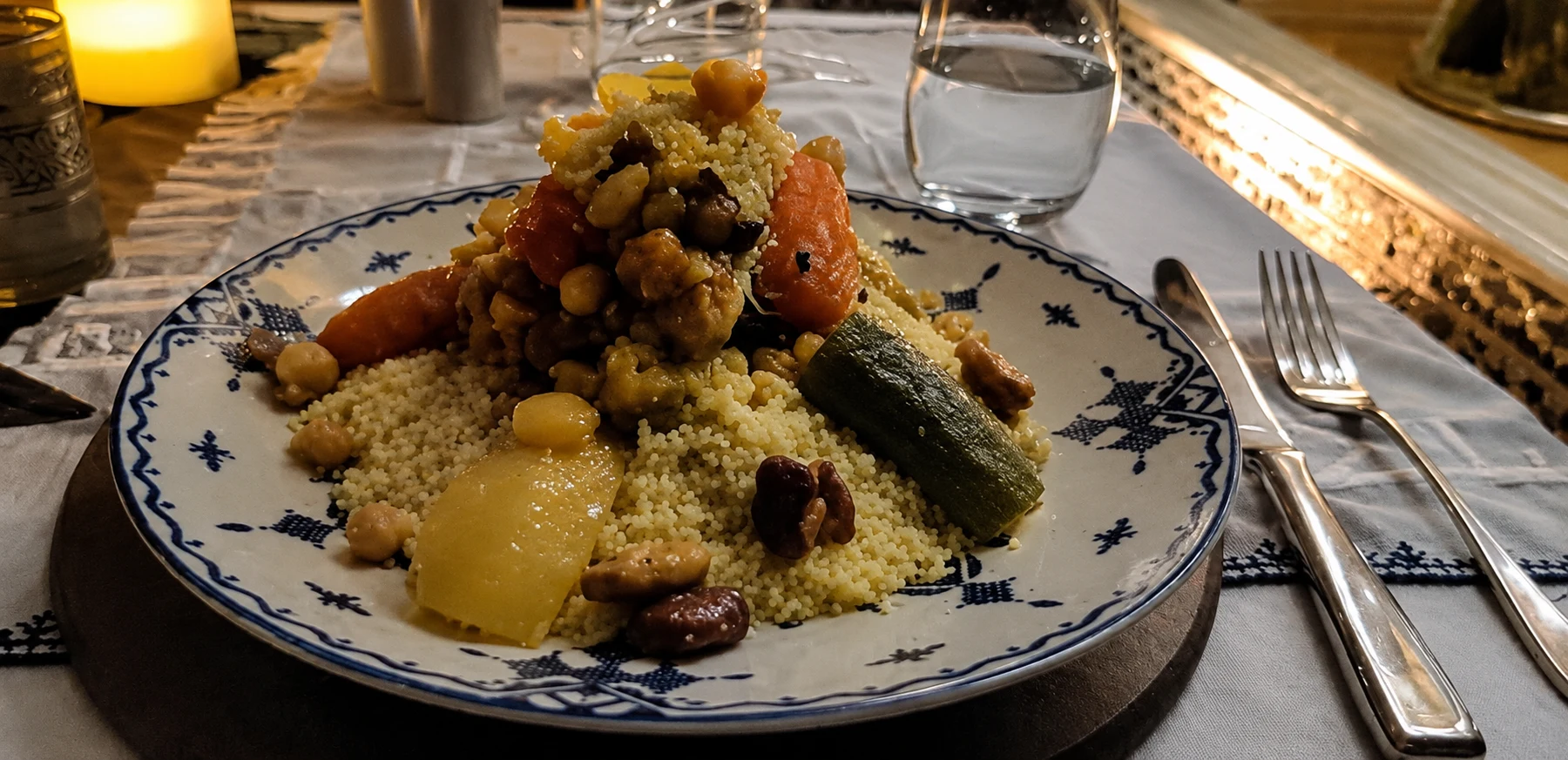
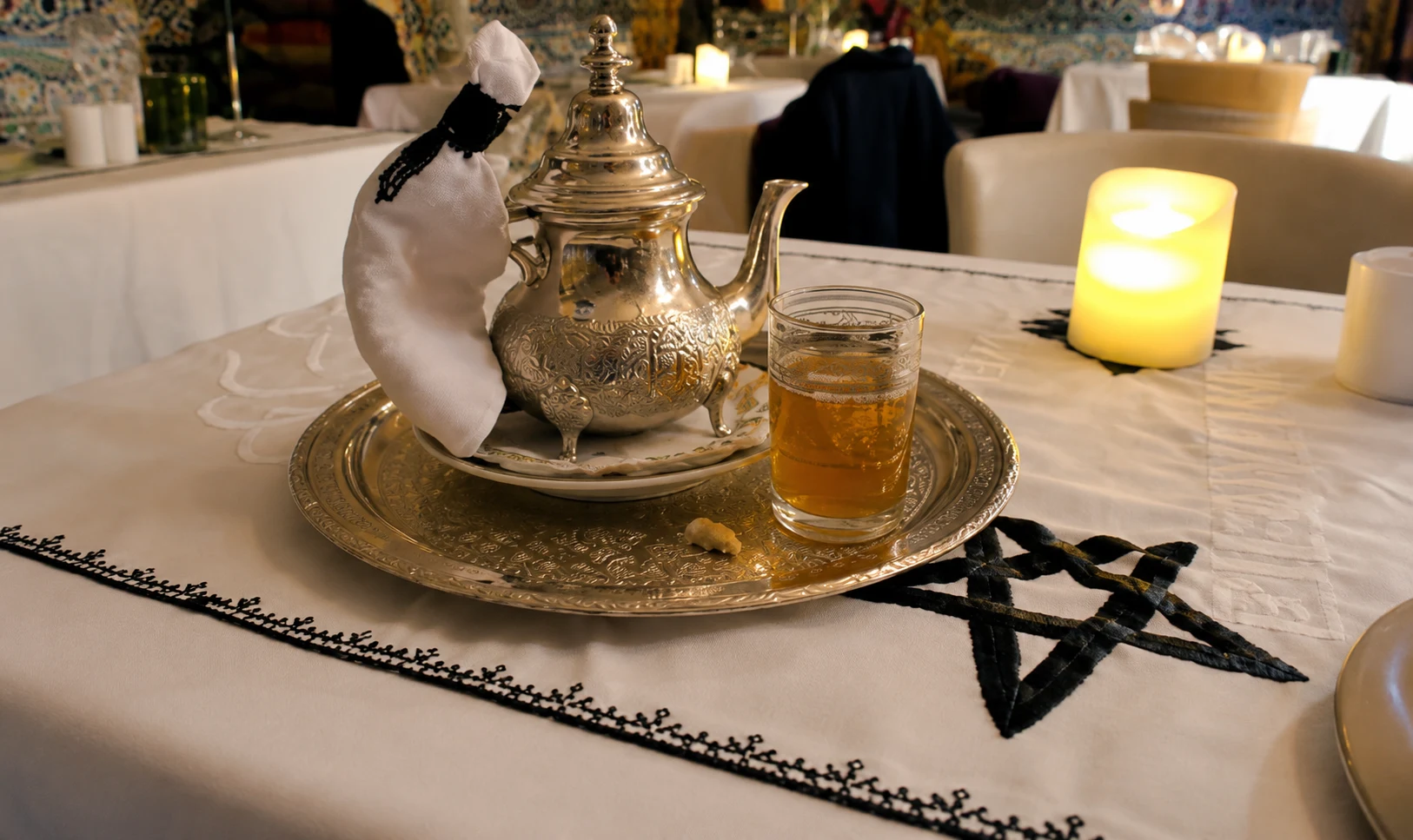
Dinner followed in the hotel’s restaurant. It served Moroccan and Lebanese food, but ordering Lebanese immediately after arriving in Morocco seemed almost morally weak. I chose couscous, followed by Moroccan sweets and mint tea.
The setting did more for me than the couscous. The decoration, music and mint tea all did their part. The main course left me indifferent. Perhaps I had not adjusted to the flavours yet. The pastries were more persuasive.
I was too exhausted for further gastronomic conclusions.
A city made of several cities
The next morning I went on an excursion to Meknes and Moulay Idriss, so Fes itself had to wait until the afternoon. Those places belong to other stories, but they also gave me my first sense of how varied Morocco could be within a relatively small area. By early afternoon I was back at the Marriott, where I freshened up and met the driver again. This time a local guide joined us.
Only then did Fes properly begin.
Understanding the city is easier if one first abandons the idea that there is a single Fes. The historical heart is Fes el-Bali, the ancient medina. Beside it lies Fes el-Jdid, literally “New Fes”, although it dates from the thirteenth century. Farther out is Ville Nouvelle, created under the French Protectorate and built according to an entirely different urban logic, with broad avenues, modern blocks and much more generous space.
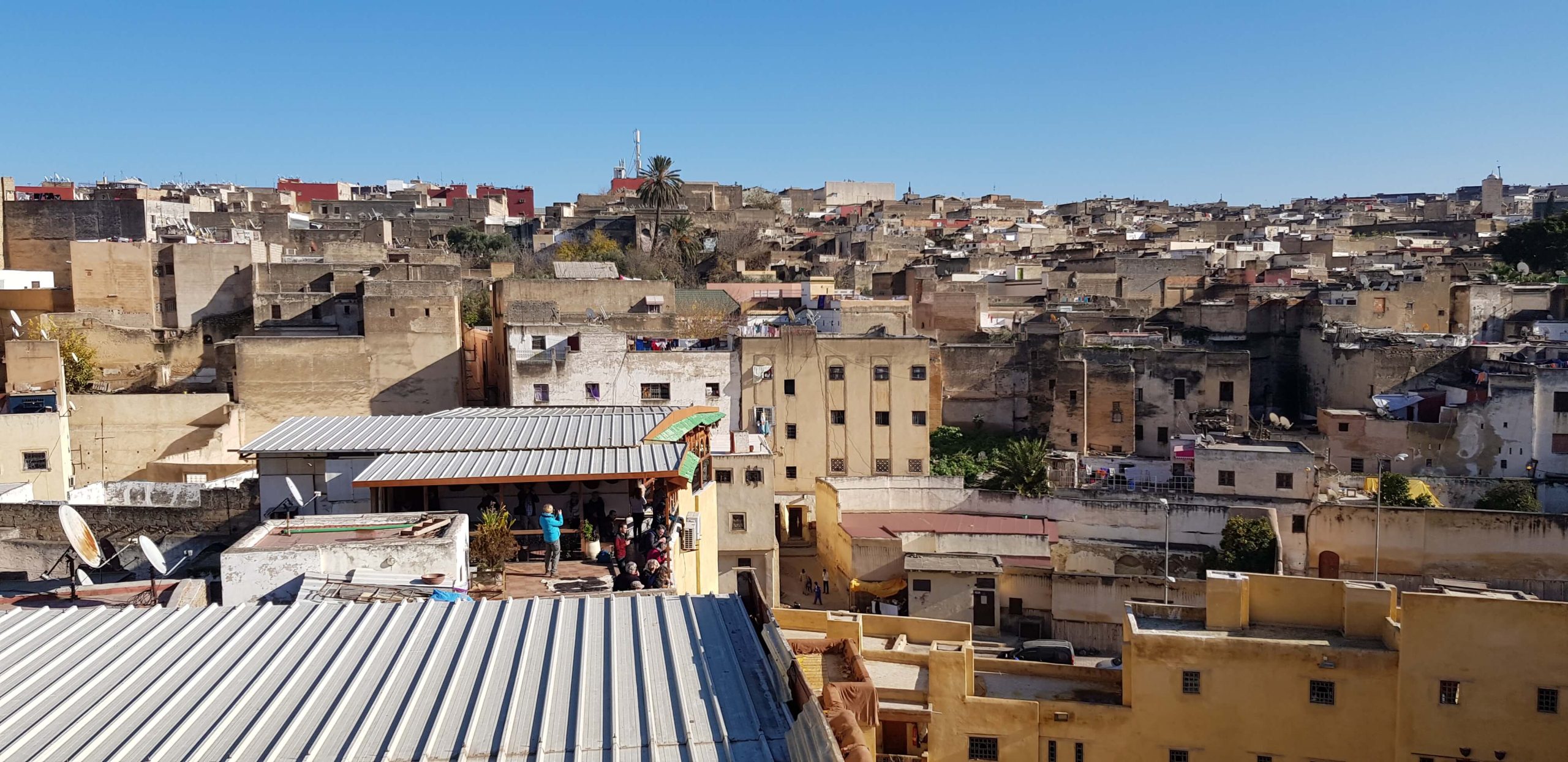
The origins of Fes reach back to the Idrisid period. The first settlement is associated with Idris I in 789, while Idris II established another settlement on the opposite bank in the early ninth century. Over time the two developed into the urban core we now know as Fes el-Bali. The city later became one of Morocco’s great political, commercial, intellectual and religious centres and reached a particularly important phase under the Marinids in the thirteenth and fourteenth centuries. The Marinids founded Fes el-Jdid, while the older medina continued to develop around religious institutions, markets, workshops and densely packed residential quarters.
The Saadians favoured Marrakech and the Alaouite sultan Moulay Ismail chose Meknes; Fes returned to political prominence before Rabat became the capital in 1912 during the French Protectorate. I suspect that, over time, losing some of that prominence helped the medina retain its own rhythm of workshops, markets and everyday life.
I did not know most of that history when I first arrived. What I noticed was much more immediate: the layout of modern Fes made sense from the car, while the medina looked as if it operated according to rules from another age.
The medina has been on the UNESCO World Heritage List since 1981, but that designation alone does not explain what makes it extraordinary. It is not simply an unusually large collection of old buildings. Houses, mosques, madrasas, shops, workshops, food markets and traditional trades still occupy a street pattern whose basic logic developed centuries before modern traffic and urban planning.
When I entered it for the first time, my reaction was simple: I wondered whether I had somehow walked into the wrong century.
Into Fes el-Bali
Calling Fes el-Bali an “old town” is technically correct but psychologically misleading. In much of Europe, an old town usually means a compact historical centre: pedestrian streets, a church or cathedral, a central square, cafés, restored façades and enough signs to reassure the visitor that somebody has anticipated their presence.
Fes is something else entirely.
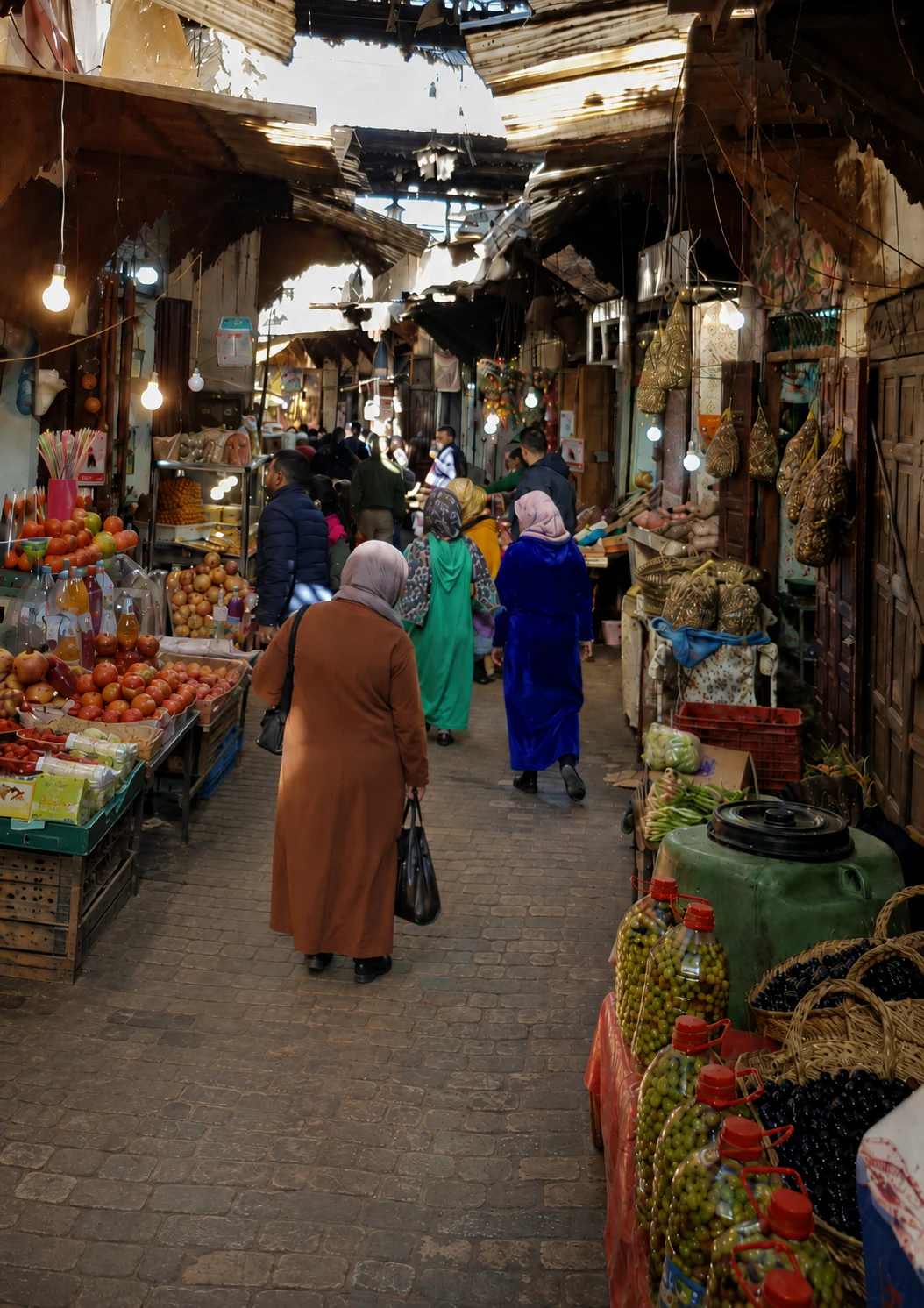
The streets narrow until two people passing each other can become a logistical negotiation. Alleys turn, divide, descend, disappear under buildings and reopen in places where orientation seems to have little relationship with geometry. Workshops flow into shops, shops into food stalls, residential doors appear beside religious buildings, and people, animals, merchandise and handcarts all compete for the same limited space.
At first the entire system looks impossible. After a while, it becomes obvious that the city knows exactly what it is doing. It is the visitor who does not.
I would later find parts of Marrakech’s medina almost theatrical, as if everyday life had been adjusted for an audience. Fes felt much more authentic to me. Even with my guide steering me towards shops, I had the sense of entering a city where people were busy living and working, rather than performing Morocco for visitors.
I had left the route entirely to my guide. I cannot now reconstruct exactly which streets we took, but I remember the succession of encounters vividly.
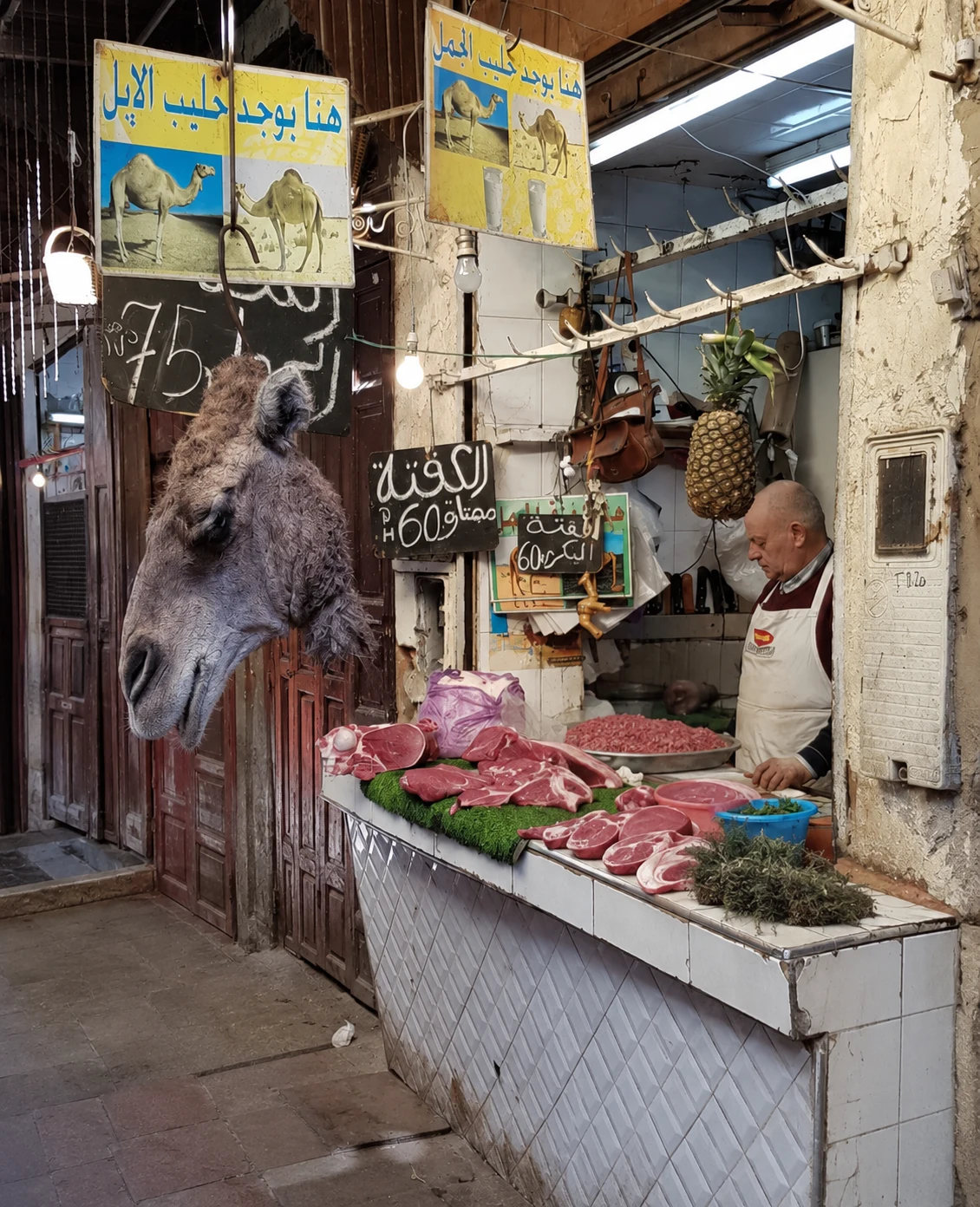
Our first stops centred on food. The butchers’ displays were far more explicit than those I was used to in European supermarkets: ordinary cuts alongside heads, offal and live animals, with very little effort to hide where meat actually comes from. Camel, sheep and chicken were all part of the visual landscape.
Nearby, vegetables, spices and prepared food produced a completely different palette of colours and smells. Food stalls grilled meat, cooked pancakes and prepared dishes I could not even name right beside the passing crowds. Some looked excellent. Others looked excellent until I began considering how much of the rest of my Moroccan itinerary depended on a functioning digestive system.
I wanted to taste things, but I was also afraid to taste them, and for a while fear was winning comfortably.
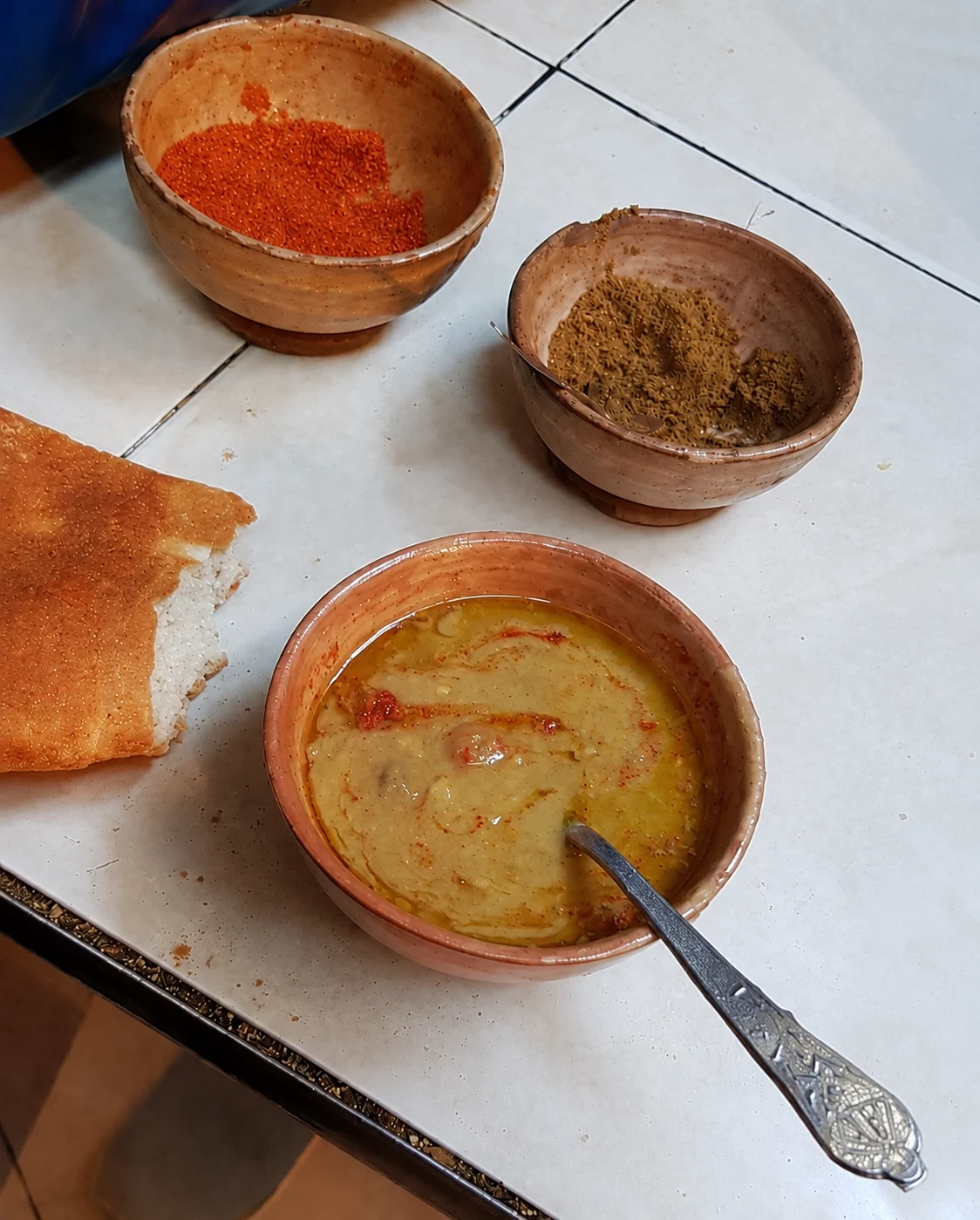
My guide eventually decided that this was ridiculous and persuaded me to try harira soup. Like many traditional dishes, it does not have a single immutable recipe, but Moroccan versions commonly combine tomatoes, pulses such as chickpeas and lentils, herbs and spices, often with flour or vermicelli and sometimes meat. None of that worried me.
The spoon did.
We sat at a small table with several locals. The bowl arrived with bread and cutlery that did not inspire enormous confidence. The people around me showed me that the bread should be dipped into the soup, which seemed a useful way of reducing my dependence on the spoon. So I followed them.
The harira itself did not become a major culinary revelation, but the situation mattered more than the recipe. Until then, I had been observing Fes from behind my guide. Sitting at that table, even briefly and superficially, I was participating in something ordinary rather than merely photographing it.
And I survived.
My guide then introduced me to something requiring less courage: kaab el ghazal. The Arabic name is literally closer to “gazelle’s ankle” or “gazelle’s heel”, although the crescent-shaped almond pastry is better known through the French cornes de gazelle and the English “gazelle horns”.
Whatever part of the gazelle one prefers, it was excellent. By then I was beginning to wonder how many other things fear had already stopped me from tasting.
Carpets, craftsmen and salesmanship
Food gradually gave way to crafts and shopping, and no guided walk through a Moroccan medina would be complete without carpets.
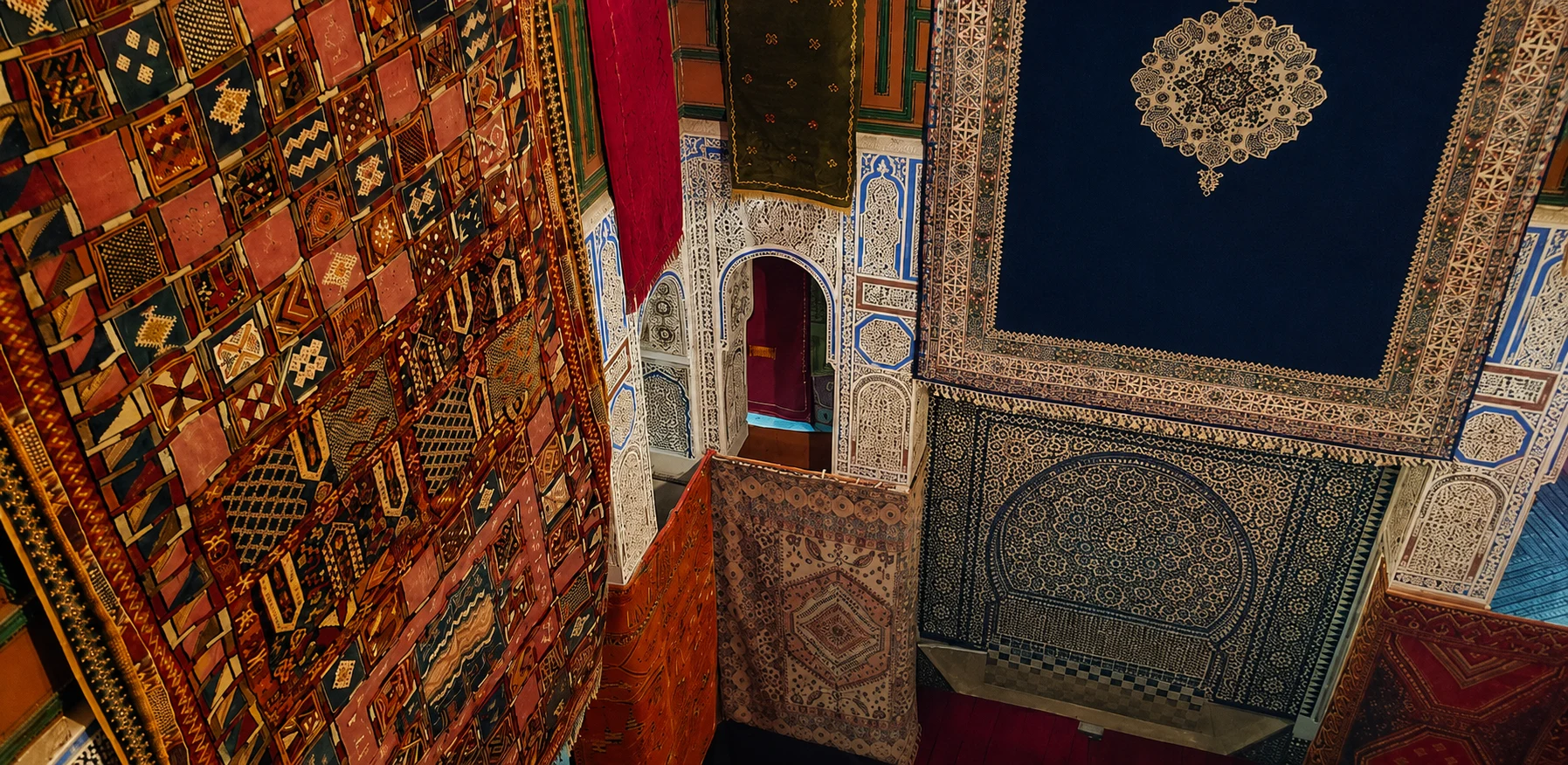
The carpet shop occupied several floors, which was itself surprising because the building looked much smaller from the narrow street outside. Once inside, the commercial performance began. Carpets appeared in rapid succession, each followed by explanations of materials, weaving techniques, patterns, quality and origin. One carpet was replaced by another, then another, until almost every horizontal surface seemed to require additional textiles.
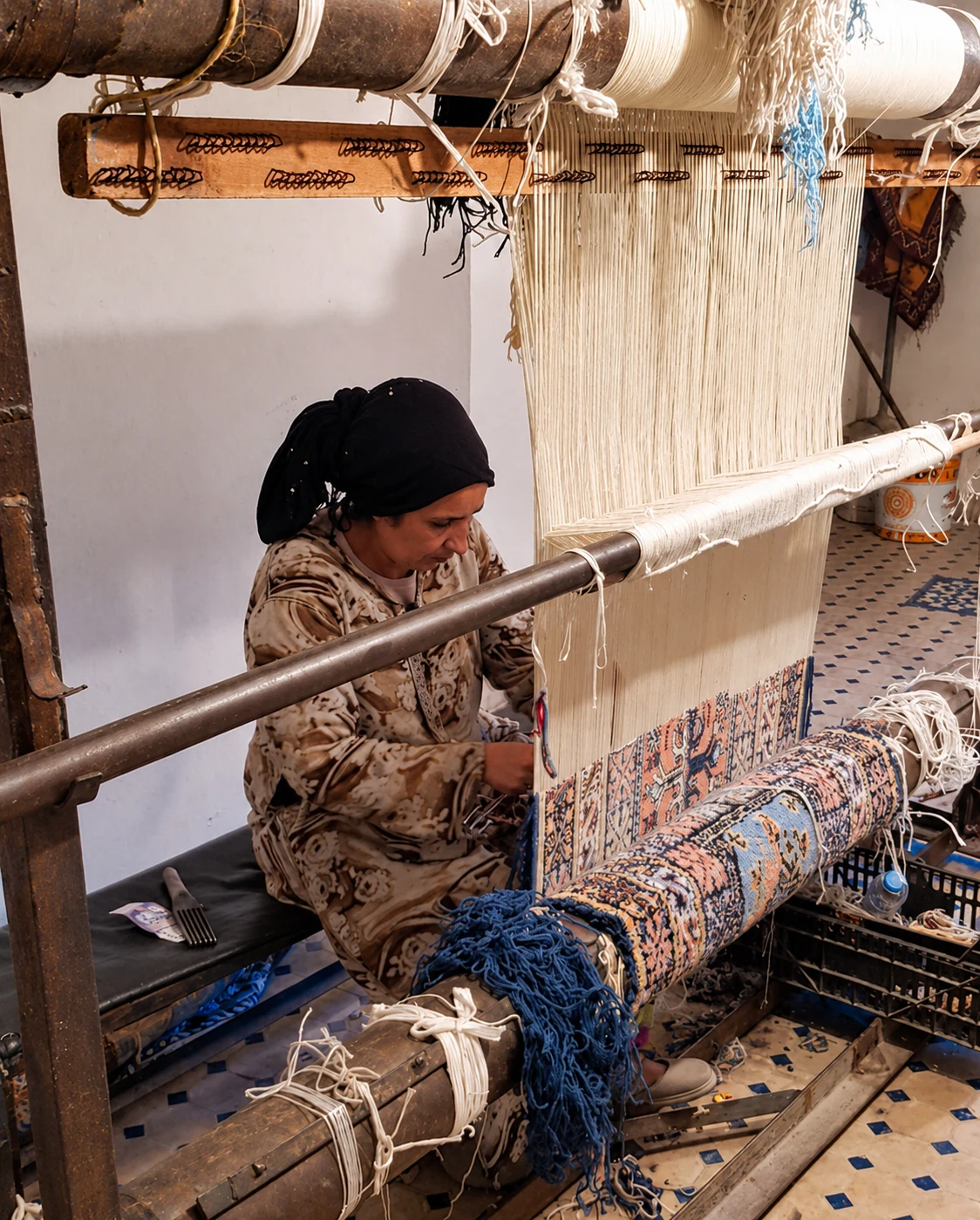
The merchants were very good at what they did. They also soon understood that I was not going to buy a carpet. This did not reduce their enthusiasm, and eventually I was shown a demonstration of traditional weaving, which I enjoyed.
The whole experience reminded me of a carpet shop in Istanbul’s Grand Bazaar that I had visited years earlier. There too, the salesman had spent a remarkable amount of time explaining carpets despite knowing perfectly well that I was unlikely to purchase one. I asked him why.
His answer was simple: perhaps I would not buy a carpet that day, but if I ever wanted one, I would remember him. He was right. I still do, and I still think I might like a proper carpet one day.
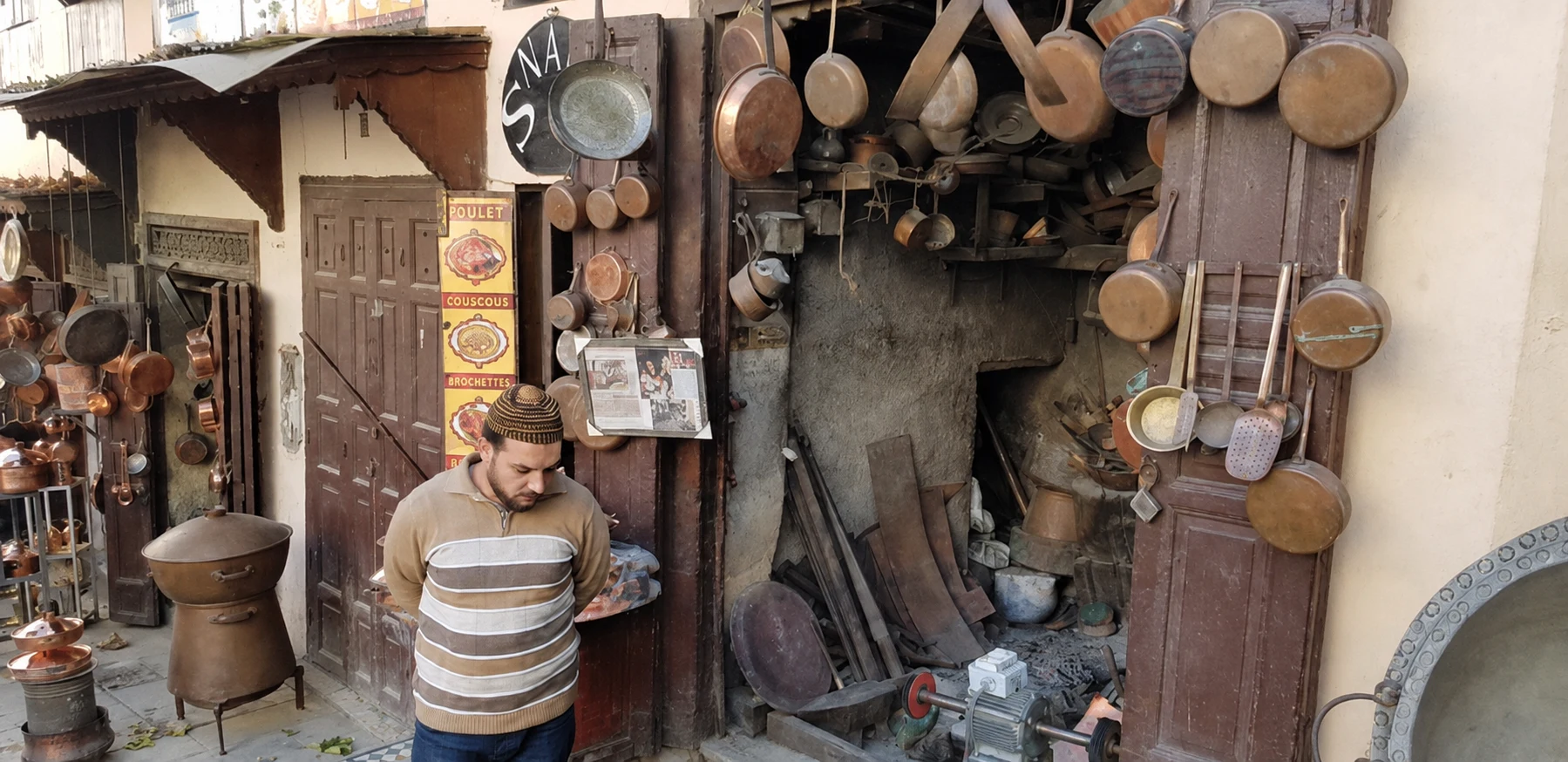
From carpets we moved to metalwork: trays, lamps, plates and decorative objects, many of them hammered or shaped by hand in workshops directly connected to the shops. The object in front of you may be made a few metres from where it is sold.
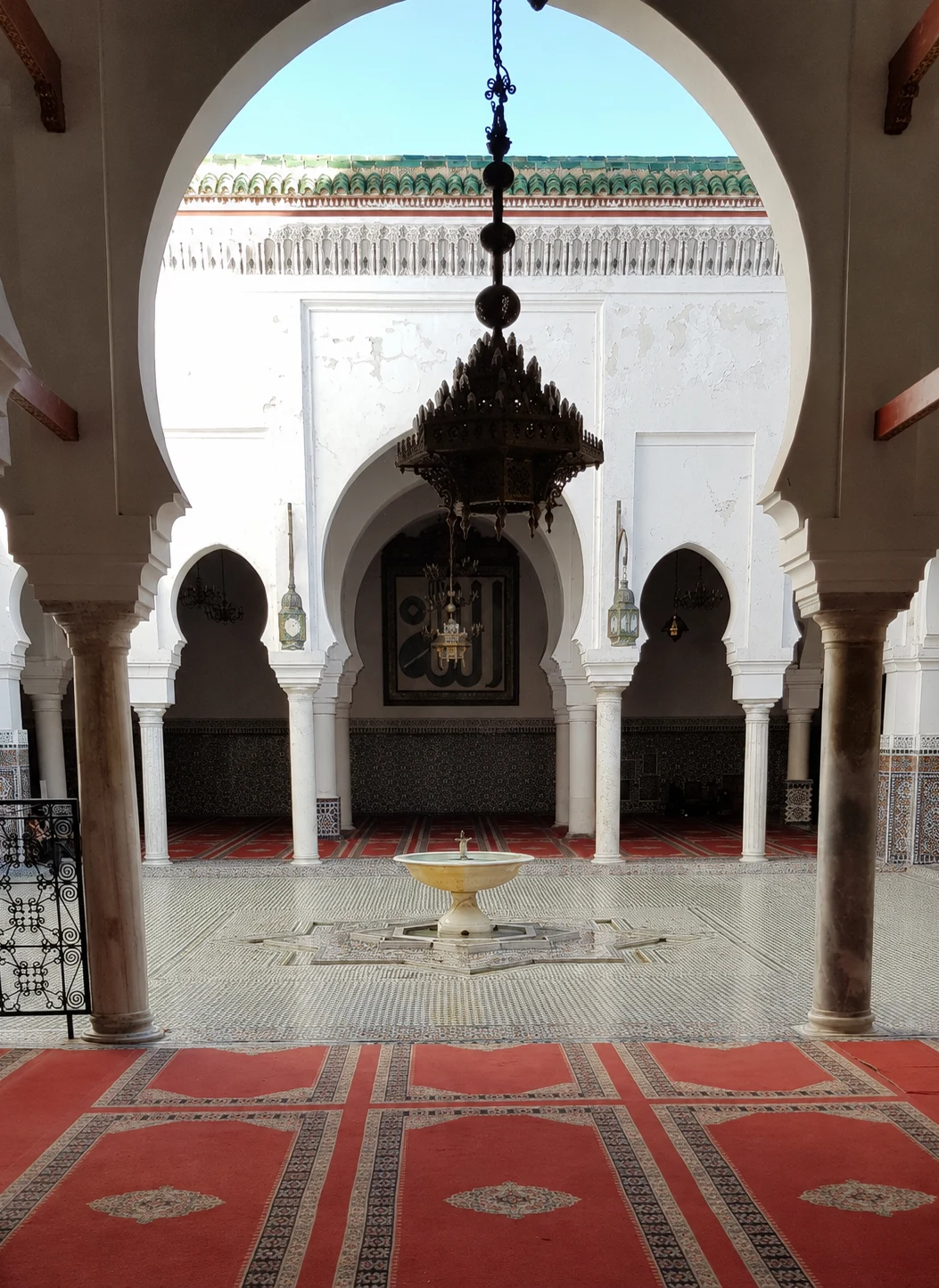
Religious architecture appeared continuously between markets and workshops. Fes contains some of Morocco’s most important mosques and madrasas, including the Qarawiyyin complex and a number of Marinid educational institutions. Most functioning mosques in Morocco are not normally open to non-Muslim visitors, while some historic madrasas can be visited, so I saw much of this architecture from doorways and the surrounding streets.
At the time I found this surprising because I had visited major mosques in Istanbul without difficulty. Later, a guide in Marrakech offered me his own explanation, involving both the religious function of the buildings and the need to protect them from inappropriate tourist behaviour. I never established whether his explanation represented official policy or his personal interpretation, so I leave it as something a guide told me.
One younger hand
The next commercial stop involved argan oil.
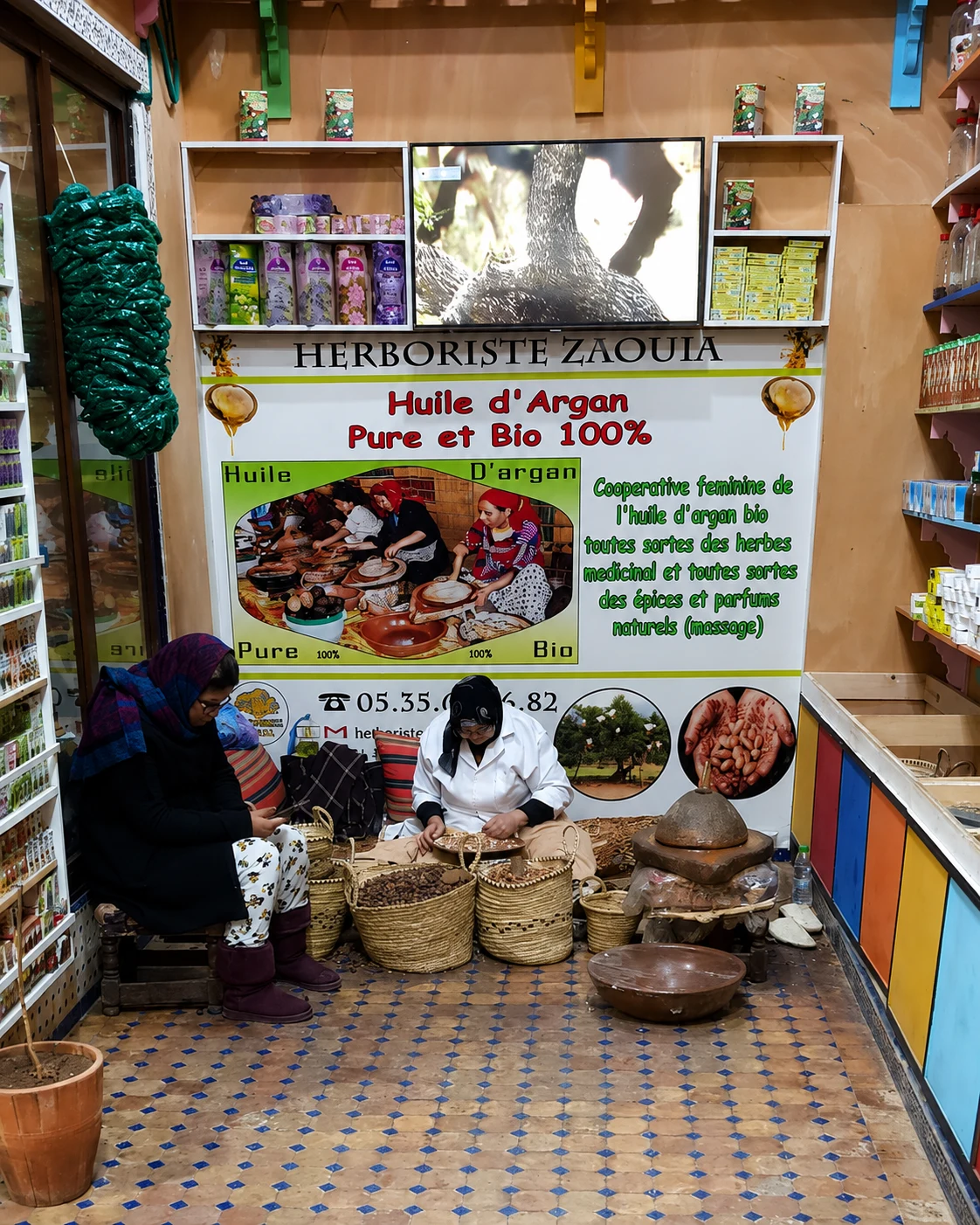
Argan is associated primarily with south-western Morocco, where the argan tree and the traditional knowledge surrounding its cultivation and oil production form an important part of local culture. What I was seeing in Fes was therefore not a native Fassi tradition but a demonstration of one of Morocco’s best-known products.
Near the entrance, traditional production methods were demonstrated before we were moved into a far more polished sales space. The contrast was impressive: outside, the atmosphere suggested craft and tradition; inside, everything was immaculate, products were beautifully arranged and the staff wore white uniforms and spoke fluent English. They could easily have been launching cosmetics in Paris or Milan.
I had absolutely no intention of buying beauty products. Someone nevertheless persuaded me to try pure argan oil on one hand and compare it with the other. To my irritation, the treated hand did appear smoother and perhaps even slightly younger.
For several minutes I therefore possessed one hand that seemed to be ageing more successfully than the rest of me.
Whether the explanation was argan oil, simple moisturisation, lighting or highly competent sales psychology did not matter very much. The demonstration had achieved its purpose: I was impressed despite myself.
Why they give you mint at the tannery
Then came the place I had most wanted to see: the Chouara tannery.
At the entrance someone handed me a sprig of mint. I initially interpreted it as another piece of tourist theatre, something decorative and photogenic that would help create a suitably exotic impression.
Then we climbed towards the terrace.
The mint immediately became emergency equipment.
The smell was spectacularly bad. Not interestingly bad, not authentically earthy, not the kind of smell one pretends to appreciate because it proves that one is an experienced traveller. It simply stank.
I held the mint under my nose and developed instant respect for whoever had thought of distributing it.
Then I looked down.
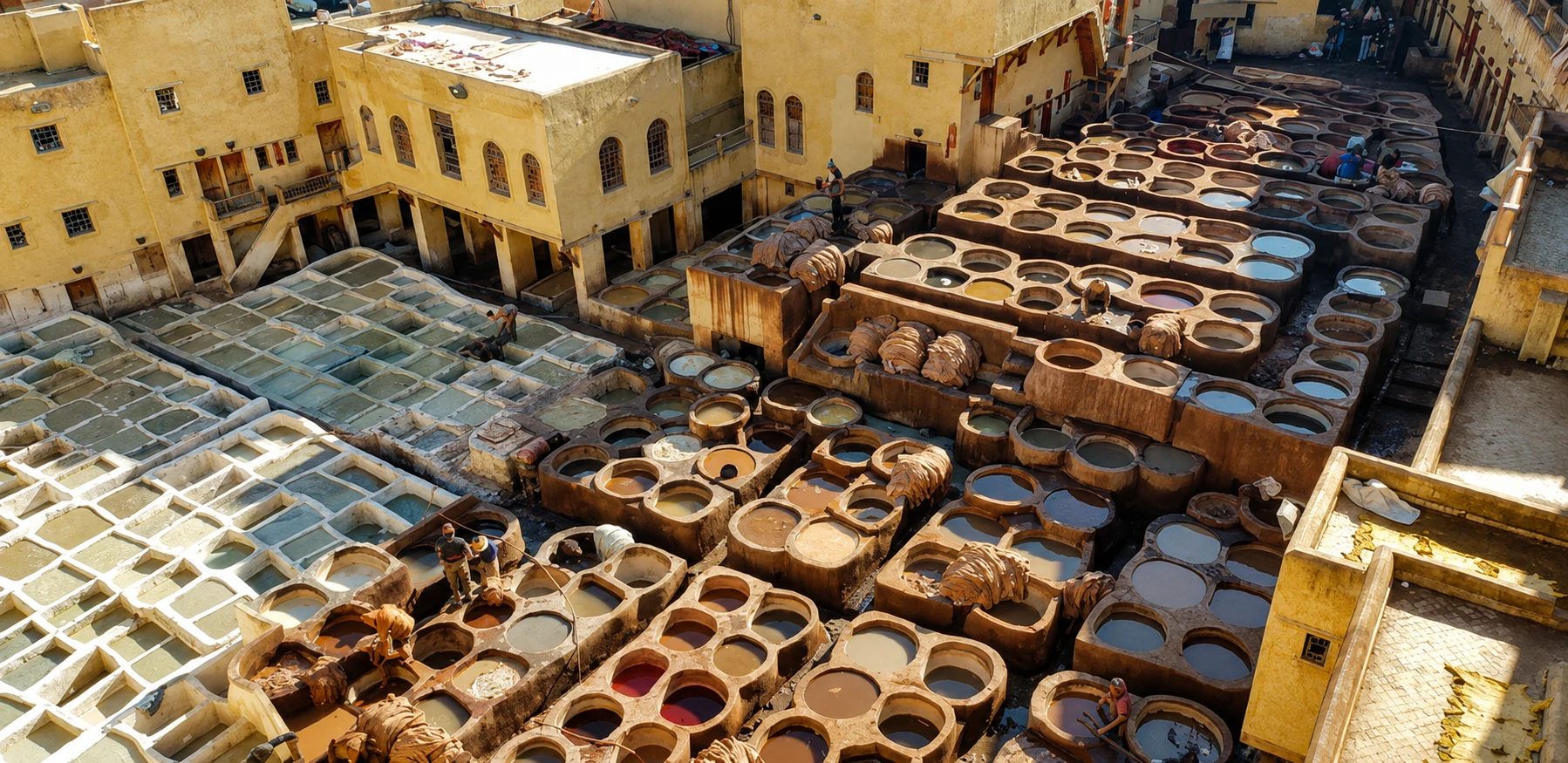
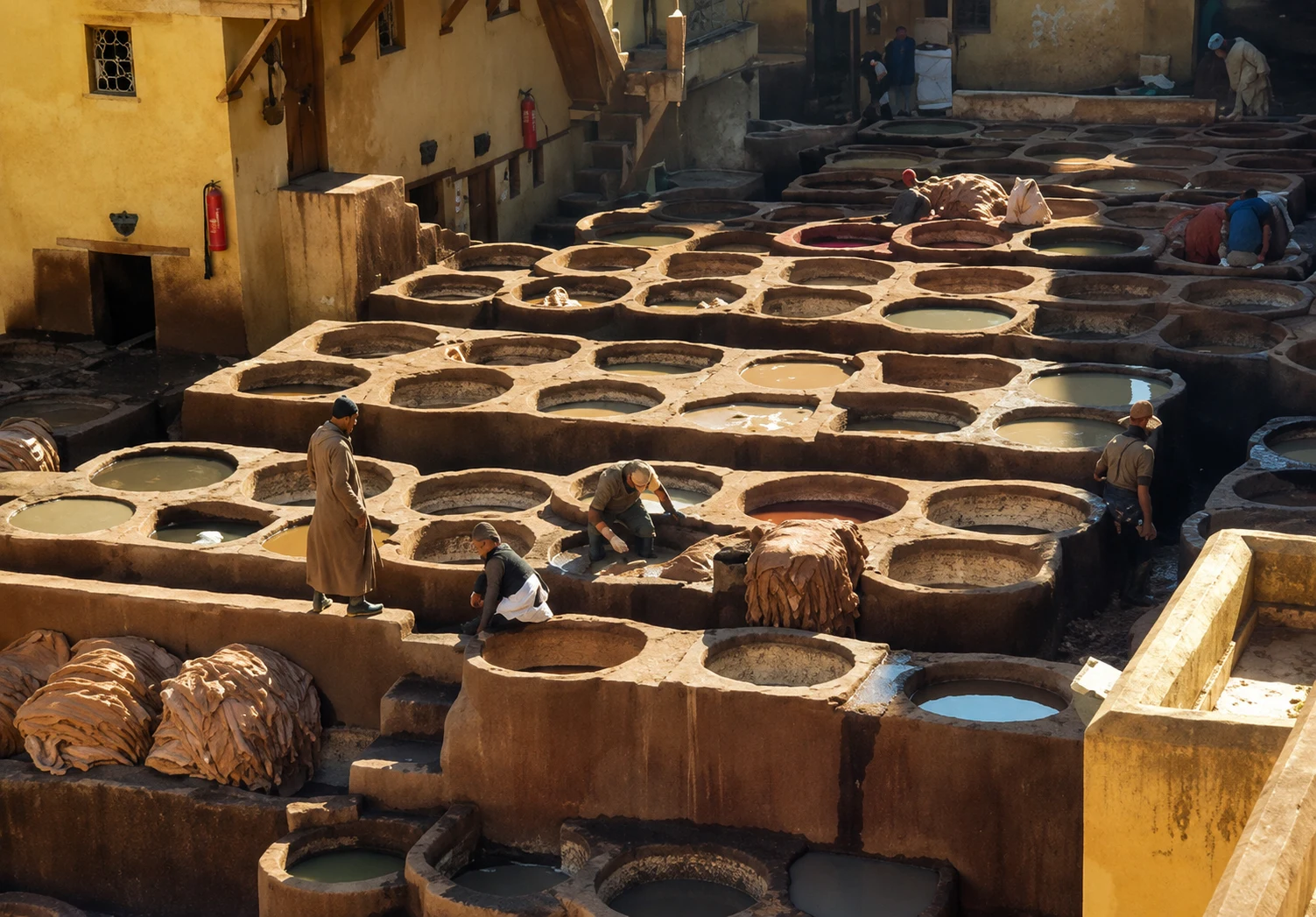
Below the terrace were the stone vats I had associated with Fes long before arriving. Workers moved between them, hides were being processed and coloured, and the surrounding buildings pressed tightly around the entire production space.
The view was extraordinary because it was simultaneously picturesque and industrial. This was not a reconstructed historical demonstration in which actors performed a vanished craft for tourists. Leather production remained part of the economic life of the medina. Methods and materials have changed over time, but the continuity of the place is real: leather is still being processed in an area associated with the trade for generations.
After admiring the vats, we were naturally introduced to the retail side of the operation. A merchant explained the leather, the production process and the supposed durability of the finished goods. Jackets and bags appeared at quite reasonable prices. The material itself felt excellent.
The designs were another matter. Many of the jackets looked as though they had been waiting very patiently for fashion to return to the period when I was in primary school.
It still has not.
In Turkey, I had bought leather jackets that at least belonged to the present day. I bought none of the Moroccan ones, although I had little doubt that some would survive long enough to become family heirlooms. The salesman tried hard. My wallet remained closed.
For me, however, the tannery was the visual climax of the guided tour. Its entrance had been so inconspicuous, buried within the structure of the medina, that I doubt I would ever have found the viewpoint on my own.
Back at the Marriott
After leaving the medina, we found the driver and headed back towards the hotel, stopping briefly at the railway station to buy tickets for the rest of my trip.
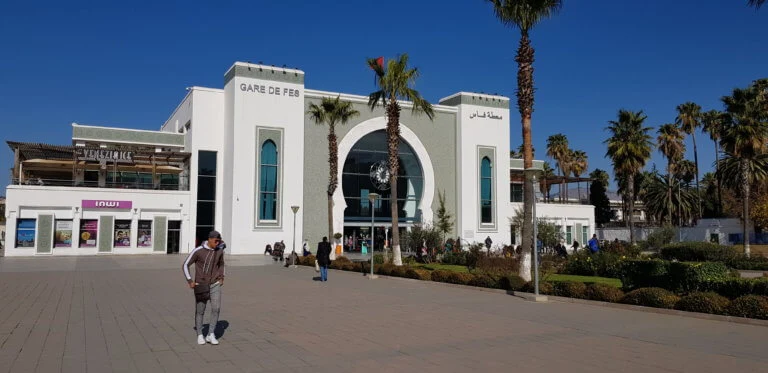
Back at the Marriott, I paid the guide and driver, thanked them and said goodbye. Hiring them had clearly been the right decision.
Yet once they left, I became restless. I had seen an enormous amount of Fes, but whenever a street divided, someone else had chosen the turn. The guide had given me a way into the medina. Now I wanted to see whether I could find my own way back.