
A practical guide to stations, operators, Advance and Off-Peak tickets, apps, delays and sleeper trains
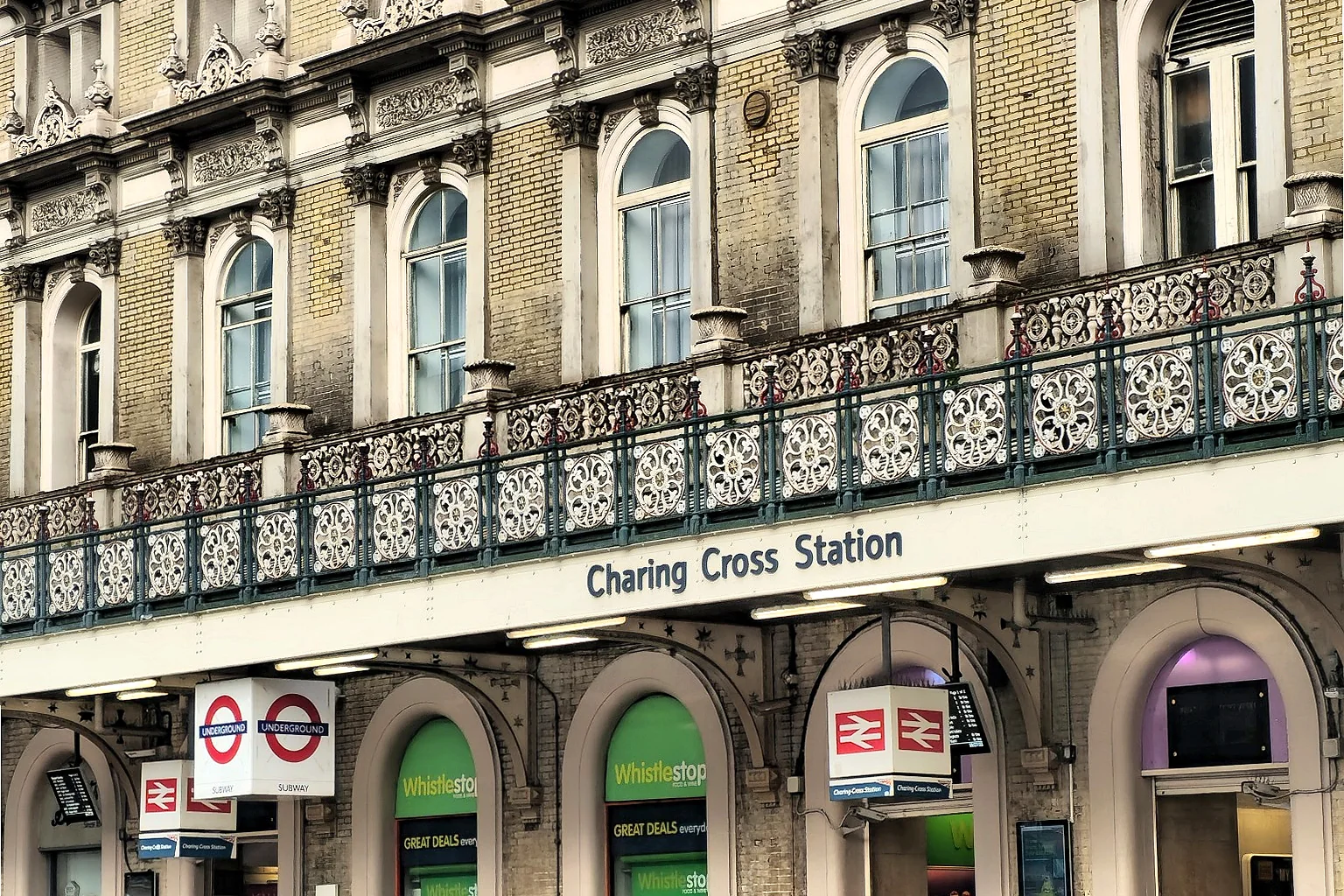
On my first independent trip abroad, sometime around 2002, I learned something fairly basic in a way that now makes me laugh. I took the overnight train from Rijeka to Vienna and booked an Ibis near Westbahnhof, convinced I had cleverly chosen a hotel next to the station. I was the only passenger in the sleeping car, so I practised my German with the conductor. When I mentioned where I was staying, she told me our train was not arriving at Westbahnhof at all, but at Südbahnhof. Vienna, it turned out, had more than one major station — something that had never occurred to me.
I was young and inexperienced, and it was a different information age. Printed guidebooks were my main source, and they probably explained all of this perfectly well; I saw no reason to read the railway chapter. I had a ticket to Vienna, knew I was going by train and had booked a hotel by “the station”. What else was there to research? Quite a lot, apparently. I had also brought a very Croatian mental model with me: Zagreb had not taught me to think of Glavni kolodvor and Zapadni kolodvor as two major terminals serving different parts of a network; Westbahnhof and Südbahnhof did exactly that. Today the same mistake would be harder to make: Südbahnhof closed in 2009 and Hauptbahnhof took over the role of the main hub.
By the time I reached London I had already passed through Budapest, Prague and Paris, so the idea of a city having several major stations no longer surprised me: Budapest has three, Prague four and Paris six. London takes the whole idea to another level.
National Rail groups no fewer than 18 stations under the label London Terminals. A London Terminals ticket does not automatically cover all 18; it is valid only at terminals that lie on a reasonable route for the journey. The name is slightly misleading because not all of them are true termini: Old Street, for example, is a through station for Great Northern trains as well as a Tube station. City Thameslink, Vauxhall and Waterloo East are similar cases. Farringdon, however, is not a London Terminal even though it is one of central London’s most important interchanges, bringing together Thameslink, the Elizabeth line and the Circle, Hammersmith & City and Metropolitan Underground lines. And the complexity goes well beyond the number of stations. The same destination can be reached by different routes, from different terminals, with different operators, at prices that sometimes look as if they belong to different transport systems.
Then come Advance, Off-Peak, Super Off-Peak and Anytime tickets, operator and route restrictions, split ticketing, seat reservations and platforms announced late enough to make you wonder whether you have missed something. The point of this article is not to give you an algorithm to follow before every journey. It is much more useful to understand how the system works. Once that clicks into place, you start moving through it with surprising confidence. In this article, Britain means the rail network of England, Scotland and Wales; Northern Ireland has a separate system.
One final note before we go further: this article draws on my own trips and was last checked and updated on 20 September 2026. Britain’s railway system is undergoing major reform, so operators, fares and passenger rights are changing. I have tried to keep every factual detail up to date, but it is still worth checking the rules for your specific route and date before buying.
London has no main station. It has rail geography.
Once you start using London as a base, its major stations become a kind of mental map of Britain. Paddington opens up the west, GWR territory: Oxford, Bath, Bristol, Wales and Cornwall. Nearby, Marylebone leads into Chiltern’s smaller network towards High Wycombe, Bicester, Oxford and Birmingham.
On the north side of the centre, three huge stations sit almost next to one another yet lead into completely different worlds. Euston serves Birmingham, Manchester, Liverpool and routes farther north towards Scotland. King’s Cross connects London with Cambridge, York, Newcastle and Edinburgh. Across the road is St Pancras: East Midlands services, high-speed trains to Kent, Thameslink through London and Eurostar.
To the east is Liverpool Street, the starting point for East Anglia, Cambridge and Stansted. Nearby, Fenchurch Street is far more specialised: it is the London terminus for c2c services, which run through east London to south Essex and on to Shoeburyness via Southend. South of the Thames things get denser again. Waterloo serves Portsmouth, Southampton, Bournemouth and Salisbury. Victoria covers a large part of the south and southeast, while Charing Cross mainly handles Southeastern services into Kent and East Sussex: Tunbridge Wells, Hastings and Dover.
The boundaries are not neat. When Charing Cross and Waterloo East were closed for several weeks in summer 2026, services were diverted to Victoria, Cannon Street, Blackfriars and London Bridge. London’s terminals have a geographical logic, but not rigid territories. Thameslink disrupts the neat terminal map even further. Instead of ending at the edge of central London it runs straight through: St Pancras, Farringdon, City Thameslink, Blackfriars, London Bridge and then south. That makes the railway in London more than a way of getting into the city. Sometimes it is an excellent way of crossing it.
Borough Market is practically next to London Bridge. From London Bridge to Trafalgar Square and the National Gallery, an ordinary train to Charing Cross can be a more elegant solution than the Underground.
From St Pancras beyond Britain
St Pancras differs from the other terminals in one more important way: this is where Eurostar departs. There are currently direct trains from London to Paris, Brussels, Lille, Rotterdam and Amsterdam, with connections beyond them to a much larger part of continental Europe.
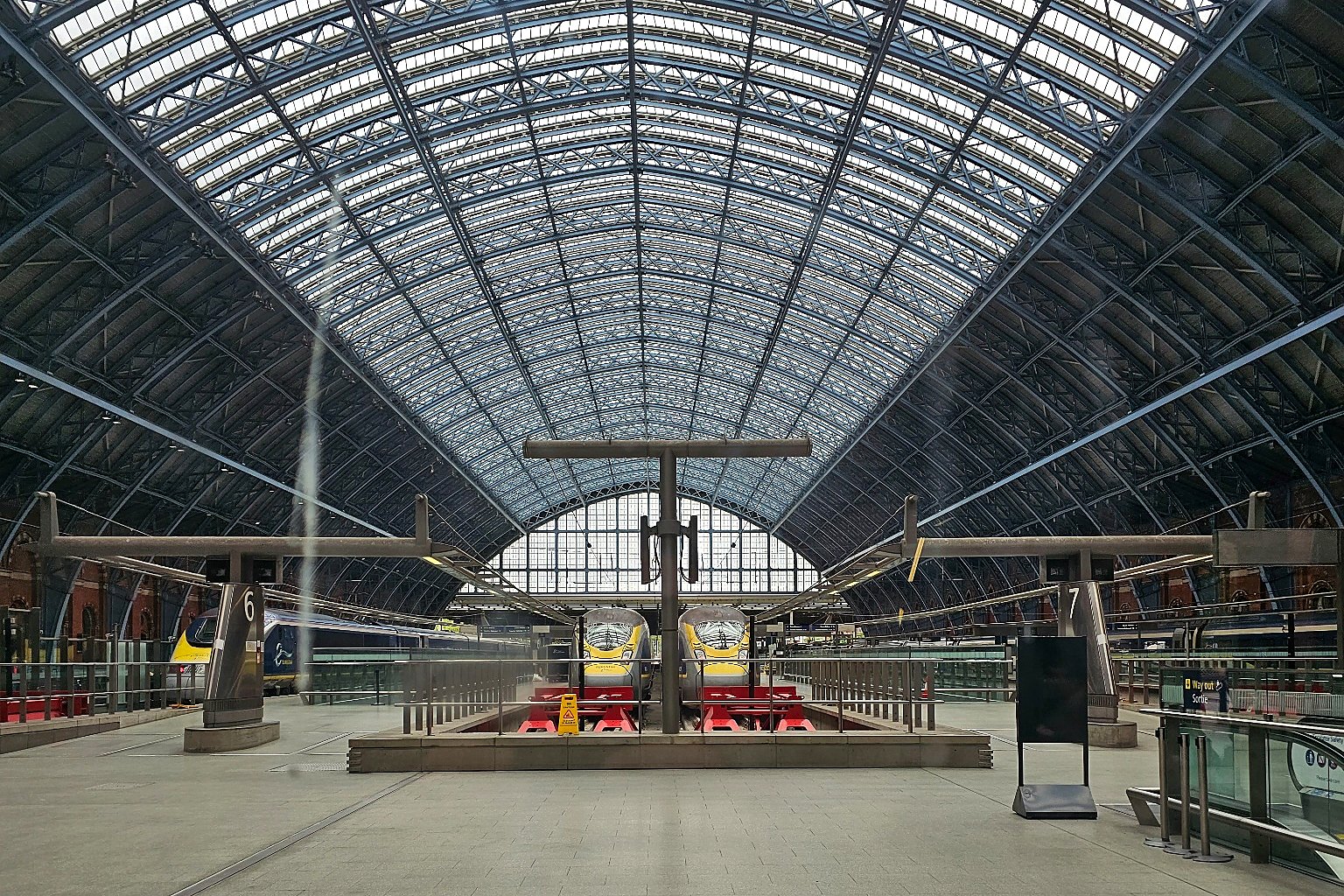
I first used Eurostar in 2013, travelling from London to Brussels. At the time, I admit, the main attraction was simply passing through the Channel Tunnel. For planning purposes, though, something else matters more: an international train from St Pancras does not work like a domestic service where you can appear a few minutes before departure.
Before boarding there is a ticket check, security screening and two border controls. Eurostar currently recommends arriving about 75 minutes before departure for Standard and Plus and about 45 minutes for Premier; the gates close 30 and 15 minutes before departure respectively. The whole departure process feels closer to an airport check-in than to boarding an ordinary train. The fares are separate too. Advance, Off-Peak and Anytime in the rest of this article belong to the domestic British system; Eurostar has its own classes and rules. I therefore treat it as a separate international leg rather than as just another part of the National Rail system.
Changing stations with a suitcase is not a footnote
I once landed at Stansted and continued from Waterloo to Bournemouth. On a journey planner, the transfer across London looks harmless. Add a large suitcase, stairs and crowds and it suddenly does not. I use the Tube constantly, but I have stopped treating an Uber or taxi between stations as some sort of personal defeat. If I have a big suitcase, an awkward transfer and a tight schedule, a few dozen pounds can solve the part of the journey I simply do not want to turn into an Olympic event.
Before paying for extra transport, look at the ticket itself. If the journey runs via London and the route carries a + symbol, the appropriate transfer between the relevant London stations is already included — by London Underground, DLR, Thameslink or the Elizabeth line. In that case a taxi or Uber is a comfort choice, not a necessity.
Luggage is usually not a problem on British trains, but space is not unlimited. National Rail warns that extra charges may apply if you have more than three items, if luggage occupies seats or if an item is longer than one metre in any dimension. You must also be able to handle your own luggage. So when choosing a connection, I do not look only at journey time; I also look at changes, stairs and space on the train.
And then everyone stares at the screen
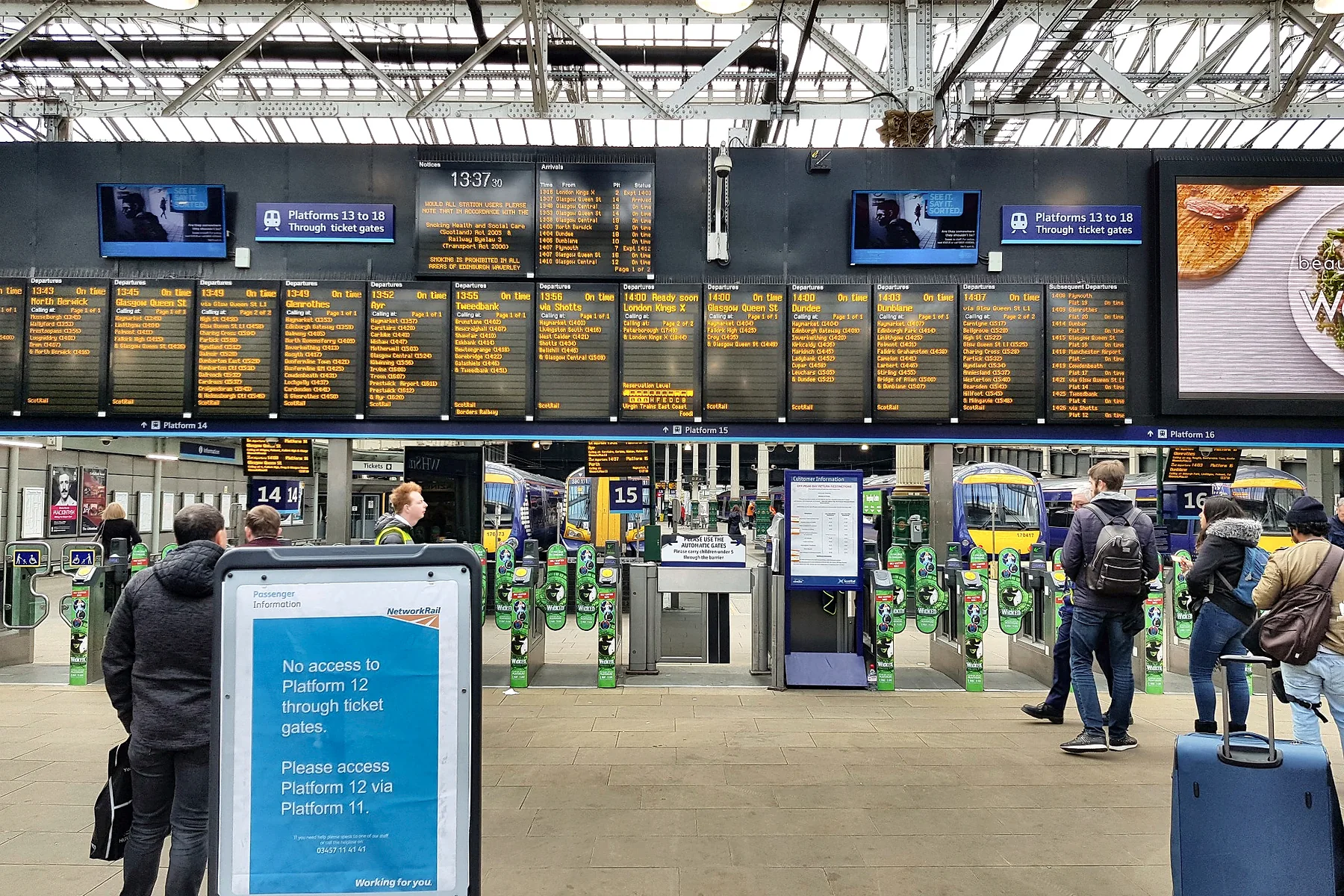
One thing you have to get used to in Britain is that platforms are announced late. The train is on the board, departure time is approaching, but there is no platform. In front of one of those walls of screens, everyone is waiting for the same moment: a number appears and half the station starts moving in the same direction.
If the train originates there, a late platform announcement is not a reason to panic — the other 300 people staring at the same screen probably do not know the platform either. If the train is only calling at the station, however, do not arrive at the last minute.
One network, many operators
Until the 1990s, Britain had the state-owned British Rail. Privatisation separated infrastructure from operations and divided passenger services among different companies.
Much of the competition was supposed to happen through bidding for the right to operate those services. Over time, however, the system also developed into something much more visible to passengers: on some parts of the network several operators use the same tracks, and in places they compete directly for the same journey. Trains from different operators routinely sit side by side at the same stations.
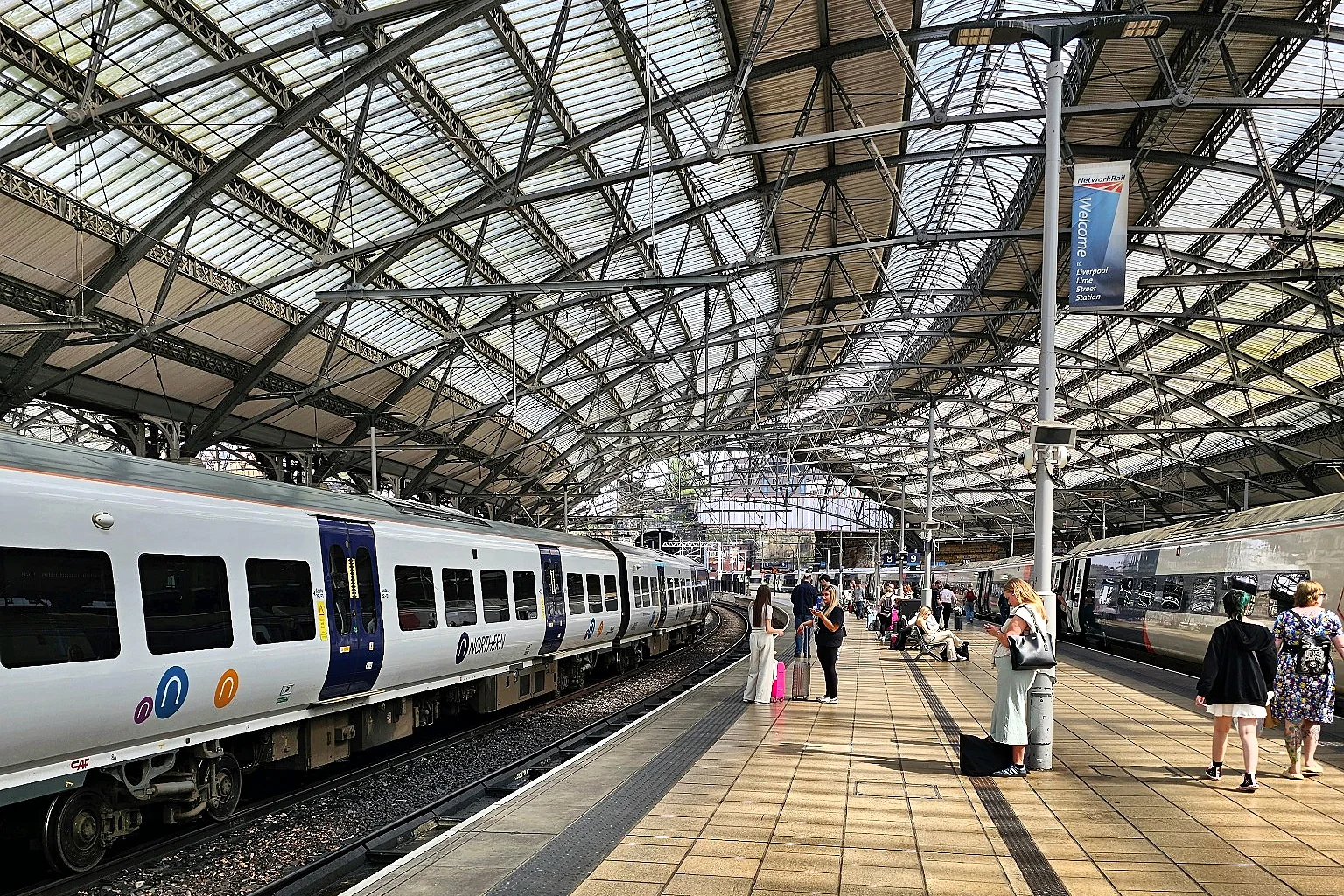
Doncaster: the same two stations, three operators
The clearest example is the East Coast Main Line, running from King’s Cross through Doncaster, York and Newcastle towards Edinburgh. Between King’s Cross and Doncaster you can choose from LNER, Grand Central and Hull Trains. Same departure station, same arrival station, same main line — but three operators. LNER is the main intercity operator. Grand Central and Hull Trains are private open-access operators: they do not run under a government contract but at their own commercial risk.
The fares show just how little “the same route” guarantees the same product. An Anytime Single in Standard Class costs £104 if restricted to Hull Trains, £108.70 if restricted to Grand Central and £136.90 if it is Any Permitted (prices checked in September 2026). The freedom to choose any permitted operator has a very concrete price — and that price does not depend on whether you buy the ticket three weeks or three minutes before departure.
Advance tickets can be much cheaper, but comparing the lowest advertised Advance fare here would be misleading. Those fares depend on a specific train and remaining availability, so putting three headline minimum fares side by side creates more confusion than clarity.
Even during disruption, those three operators are not automatically interchangeable. That is the British railway in miniature.
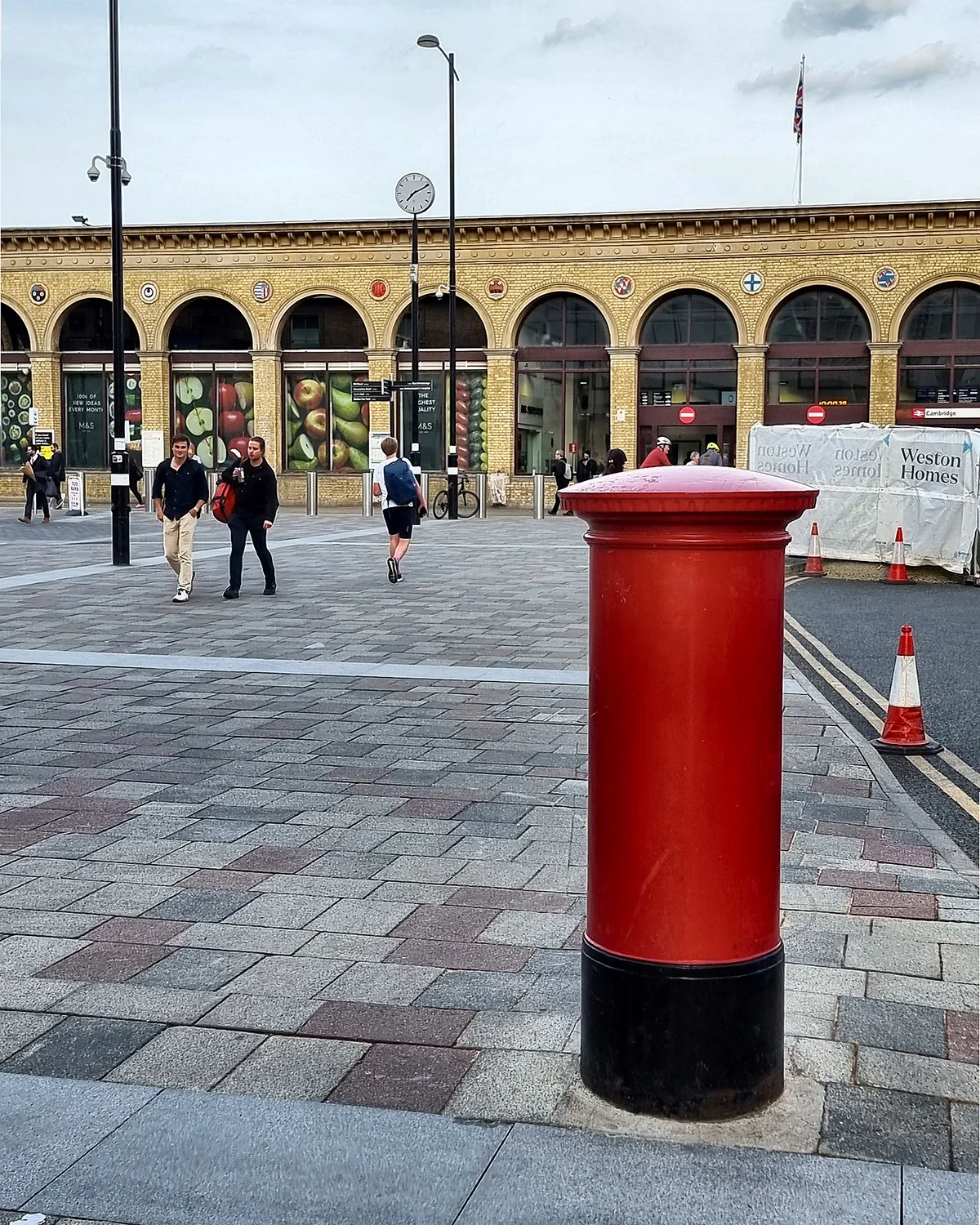
Cambridge: one city, two lines and half of London as a starting point
London–Cambridge shows a different kind of complexity. It is not just a matter of several operators on the same line; here there are also different London departure points and two corridors to the same city. Search results can show Great Northern, Thameslink and Greater Anglia. Great Northern and Thameslink are two brands of the same operator, while Greater Anglia runs separately.
Great Northern provides the fastest journeys from King’s Cross, at about 50 minutes. Thameslink uses the same northern corridor but lets me board a direct Cambridge train at St Pancras, Farringdon, City Thameslink, Blackfriars or London Bridge. Greater Anglia leaves Liverpool Street on a completely different line. Here again, price makes it clear that the choice is not merely geographical.
An Anytime Day Single restricted to Greater Anglia costs £29.40, while an Any Permitted Anytime Day Single from the London Terminals group costs £31.90 (prices checked in September 2026). For only £2.50 extra you get far more choice of route and operator. But there is one important detail: London Terminals does not mean every London station. For journeys from Cambridge, such a ticket is valid at the appropriate terminals, including King’s Cross, St Pancras and Liverpool Street, but not at Farringdon, City Thameslink, Blackfriars or London Bridge. To travel between Cambridge and those stations in the central Thameslink corridor you need a ticket valid to London Thameslink.
From central London you can reach Cambridge without changing, whether you start at King’s Cross, St Pancras, Farringdon, City Thameslink, Blackfriars, London Bridge or Liverpool Street — but the ticket must be valid from the station where the journey actually starts.
What will Great British Railways actually change?
GBR has not yet been established as an operating organisation, and under the current timetable it is expected to begin work during 2027. Most passenger services contracted by the UK Department for Transport, together with Network Rail’s infrastructure, are intended to come under a common system, while devolved operators such as ScotRail and Transport for Wales, and private open-access operators such as Grand Central and Hull Trains, will remain separate. For passengers, the physical geography of the network will not change: King’s Cross and Liverpool Street will not become one station, Thameslink will not stop running through Farringdon and London Bridge, and the basic question will remain the same — which route, from which station, on which train?
Not all trains are equal — and neither is First Class
In theory, you are buying transport between two points; in practice, trains and operators can differ quite noticeably. I have felt it most in the south of England, where Southern has struck me several times as distinctly more tired-looking than some of the alternatives.
A large survey by Transport Focus, Britain’s independent passenger watchdog, shows how much the experience can vary. Conducted between October 2025 and the end of March 2026 among almost 101,000 passengers, it put Hull Trains at 94% overall satisfaction, LNER at 93% and CrossCountry at 79%. For cleanliness, Southern, Thameslink and c2c were all at 70%. One journey does not define an entire operator. But after four hours on one train, an operator’s average matters less than the actual seat you are sitting in.
First Class: the suitcase changes my calculation
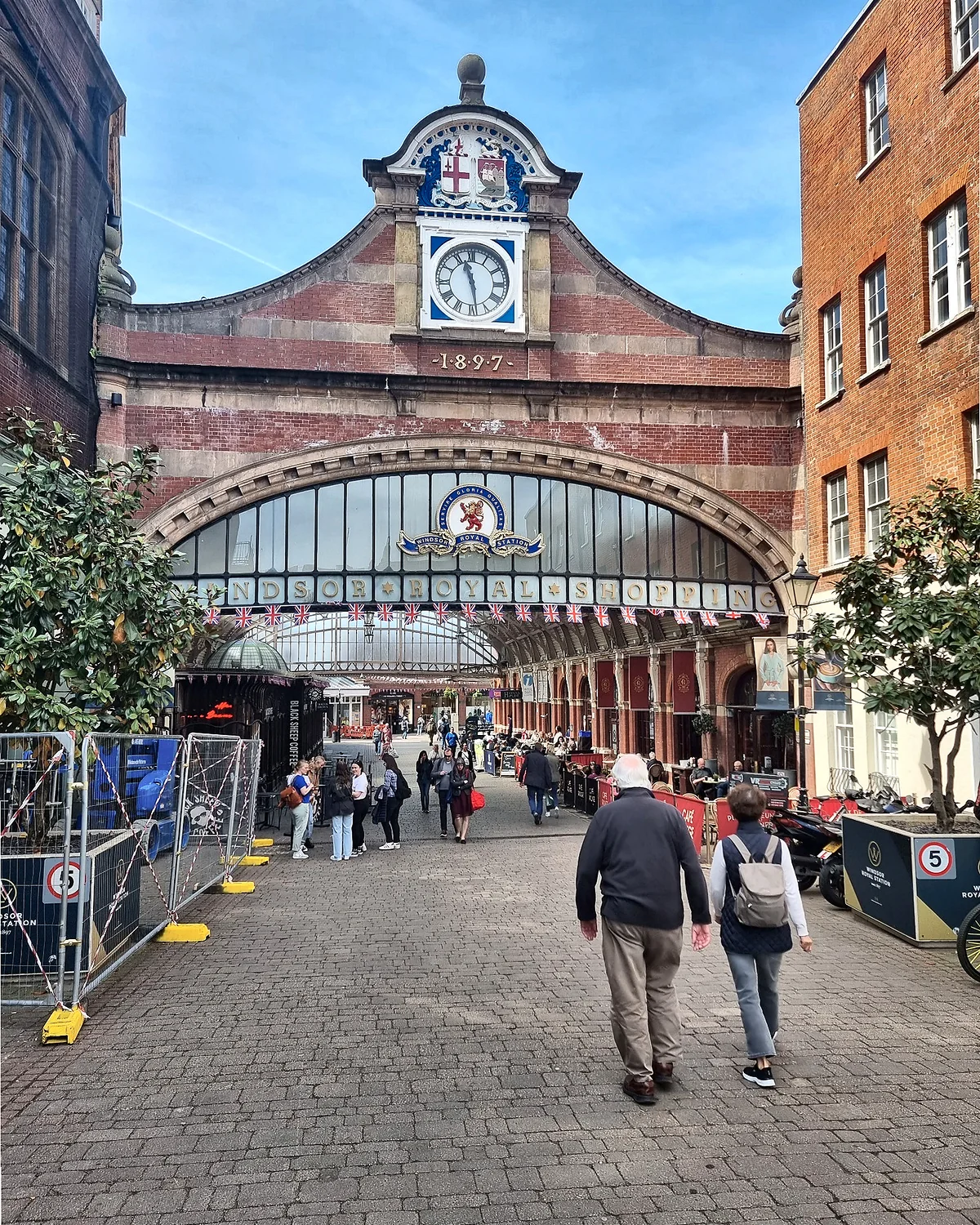
I remember exactly when I started taking First Class seriously. It was 2013, on my first trip to England. I was returning from Windsor to London, the train was packed, I had an enormous suitcase and several passengers made it very clear that they were not delighted by its presence. Nothing dramatic happened — I was simply uncomfortable for the whole journey. Windsor is where the habit began.
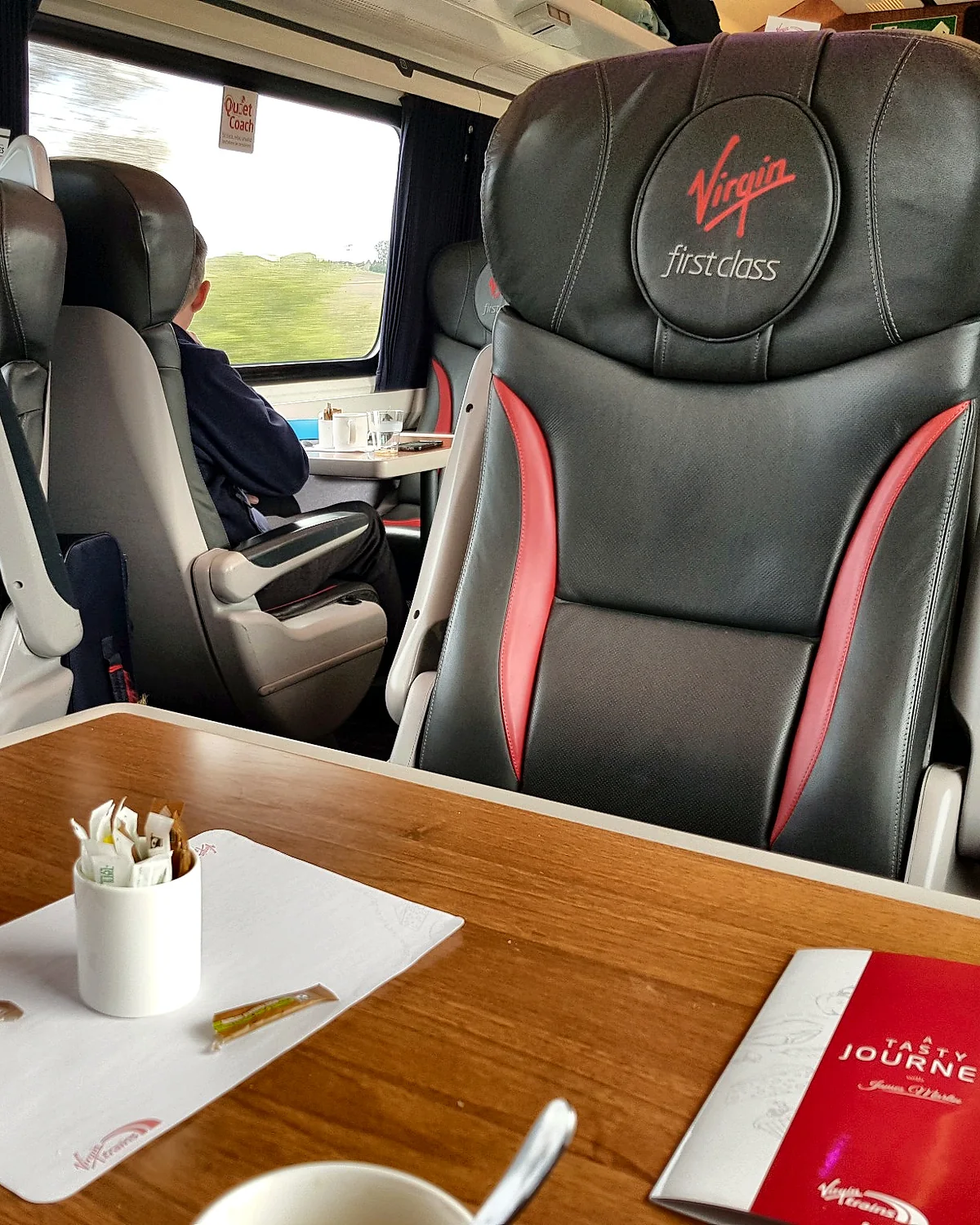
I have used First Class many times since. But First Class in Britain is not one product. On LNER it can mean a lounge, food, drinks and a full intercity service. On Great Northern it mostly means a quieter section and more space. On Greater Anglia to Cambridge it does not exist at all.
If I am travelling without luggage and the journey is short, the upgrade often makes little sense. But with a large suitcase, First Class can make sense even on a short trip. I am not just buying a better seat; I am buying more space and a much smaller chance of spending half the journey wondering where to put my luggage. On longer journeys I almost always check the First Class price. If the difference is reasonable, I often take it. If the upgrade costs as much as a good hotel night, Standard suddenly looks very attractive.
Tickets: Advance, Off-Peak, Anytime and the rest of British fare maths
Fares differ in how they are set. Advance fares are quota-controlled, so the cheapest tiers can disappear as a train fills up. With standard Anytime and Off-Peak tickets, what the ticket permits matters more than whether it was bought a month or 10 minutes before departure.
Doncaster already showed that even Anytime is not one universal ticket: it may be restricted to one operator or be Any Permitted. There is another distinction worth knowing: Day tickets and versions with longer validity. An Anytime Day Single is valid only on the date shown, while a standard Anytime Single is valid for two days including the printed date. An Anytime Day Return allows outward and return travel on the same day without a time restriction, while a standard Anytime Return is more flexible: the outward portion is valid for five days and the return for one calendar month. On one of my trips from Brighton to Seaford in 2022 I had exactly that kind of Anytime Day Return — useful when I wanted complete freedom over timing but knew I was returning the same day. With Anytime or Off-Peak, it is always worth checking what appears under Route.
And then LNER does something different
Even the basic categories are no longer universal. On part of LNER’s network, including London–Edinburgh, Off-Peak and Super Off-Peak have been removed in a pilot. Instead, LNER offers Fixed, 70min Flex and Fully Flexible. Fixed is valid only on the booked train, 70min Flex lets the main LNER part of the journey begin up to 70 minutes before or after the booked service, and Fully Flexible is valid at any time of day. Just when I think I have learned the basic system, an exception appears.
Advance does not necessarily mean “bought months in advance”
Advance is primarily a ticket tied to a specific train, not a synonym for “bought very early”. All Advance tickets are Singles; for a return journey you can buy two Advance Singles or combine different ticket types in each direction. They usually go on sale around 12 weeks before travel, but that is not a fixed rule: if the timetable is not yet confirmed they may appear later, while some operators sell them on the day of travel, sometimes as little as 10 minutes before departure. So if a date several months away shows only expensive flexible fares, do not immediately assume the cheap tickets have sold out — they may not yet have been released.
How I turned a cheap Advance ticket into a more expensive journey
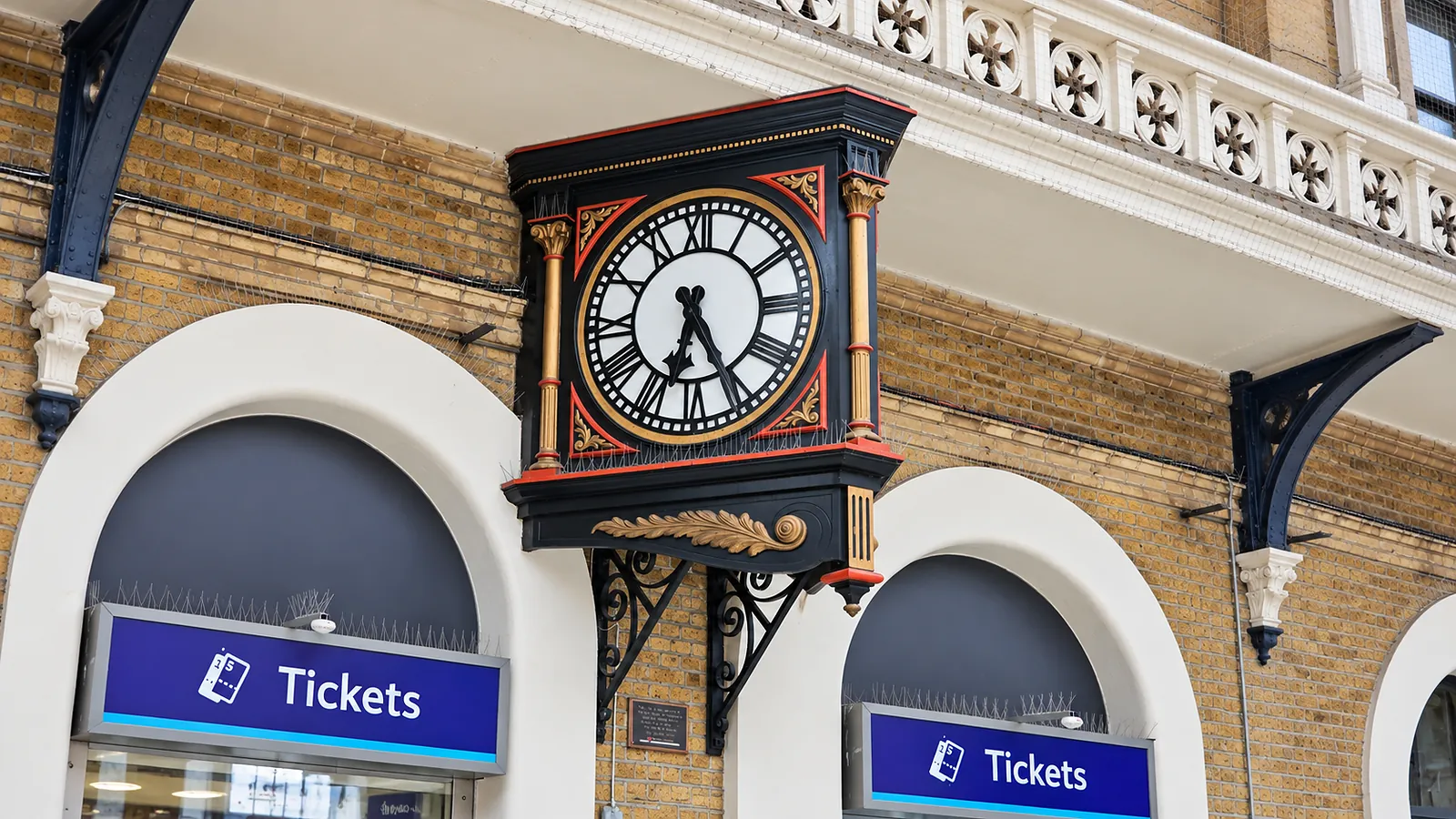
In Penzance I had an Advance Single for the journey back. Then the rain started, the rest of my day was washed out and I was ready to return several hours earlier.
There was an earlier train. I had a ticket — just not for that train. The change of plan neatly swallowed the original saving. I have not stopped buying Advance tickets because of it. When I know exactly which train I want, they can be excellent value. They are not automatically “the best ticket”.
Flexibility is not the same as a right to a refund
For Anytime, Off-Peak and some other flexible tickets purchased from 1 April 2026, refund rules are stricter. If you change your mind and decide not to travel, you generally need to request the refund by 23:59 on the day before the ticket becomes valid. The date can be changed only before the first day of validity, and a refund fee of up to £5 may apply. Different rules apply when the reason is delay, cancellation or a timetable change.
Off-Peak is not one universal time
Off-Peak does not simply mean “after 9:30”. Restrictions depend on the route and the specific fare. If the journey planner offers an Off-Peak fare for a particular train, that fare is valid on that departure. If it does not, there is little point arguing with the British fare system about some supposedly universal time that does not exist. In Scotland, from 1 September 2025, ScotRail permanently removed the distinction between peak and off-peak pricing on the fares it controls: Anytime prices were reduced to the former Off-Peak level and Off-Peak products are being phased out.
Breaking your journey
If the same train runs A–B–C and, for some strange reason, the fare to C is lower than the fare to B, that does not automatically mean you can buy to C and get off at B. On an Advance ticket, a break of journey is not permitted except for changes that form part of the itinerary, and that prohibition includes deliberately ending the journey before the ticketed destination.
On Anytime tickets a break of journey is allowed, and on Off-Peak and Super Off-Peak it usually is as well unless the specific restriction says otherwise. Check the exact wording on the ticket.
Split ticketing: when two tickets beat one
If a train runs A–B–C, the A–C fare can be more expensive than A–B plus B–C. You can buy two tickets and remain on the same train provided it stops at B and both tickets are valid for their respective sections. I started using split tickets seriously on a journey from Bristol, when the app offered the combination automatically.
For a tiny saving there is little point complicating the journey. When a long-distance fare looks excessive, it is worth checking whether the same route can legally be split into two or more tickets.
Where I search for trains and where I buy tickets
I usually search on National Rail, where I check routes, times, changes, operators and possible disruption. At the moment I usually buy through the Transport for Wales app or website — not because there is some secret Welsh fare, but because it was the first app I happened to find that I could install and use from Croatia without any trouble. At one point I could not install the GWR app; TfW worked, so I started using it and stayed with it.
The ticket retailer and the train operator are not necessarily the same company. Through TfW you can buy a ticket for a train that has nothing to do with Wales, and there is no extra booking fee. Their rule for Advance tickets is useful too: the date or time can be changed without a fee until 18:00 on the day before travel, subject to any fare difference. Changes are still possible after that, up to departure of the first booked train, but the normal fees then apply.
National Rail is my search engine. TfW is currently my ticket office. That works for me; another retailer may suit someone else just as well. Specialist websites are particularly useful for automatically finding split tickets, although some charge extra fees. I go to an operator’s own website when I need a specific promotion, a sleeper, First Class options, seat selection or another operator-specific feature.
And not every online ticket lives only on your phone
Most of the time I use e-tickets, but paper has not disappeared completely. Some tickets still have to be collected from a station machine. And I do not throw away a paper ticket the moment I board: at many stations I need it again at the exit barrier. That sounds obvious until the first time you stand in front of closed gates searching every pocket.
What matters more is having a ticket before you board, whenever there is a working way to buy one at the departure station. Do not assume you can board and pay the conductor. On routes in England where Penalty Fares apply, travelling without a valid ticket can mean an additional £100 plus the full Single fare; if paid within 21 days, the additional amount falls to £50. Exceptions exist where there is no working way to buy at the origin or where staff explicitly allow boarding, but the normal rule is simple: ticket before train.
Do not automatically apply London’s contactless logic to all of Britain. Contactless pay as you go works in London and across a growing part of the southeast network, but only within the designated area; check that your destination is included before travelling. If it is not, tapping in at the start can end with a maximum fare and no valid ticket for the whole journey. Railcard discounts currently do not apply to contactless PAYG. Since March 2026, contactless has also worked between Liverpool Street and Stansted Airport, including Stansted Express, but Oyster is still not valid there.
The ticket is not the whole story: seats and discounts
A perfectly valid ticket does not necessarily come with a reserved seat. After that Windsor journey in 2013 I became fond of having a reserved seat whenever reservations are available: I would rather know where I am going to sit and where the suitcase will go than repeat the social experiment of a packed carriage.
Many local routes do not offer reservations, while on longer intercity journeys they are often possible and useful. Where an operator offers them, seat reservations are free and can be made separately; the deadline varies: on some services it is around two hours before travel, on others just a few minutes before departure. Great Northern and Southern do not offer seat reservations at all. A ticket and a reservation are still not the same thing, and Friday afternoon London–Edinburgh is not the ideal moment to test how willing the British public is to share personal space.
For passengers who need additional assistance, Passenger Assist is useful when planning seats and connections. One operator can arrange assistance for the entire journey even when trains or operators change, and a request can be made up to two hours before departure. Assistance can also be requested at the station without advance booking, though you should then allow for a possible wait.
The Railcard I perhaps should have bought
I have never used a Railcard. The British system currently has nine main Railcards: some are age-based (including the Senior Railcard), others apply when travelling with another person or with children, and there are also Disabled Persons, Veterans and Network Railcards. Most one-year cards cost £35 and can reduce eligible fares by roughly one third, subject to their own restrictions. Before a longer or more expensive trip I now at least check whether there is one I qualify for.
The Network Railcard interests me most. There is no special status requirement: you need to be at least 16 and use it within the London and southeast area it covers. It also costs £35 a year and gives up to one third off eligible Standard Class Anytime and Off-Peak fares. On weekdays it is generally valid from 10:00, with a £13 minimum fare; it does not apply to Advance or First Class. Its area includes Cambridge, Oxford and Windsor — exactly the sort of places I often choose for a day trip from London.
This is one of those things where I may have spent too long saying “it probably would not pay off for me” without ever doing the calculation — a fairly weak defence for someone who calculates for a living.
For non-residents there is also the BritRail Pass, with different durations and geographical coverage. I have not used that either. For a few fixed journeys, individual tickets may be perfectly adequate; for several days of more flexible travel from city to city, the calculation can look very different. There are also domestic Ranger and Rover tickets: a Ranger generally gives unlimited travel in a defined area for one day, while a Rover covers several days within a specified period. If you are exploring one region intensively for several days, they are worth comparing with individual tickets.
What happens when trains are late, cancelled or the system goes wrong
The first distinction is between you missing the train and the railway disrupting your journey. With an Advance ticket, if you miss your first booked train through your own fault, the ticket generally ceases to be valid and you need a new one. But if a delay during the journey makes you miss a connection, you can continue on the next permitted train to complete the journey. So do not automatically buy a new ticket: first check what the existing one already allows.
When my Advance ticket effectively became an Anytime
This happened to me during a strike, travelling from Swindon towards London. I had an Advance ticket, but special arrangements that day allowed me to use other departures. In practice, my Advance behaved like an Anytime.
If I had just assumed my plan no longer worked and bought another ticket, I would have paid for a solution the railway had already provided. During strikes or serious disruption, read the rules applying on that specific day first.
Wider protection for cancellations from 20 September 2026
On 20 September 2026, the automatic ticket-acceptance scheme for cancellations was expanded. If your train is cancelled, the existing ticket can be used on another participating operator’s train provided it departs up to two hours before or after the original service and follows a direct or reasonable alternative route. The scheme now covers 17 operator brands, including LNER, GWR, Avanti West Coast and CrossCountry; you show staff the original ticket.
It is not universal. Operators currently outside the scheme include Grand Central, Hull Trains, Lumo, ScotRail and Transport for Wales, while East Midlands Railway is expected to join later. Doncaster therefore neatly illustrates that several trains on the same route do not necessarily become interchangeable when something goes wrong.
Refund or Delay Repay?
If a delay, cancellation or timetable change makes you decide not to travel at all, request a refund for the unused ticket from the retailer that sold it. If you do travel but arrive late, claim Delay Repay from the operator responsible for the first delay. The delay threshold and compensation level depend on the operator, ticket and length of delay, so check that operator’s Passenger’s Charter after the journey. The same disruption can therefore lead to two different processes.
Rail replacement: when Stansted Express becomes rather less express
One experience with a Stansted Express replacement bus has stayed with me. When part of the “Express” becomes a bus, the name suddenly feels ambitious, and another question appears: why did I pay the premium for an airport rail link if part of the journey involves a bus and an extra change anyway? In that situation a direct coach from London can look much more rational. That is why I recheck airport links, especially at weekends, shortly before travelling.
Sleeper trains: Cornwall yes, Scotland still waiting
Whether a sleeper makes sense depends on the ticket price, the hotel night it replaces, the daylight hours saved and the quality of sleep.
Night Riviera: Truro in a single cabin
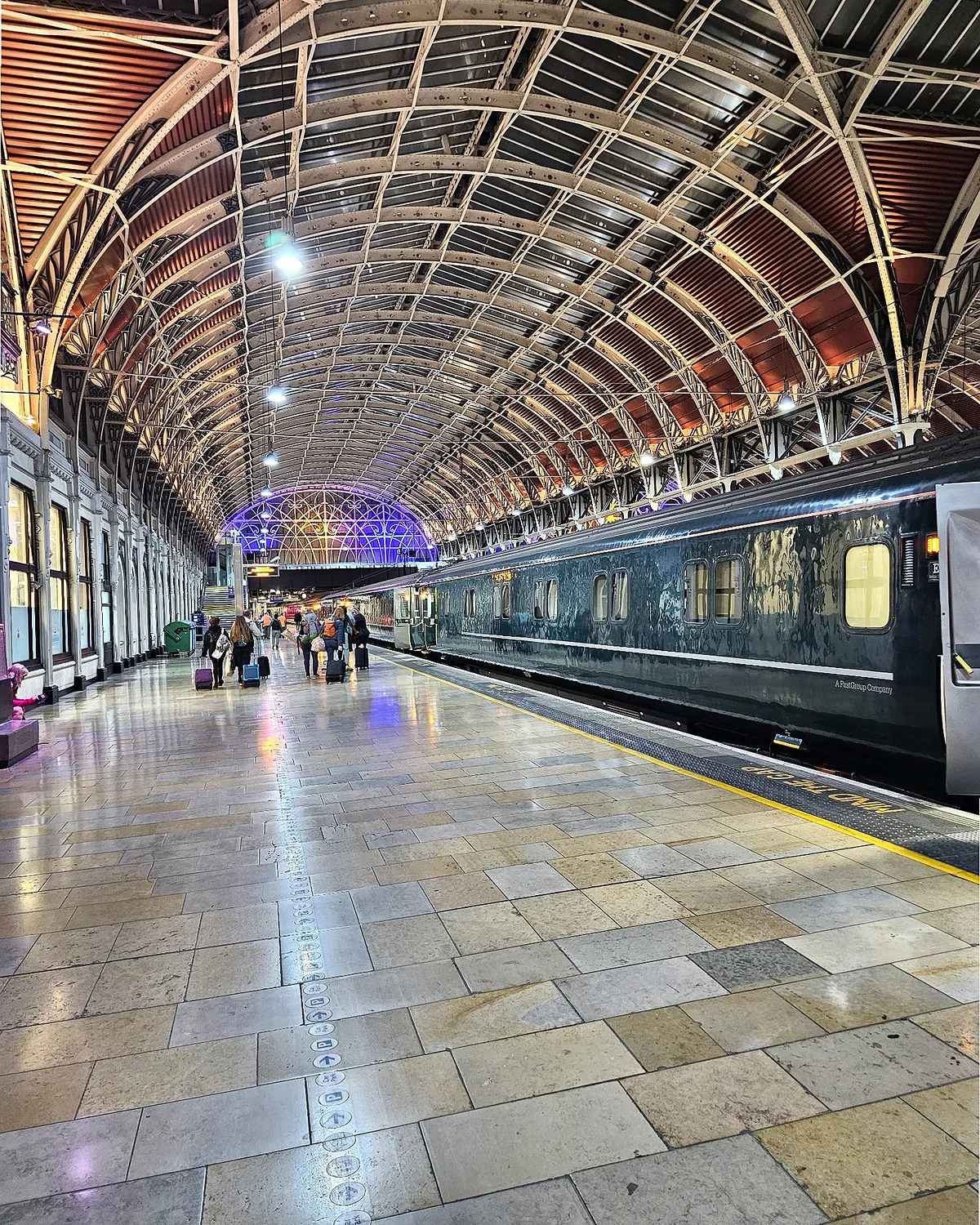
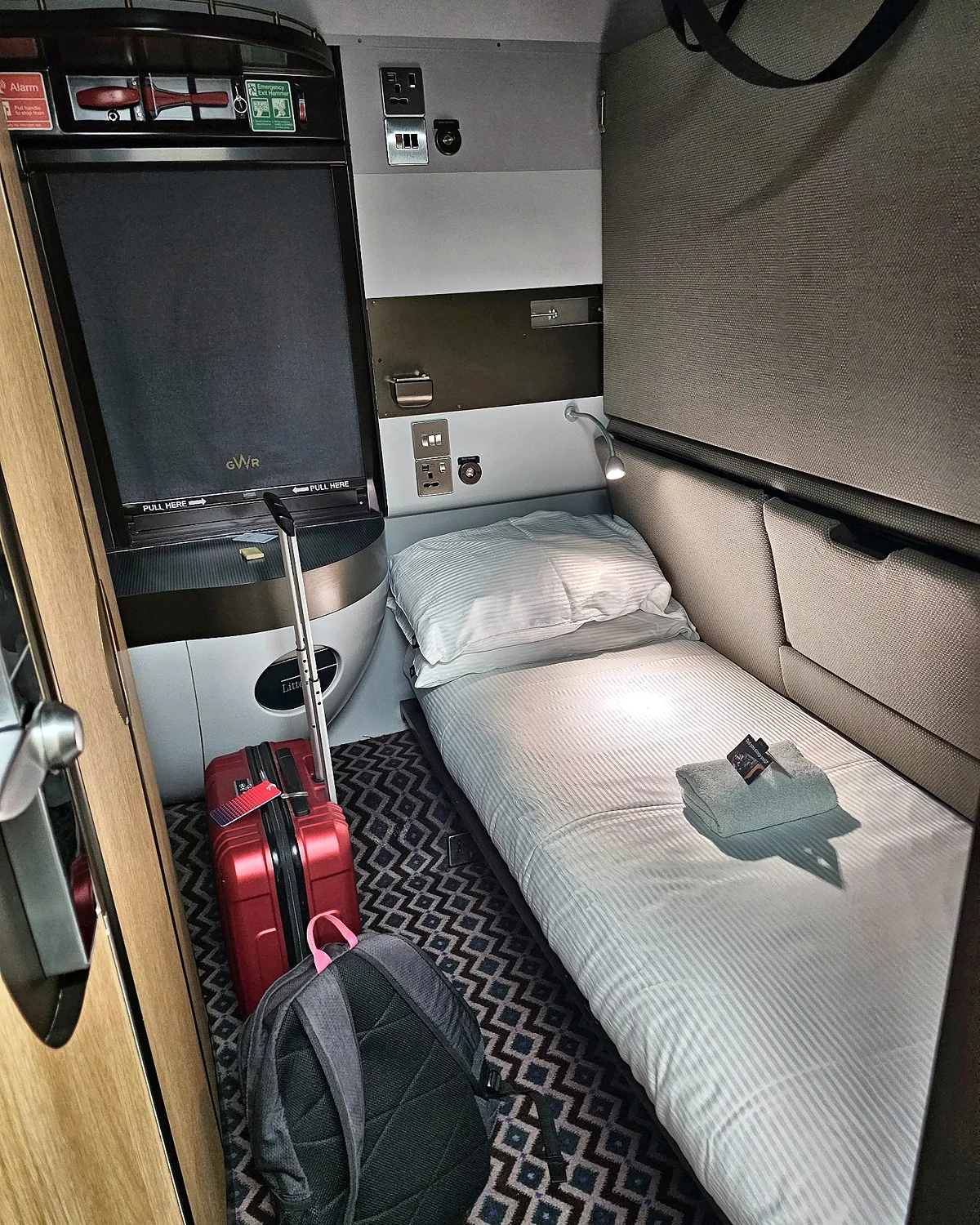
I travelled on the Night Riviera from London to Truro in a single cabin. For me it worked extremely well: I could go to bed in London, travel overnight and step out in Cornwall in the morning, without spending most of a day on a train or paying for a hotel night.
The cabin has a proper bed, a washbasin and privacy. Passengers in single cabins have access to lounges and showers at Paddington, Truro and Penzance, with a light breakfast served in the cabin. For me that belongs to a completely different category from trying to sleep in a seat.
Caledonian Sleeper: I will do it one day, but the price still puts me off
I have not tried the Caledonian Sleeper yet. But I will. The problem is price and availability: whenever I have seriously looked at cabins, they have been expensive, while the most popular dates are often sold out months ahead.
A Classic room has a bed and washbasin but no private bathroom; Club and Caledonian Double rooms have their own shower and toilet. Of course I would prefer a private shower, but the price quickly explains why I have not booked one yet. A seat is cheaper, but I am no longer at the stage of life where 12 hours of dozing upright come without interest the next day.
Inverness particularly appeals to me, along with the idea of spending a few days in a Scottish castle converted into a hotel, even if it is not a Marriott. Regular readers will know why that is worth mentioning.
When flying is simply better
I like trains, but not enough to choose them on principle. So I often fly to Scotland, for reasons of both comfort and cost. On trips to Aberdeen, I have found flying British Airways from Heathrow both noticeably faster and cheaper than taking the train, and on one trip I returned from Edinburgh on a direct flight to Stansted because flying suited me better there too.
Edinburgh is not quite the same category as Aberdeen and Inverness. Between London and Edinburgh, the train is a serious alternative to flying: the fastest services take just over four hours, city centre to city centre, without the extra airport logistics. For Aberdeen, and especially Inverness, the case for flying becomes much stronger.
There is another situation in which the train wins outright. On one trip I was not travelling “from Edinburgh to London” at all; I went via Newcastle, Durham and York, stopping in the cities along the way. Suddenly the train was not just transport between A and B but the best way to connect everything in between.
If A and B are all that matter, compare train and plane. If A, B and everything between them are part of the trip, the train serves a completely different purpose.
When the system stops looking complicated
Britain’s railway system initially looked to me like a list of exceptions: multiple terminals, multiple operators, different ticket types, strange prices and a platform that does not exist until half the station suddenly runs towards it.
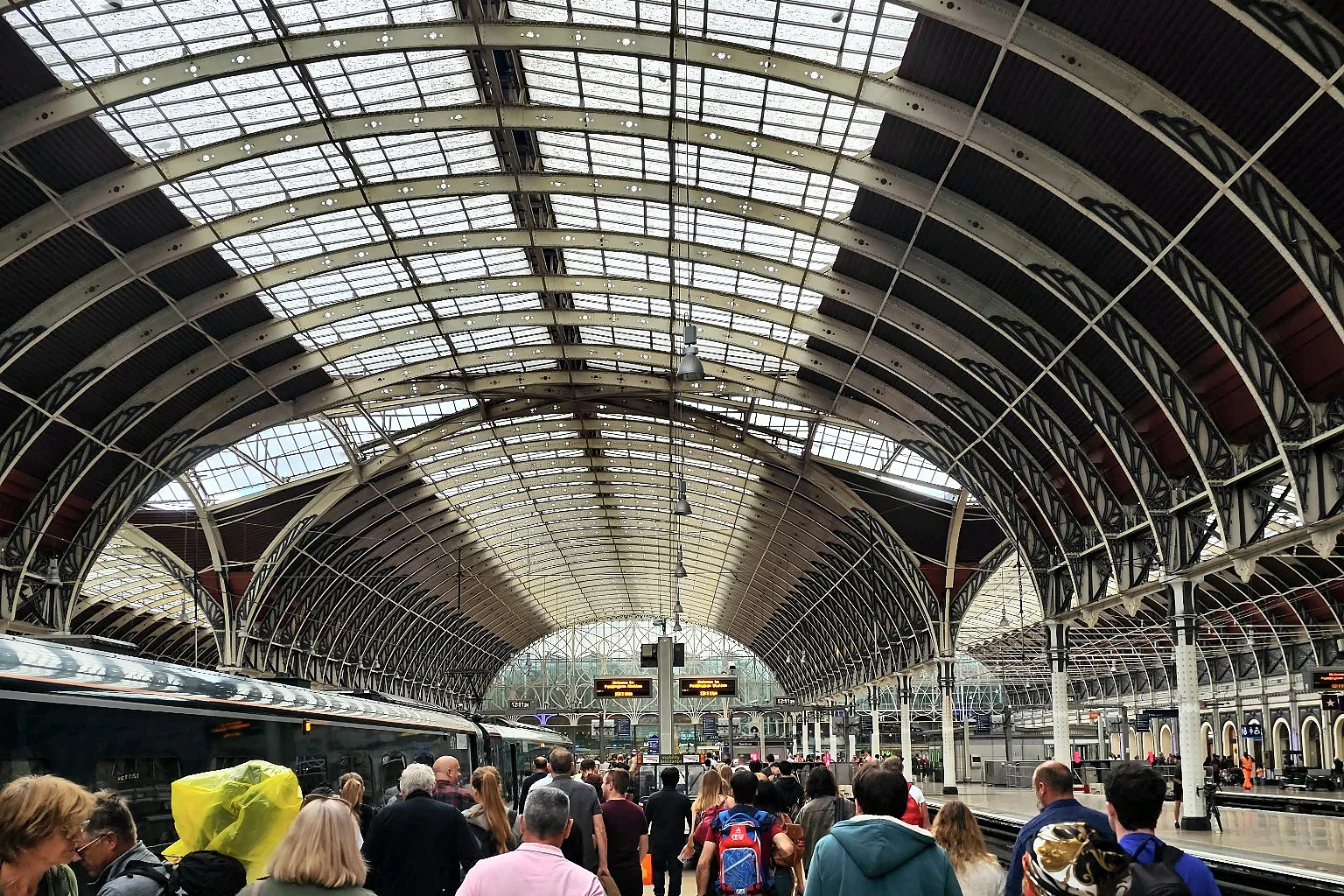
There is no recipe. After enough journeys, you start recognising what needs checking. That is why the best way to close this article is with a photograph of Paddington: a vast terminal, a crowd of people and a system that looks complicated — until you learn how to read it.
1 comment
Comments are closed.